
Pro Stair Calculator (Rise & Run) X - Calculate Stair Rise & Run with Precision
Our advanced stair calculator helps you design safe, code-compliant stairs with perfect rise and run dimensions. Create comfortable, functional staircases for any building project.
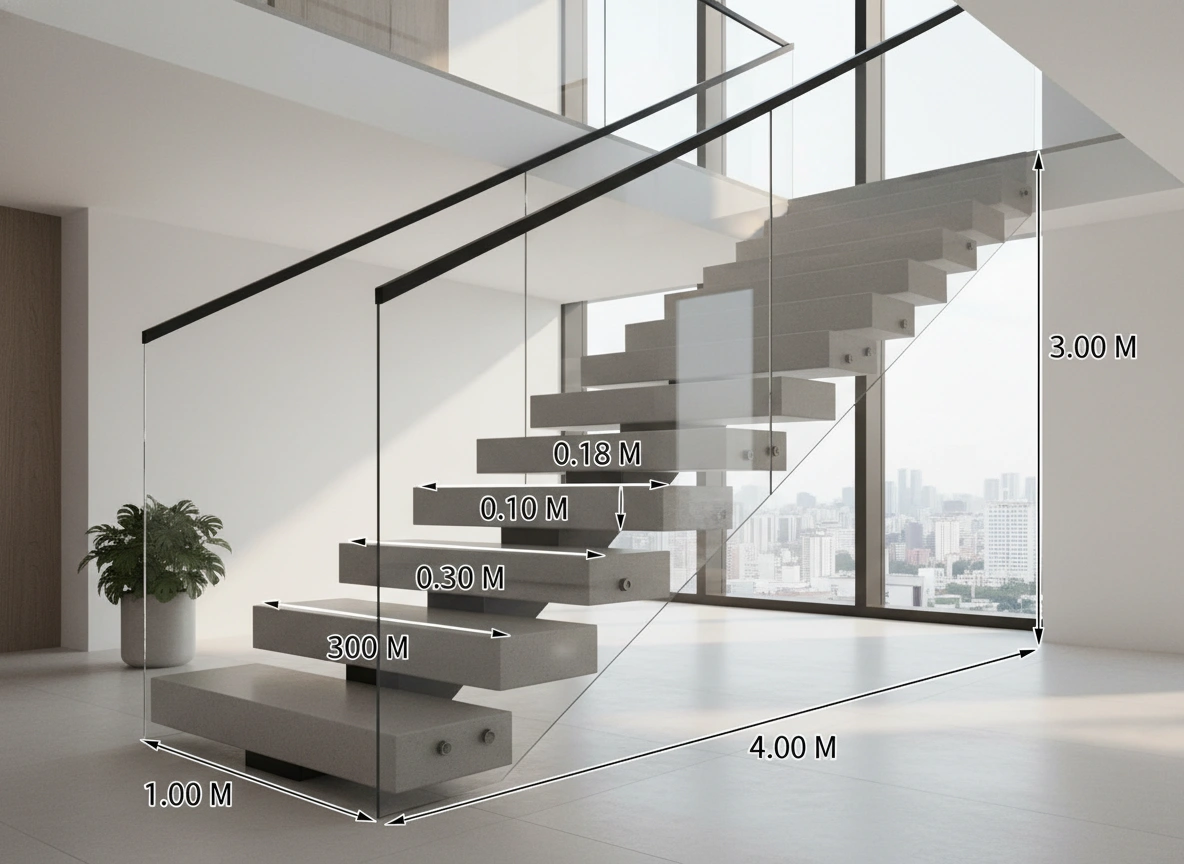
Calculate Your Stair Dimensions
Your Stair Calculation
Number of Steps
0
Rise per Step
0
inches
Run per Step
0
inches
Stringer Length
0
inches
Stair Visualization
Code Compliance
No calculation yet
Enter your measurements and click "Calculate" to see results.
Calculation History
Stair Design Assistant AI
Ask our AI assistant any questions about stair design, building codes, or best practices for your specific project.
Related Calculators
Siding Calculator
Calculate the amount of siding needed for your home renovation project with precise measurements.
Calculate SidingSoil Calculator
Determine how much soil you need for your garden beds, lawns, and landscaping projects.
Calculate SoilMulch Calculator
Calculate how much mulch you need for your garden beds and landscaping areas.
Calculate MulchStair Design Examples
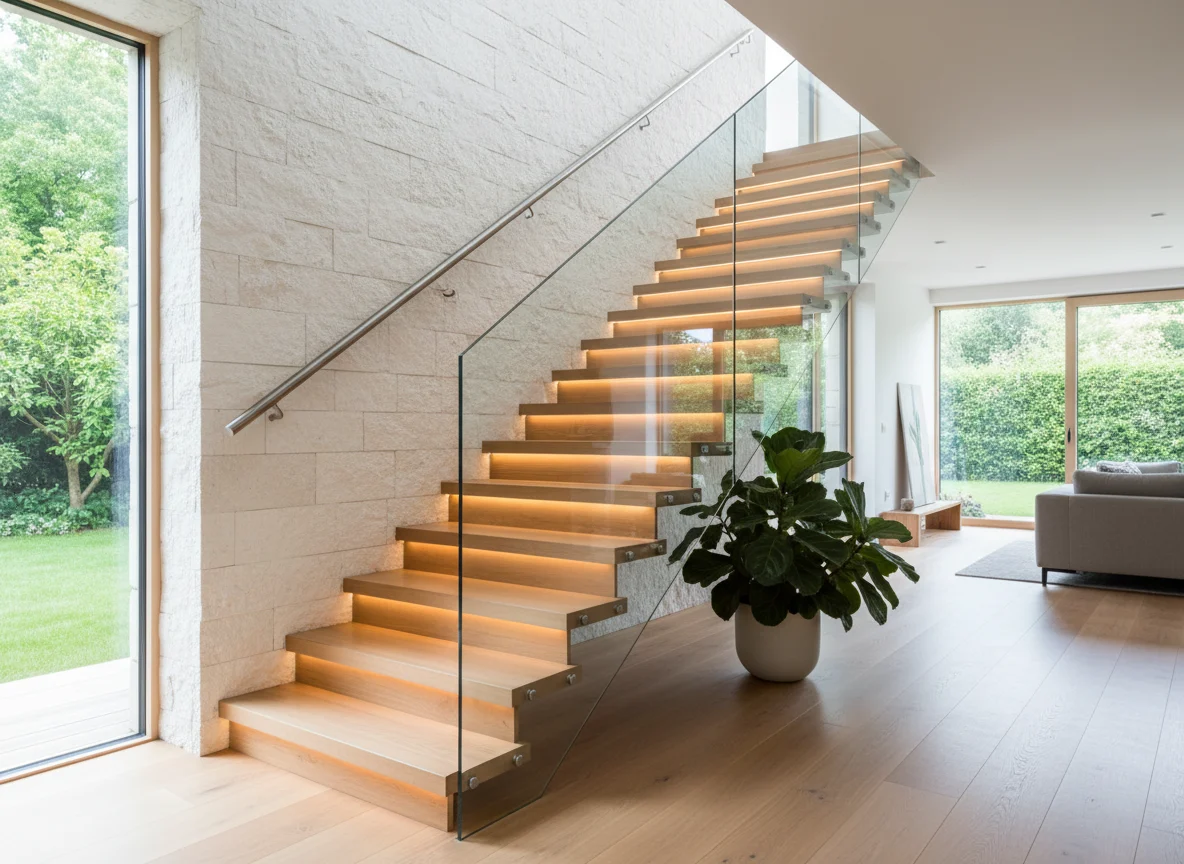
Straight Run Stairs
Simple and efficient design with consistent rise and run measurements for comfortable ascent.
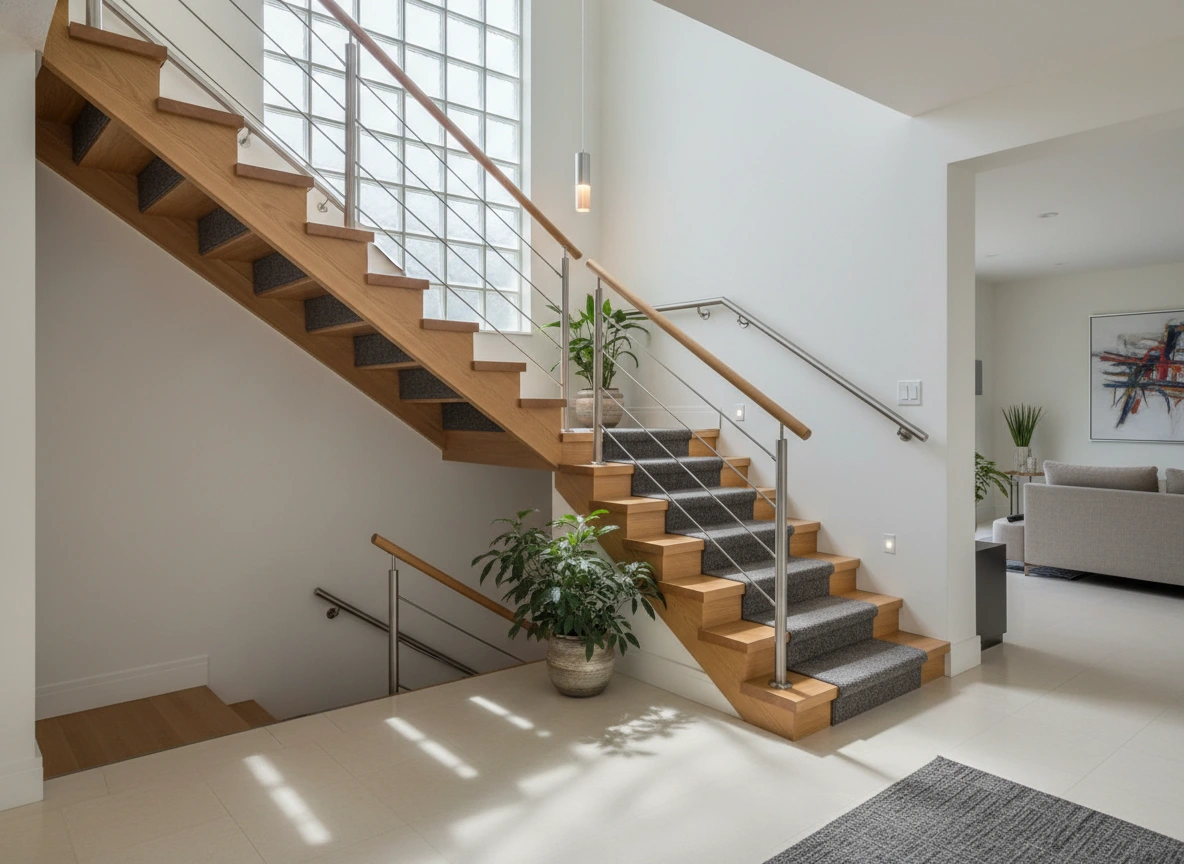
L-Shaped Stairs
Space-saving design with a 90-degree turn, ideal for corner installations.

Spiral Stairs
Compact circular design perfect for tight spaces with unique aesthetic appeal.
How to Use the Stair Calculator
- 1
Select Measurement Unit
Choose your preferred measurement unit: inches, centimeters, or millimeters. This will apply to all input and output values.
- 2
Enter Total Height and Depth
Input the total vertical height (floor to floor) and total horizontal depth (run length) available for your staircase.
- 3
Select Stair Type and Building Code
Choose your stair configuration (straight, L-shaped, etc.) and applicable building code standard for compliance checking.
- 4
Set Rise and Run Constraints
Define maximum rise and minimum run values based on your building code requirements or personal preferences.
- 5
Calculate and Review Results
Click "Calculate Stair Dimensions" to see the optimal step count, rise/run measurements, and code compliance status.
What is a Stair Rise & Run Calculator?
A Stair Rise & Run Calculator is an essential tool for architects, builders, and DIY enthusiasts who need to design safe, comfortable, and code-compliant staircases. This specialized Stair Rise & Run Calculator takes the guesswork out of stair design by calculating optimal step dimensions based on the available space and building regulations.
Using a Stair Rise & Run Calculator helps prevent common stair design errors that can lead to safety hazards or building code violations. When stairs have inconsistent rise heights or inadequate run depths, users may trip or lose balance. A properly designed staircase ensures comfortable, predictable steps for all users. This advanced Stair Rise & Run Calculator eliminates these issues entirely.
Modern Stair Rise & Run Calculators like our Pro Stair Calculator X account for various factors including total height, available depth, stair type, and international building codes. Different jurisdictions have specific requirements for maximum rise and minimum run dimensions, which our advanced Stair Rise & Run Calculator incorporates into its calculations. This makes our Stair Rise & Run Calculator superior to manual calculation methods.
The benefits of using a precise Stair Rise & Run Calculator extend beyond simple dimension calculations. Proper stair design considers ergonomic principles, ensuring comfortable ascent and descent while minimizing fatigue. By calculating the exact rise and run needed, you ensure these benefits are maximized while maintaining safety standards. Every stair project should use a reliable Stair Rise & Run Calculator during the planning phase.
Our comprehensive Stair Rise & Run Calculator provides results in multiple formats - number of steps, precise rise per step, run per step, and stringer length. This versatility makes our Stair Rise & Run Calculator suitable for both residential and commercial projects. Additionally, the code compliance feature helps ensure your design meets local building regulations. This Stair Rise & Run Calculator is truly comprehensive.
Whether you're building interior stairs, exterior steps, or specialty staircases, our Stair Rise & Run Calculator ensures you create the perfect dimensions. The calculation history feature allows you to track multiple designs, making it easy to compare options or adjust for similar spaces. This innovative Stair Rise & Run Calculator saves both time and resources.
In conclusion, a reliable Stair Rise & Run Calculator is an indispensable tool for anyone involved in stair design or construction. It transforms the complex process of dimensional calculation into a simple, accurate, and user-friendly experience, ensuring safe, comfortable staircases through proper planning. Every stair project benefits from using a precise Stair Rise & Run Calculator.
Related Calculators
External Resource
For comprehensive information on stair design and building codes, visit the International Code Council's Residential Code resources.
Stair Calculation Formulas
Basic Stair Formulas
Number of Steps = Total Height ÷ Rise per Step
Rise per Step = Total Height ÷ Number of Steps
Run per Step = Total Depth ÷ (Number of Steps - 1)
Stringer Length = √(Total Height² + Total Depth²)
Optimal Step Calculation
Optimal Number of Steps = Round(Total Height ÷ Desired Rise)
Optimal Rise = Total Height ÷ Optimal Number of Steps
Optimal Run = Total Depth ÷ (Optimal Number of Steps - 1)
Example Calculation
Let's calculate stairs for a total height of 108 inches and total depth of 120 inches, with a maximum rise of 7.75 inches and minimum run of 10 inches.
Step 1: Calculate number of steps: 108 ÷ 7.75 = 13.94 → Round to 14 steps
Step 2: Calculate actual rise per step: 108 ÷ 14 = 7.71 inches
Step 3: Calculate run per step: 120 ÷ (14 - 1) = 120 ÷ 13 = 9.23 inches
Step 4: Since 9.23" run is less than minimum 10", adjust: Try 13 steps
Step 5: Recalculate with 13 steps: Rise = 108 ÷ 13 = 8.31" (exceeds max), so try 15 steps
Final Result: With 15 steps: Rise = 7.2", Run = 8.57". Rise is acceptable but run is still short. May need to increase total depth or adjust requirements.
Frequently Asked Questions
What is the ideal rise and run for residential stairs?
For comfortable residential stairs, most building codes recommend a maximum rise of 7.75 inches and minimum run of 10 inches. The ideal relationship is often expressed as twice the rise plus the run should equal between 24 and 25 inches (2R + R = 24-25"). This creates a comfortable stepping rhythm for most people.
How many steps do I need for my staircase?
The number of steps depends on your total floor-to-floor height and desired rise per step. Divide the total height by your target rise (typically 7-7.75 inches) and round to the nearest whole number. Our calculator automatically optimizes this calculation while ensuring code compliance.
What building codes apply to stair design?
Most regions follow the International Residential Code (IRC) for homes or International Building Code (IBC) for commercial buildings. These specify maximum rise (typically 7.75"), minimum run (typically 10"), minimum headroom (80"), and other safety requirements. Always check with your local building department for specific regulations.
Can I use the calculator for spiral or curved stairs?
Yes, our calculator includes options for different stair types including spiral stairs. However, spiral stairs have additional considerations like tread width at walkline and specific code requirements for winders. The calculator adjusts calculations accordingly for each stair type.
How accurate is the stair calculator?
Our stair calculator provides highly accurate estimates based on mathematical formulas and building code requirements. For best results, measure your total height and depth carefully. The calculator accounts for real-world constraints like maximum rise and minimum run to provide practical, buildable solutions.