
Master Poultry Operations - Calculate Chicken Farming with Precision
Advanced calculator for poultry profitability analysis, flock management, and operational planning. Optimize your poultry business with data-driven insights for operations success.
Poultry Operations Calculator
Note: All calculations are adjusted for your selected country's economic conditions, currency, and typical poultry practices. Successful Chicken Farming requires careful planning and this tool helps optimize your operations.
Poultry Profitability Analysis
Annual Revenue
₨ 0
Annual Costs
₨ 0
Net Profit
₨ 0
ROI
0%
Poultry Calculation History
| Date | Country | Chickens | Revenue | Profit | ROI |
|---|
Poultry Operations AI Assistant
Ask me anything about poultry profitability, breed selection, disease management, or best practices for poultry operations. This sector requires specific knowledge and I'm here to help.
Poultry Insights
- Optimal stocking density: 8-10 birds/m² for broilers
- Feed conversion ratio: 1.5-1.8 for commercial broilers
- Layer production: 280-320 eggs/year for hybrids
- Mortality rate should be below 5% monthly
Global Poultry Analysis: 50 Top Countries
Poultry Trends by Country
| Country | Currency | Annual Production | Poultry Methods | Key Trends |
|---|---|---|---|---|
| United States | USD ($) | 20M tons | Vertical integration, CAFOs | Organic growth, antibiotic-free production |
| China | CNY (¥) | 15M tons | Large-scale commercial operations | Modernization, export focus |
| Brazil | BRL (R$) | 14M tons | Integrated, export-oriented operations | World's largest poultry exporter |
| Pakistan | PKR (₨) | 1.3M tons | Mixed small-medium scale operations | Rapid growth, backyard to commercial transition |
| India | INR (₹) | 4.5M tons | Smallholder, contract farming | Export growth, organized retail |
| Russia | RUB (₽) | 5M tons | Large complexes, import substitution | Self-sufficiency focus in poultry |
| Mexico | MXN ($) | 3.5M tons | Integrated, US-influenced systems | Export to US, poultry modernization |
*Complete poultry data for all 50 countries available in downloadable reports
 Pakistan Poultry Analysis
 Pakistan Poultry Analysis
Current Poultry Scenario
- • Currency: Pakistani Rupee (PKR ₨)
- • Annual Poultry Production: 1.3 million tons
- • Growth Rate: 8-10% annually
- • Employment: 1.5 million people in the sector
- • Investment: PKR 700 billion poultry industry
Chicken Farming Methods in Pakistan
- • Backyard Operations: 40% of production
- • Commercial Operations: 60% of production
- • Breeds: Hubbard, Cobb, Indian River
- • Feed Sources: Local maize, soybean imports
- • Market: Growing middle-class demand for poultry products
Poultry Trends & Opportunities
Export Potential
Gulf countries, Afghanistan with improved quality standards
Technology Adoption
Automated feeding, climate control in commercial operations
Industry Challenges
Feed cost volatility, energy costs, disease outbreaks
Americas Region Poultry
USD, CAD, MXN, BRL, ARS, COP, PEN, CLP
- • USA: World's 2nd largest producer
- • Brazil: Largest global exporter
- • Mexico: Fastest growing in region
- • Trend: Vertical integration dominates
Asia-Pacific Region Poultry
CNY, INR, PKR, IDR, JPY, KRW, THB, VND
- • China: World's largest producer
- • India: Rapidly modernizing sector
- • Pakistan: 8-10% annual growth
- • Trend: Smallholder to commercial shift
EMEA Region Poultry
EUR, GBP, RUB, TRY, ZAR, NGN, EGP, SAR
- • Russia: Import substitution success
- • Nigeria: Africa's largest producer
- • EU: High welfare standards
- • Trend: Organic/free-range growth
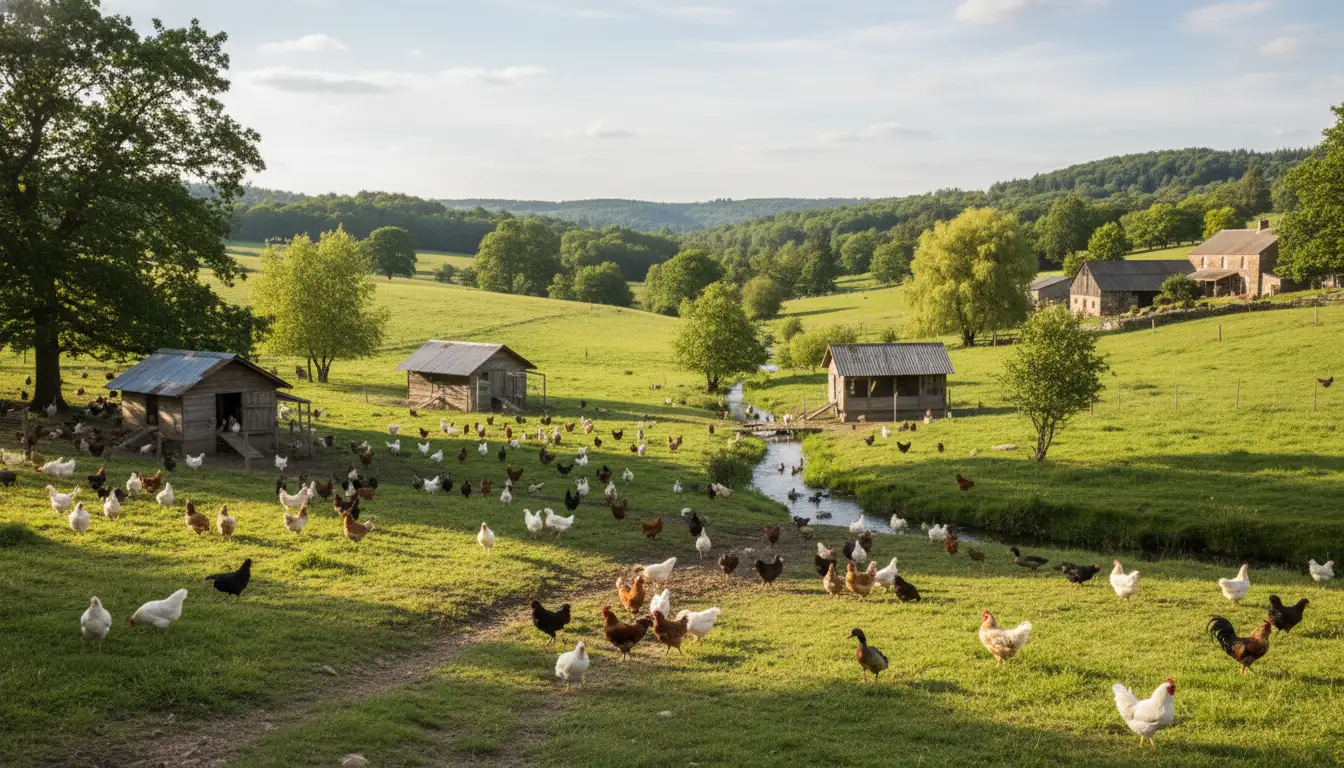
Professional poultry setup showing modern chicken housing and management
How to Use the Poultry Calculator
Input Parameters
Adjust sliders for flock size, feed costs, production type, and select your country for localized calculations.
Calculate Results
Click "Calculate Now" to generate detailed profitability analysis with visual charts and financial breakdowns.
Analyze Data
Review revenue, costs, ROI, and net profit metrics to make informed decisions about your poultry business.
Export & Save
Save calculations to history and export as CSV for business planning and financial projections.
What is Poultry Farming?
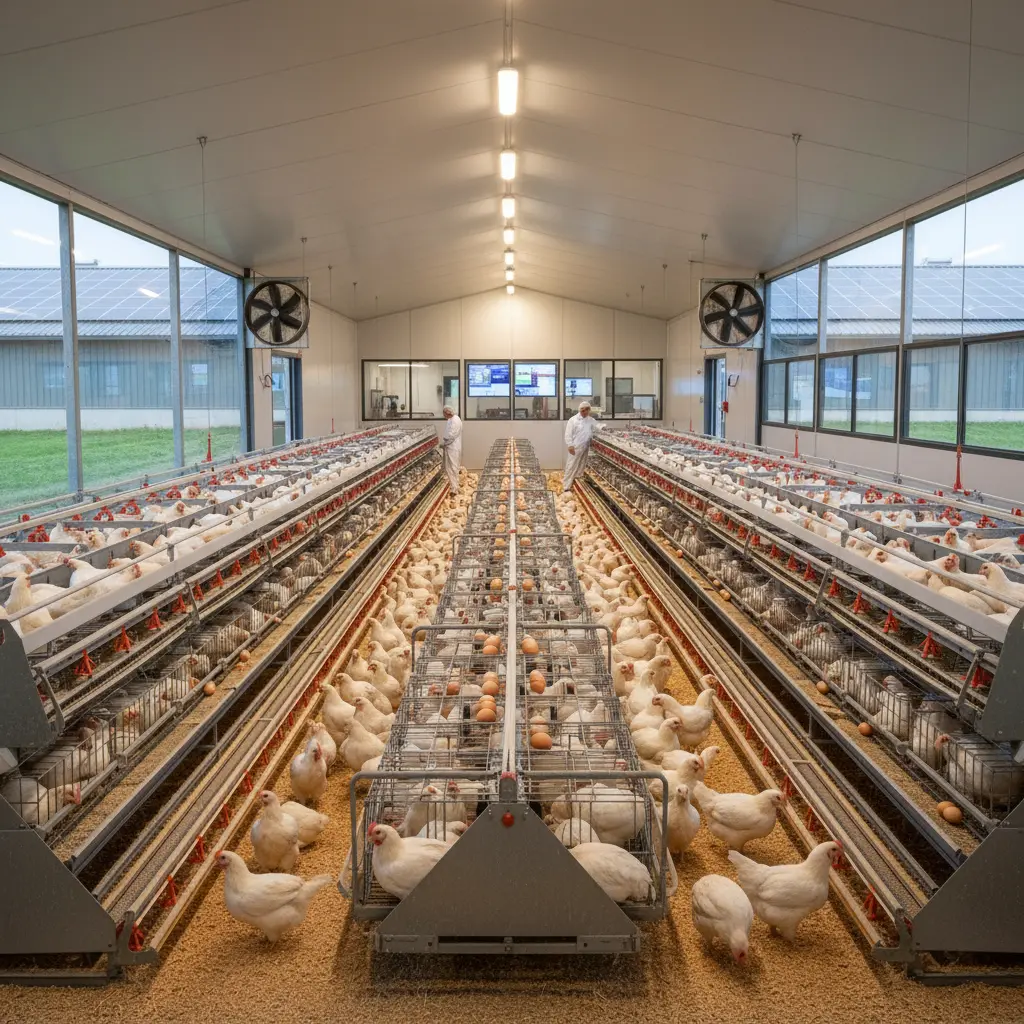
Poultry farming, also known as chicken farming, is the practice of raising domesticated chickens for their meat (broilers) and eggs (layers). This agricultural sector has evolved significantly from traditional backyard operations to sophisticated commercial enterprises. Modern operations utilize advanced technologies, scientific breeding, and optimized management practices to maximize production efficiency and animal welfare.
The global importance of the poultry industry or chicken farming cannot be overstated. As one of the most efficient converters of feed into high-quality protein, it provides affordable animal protein to billions of people worldwide. The industry has experienced remarkable growth, with chicken becoming the most consumed meat globally due to its relatively low production costs, short production cycles, and cultural acceptability across diverse societies.
Successful operations in chicken farming require expertise in several key areas: genetics and breeding, nutrition and feed formulation, housing and environmental control, health management, and marketing. Each aspect contributes to the overall profitability and sustainability of the operation. The choice between broiler (meat) production and layer (egg) production represents a fundamental decision, with each requiring different management approaches and infrastructure investments.
Global Poultry Context
The poultry industry operates on a truly global scale, with significant production in over 50 countries worldwide. From the technologically advanced operations in the United States to the rapidly growing sector in Pakistan, it adapts to local economic conditions, consumer preferences, and resource availability. The chicken farming sector has evolved through vertical integration, where single companies control multiple stages of production from breeding to processing. This approach has enabled remarkable efficiencies but also raised concerns about market concentration and environmental impacts.
Sustainable practices in chicken farming are gaining increasing attention across all 50 major producing countries. Modern operations focus on reducing environmental footprints through improved feed efficiency, better waste management, and renewable energy adoption. Animal welfare considerations have also transformed the chicken farming industry globally, with many producers adopting higher welfare standards and consumers showing increased preference for ethically produced poultry products.
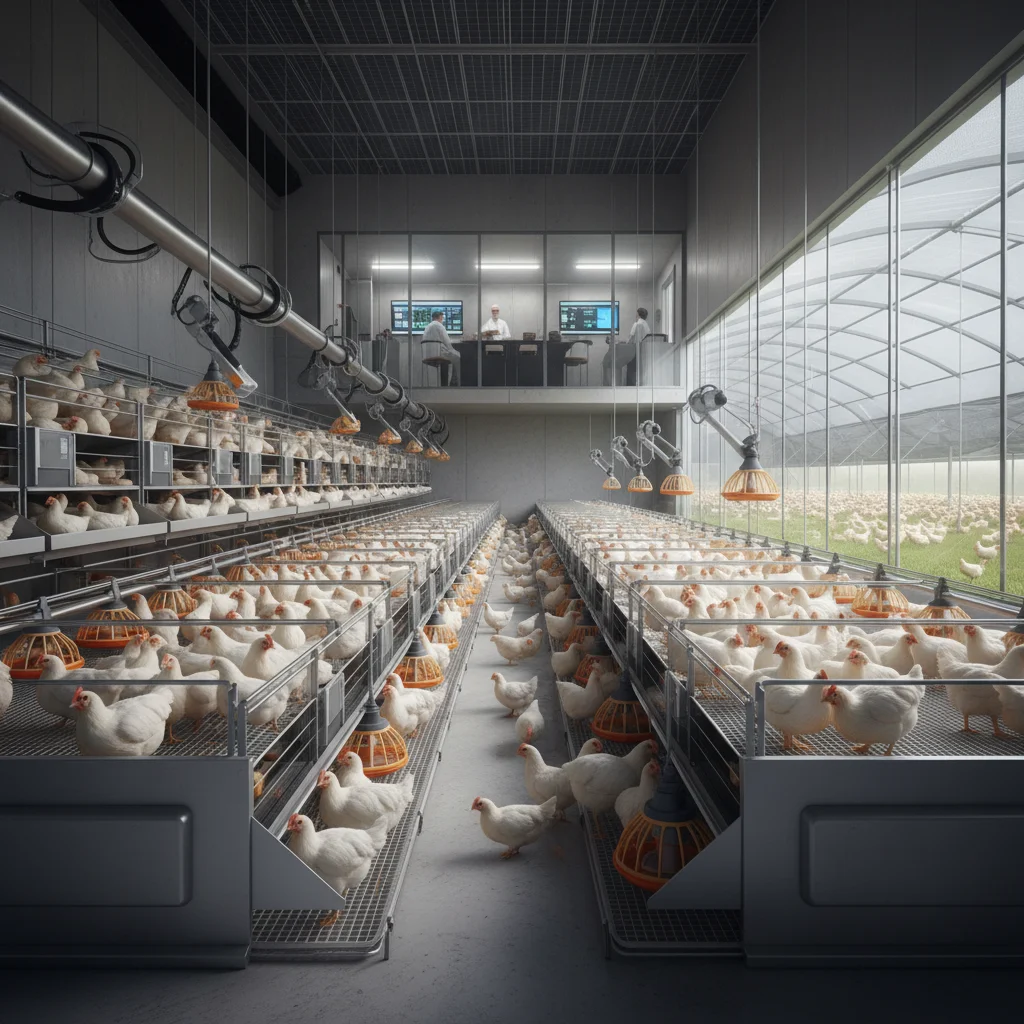
Technological innovations have revolutionized the chicken farming industry in recent decades across all major producing nations. Automated feeding and watering systems, climate-controlled housing, genetic improvements, and data analytics have dramatically increased productivity. These advancements have made poultry production one of the most technologically advanced agricultural sectors, continuously improving efficiency and animal welfare standards.
The economic viability depends on numerous factors including feed costs (typically 60-70% of total costs), market prices, production efficiency, and management expertise. Profit margins can be slim but volume-driven, making economies of scale crucial for commercial success. This calculator helps prospective and current farmers across 50 countries assess the economic potential of their Chicken Farming ventures with precision.
Global Poultry Statistics
- Global production: 133 million metric tons annually
- Growth rate: 3-4% per year worldwide
- Top producers: USA, China, Brazil, EU
- Feed conversion: 1.6-1.8 kg feed/kg live weight
External Resource:
For comprehensive guidelines on sustainable poultry practices and global standards across 50 countries, visit the Food and Agriculture Organization (FAO) poultry production portal, which provides authoritative information on best practices, market trends, and sustainability in Chicken Farming worldwide.
Poultry Calculations & Formulas
Key Poultry Formulas
Annual Revenue Calculation
Total Annual Costs
Feed Conversion Ratio (FCR)
Return on Investment (ROI)
Poultry Example Calculation
Scenario: 1,000 broiler chickens for 42 days
- • Average weight: 2.5 kg/bird
- • Price: $3.50/kg live weight = $8,750 total revenue
- • Feed consumption: 4.2 kg/bird @ $0.45/kg = $1,890
- • Chicks cost: $1.00/bird = $1,000
- • Labor: $1,500/month (pro-rated) = $2,100
- • Other costs: $1,200
- • Total Costs: $6,190
- • Net Profit: $2,560
- • ROI: 41.4% (assuming $6,190 total investment)
- • FCR: 1.68 (4.2 kg feed ÷ 2.5 kg weight)
This example demonstrates the importance of feed efficiency and cost control in Chicken Farming profitability.
Key Performance Indicators
- • Target FCR: 1.5-1.8 for broilers
- • Mortality rate: <5% per cycle
- • Production cycles: 5-6 batches/year for broilers
- • Egg production: 85-90% peak for layers
Poultry/Chicken farming Frequently Asked Questions
What is the minimum investment needed to start Chicken Farming?
The minimum investment varies significantly by country and scale. In Pakistan, a small-scale operation with 500 birds may require PKR 300,000-500,000, while in the US the same scale requires $5,000-$10,000. Key costs include housing, equipment, chicks, feed inventory, and working capital. Our calculator helps estimate specific investment needs for different scales across 50 countries.
How much space is required per chicken farming in different systems?
Space requirements vary by country regulations and system. In intensive operations in the US, broilers require 0.07-0.09 m²/bird, while EU regulations require 0.09-0.12 m²/bird. In Pakistan and India, backyard systems often provide more space. Free-range operations require significantly more space - typically 1-4 m²/bird outdoors across all countries.
What are the main challenges in commercial operations across different countries?
Major challenges vary by country: In Pakistan, feed cost volatility and energy costs; in Brazil, export market access; in the US, animal welfare regulations; in China, disease management and environmental regulations. Successful Chicken Farming requires adapting to local challenges through proactive biosecurity measures, financial planning, market analysis, and sustainable waste management practices.
Which countries offer the best profitability for poultry operations?
Profitability depends on market conditions, feed costs, and efficiency. Brazil often leads in export profitability due to feed cost advantages. Pakistan shows high growth potential with increasing domestic demand. The US offers stable returns with advanced technology. Our calculator adjusts for country-specific factors across 50 nations to provide accurate profitability projections.
How important is breed selection in different climatic conditions?
Breed selection is critical and varies by climate. In hot climates like Pakistan and India, heat-tolerant breeds like Cobb 500 perform better. In colder climates like Russia and Canada, breeds with better cold resistance are preferred. Commercial broiler operations globally use hybrid breeds for rapid growth and feed efficiency, but local adaptation is crucial for success.
Related Farming Calculators
Dairy Farming Calculator
Milk production, feed efficiency, and profitability analysis for dairy operations.
Cattle Farming Calculator
Beef production, grazing management, and cattle farming economics.
Goat Farming Calculator
Meat and dairy goat production, herd management, and profitability analysis.
Sheep Farming Calculator
Wool and meat production, flock management, and sheep farming economics.