
🦆
Duck Farming Calculator
Calculate profitability and costs for duck farming operations. Includes egg production and meat yield calculations.
Calculate Duck Farming →Calculate profitability and costs for your turkey farming operation
Total turkeys in your farming operation
Total Revenue
$0
Total Costs
$0
Net Profit
$0
ROI
0%
Enter your turkey farming parameters to get personalized recommendations.
Get instant answers to your turkey farming questions
Hello! I'm your AI Turkey Farming Assistant. Ask me anything about turkey farming, profitability, best practices, or calculations. I can help you optimize your turkey farming operation for better results.
Start by entering the number of turkeys in your farming operation. This forms the basis for all calculations in turkey production.
Input daily feed consumption per turkey and feed cost. Feed accounts for 60-70% of total costs in poultry operations.
Set growth period and target weight. Most commercial turkeys reach market weight in 14-22 weeks of production.
Analyze profitability metrics and get personalized recommendations for optimizing your poultry operation.
Our turkey farming calculator uses industry-standard formulas to provide accurate profitability projections. The calculations consider all major cost factors in poultry operations.
1. Total Feed Cost:
Total Feed Cost = Number of Turkeys × Daily Feed Consumption (kg) × Growth Period (days) × Feed Cost per kg
2. Poult Costs:
Total Poult Cost = Number of Turkeys × Cost per Poult
3. Operational Costs (estimated):
Operational Costs = (Feed Costs + Poult Costs) × 0.3
(Includes housing, utilities, labor, and veterinary costs)
4. Revenue Calculation:
Total Revenue = (Number of Turkeys × (1 - Mortality Rate)) × Target Weight (kg) × Selling Price per kg
5. Profit & ROI:
Net Profit = Total Revenue - Total Costs


ROI = (Net Profit ÷ Total Costs) × 100
For a turkey farming operation with 500 turkeys, consuming 0.25kg of feed daily at $0.45/kg over 18 weeks (126 days):
These formulas provide a comprehensive view of poultry economics, helping farmers make informed decisions about their operations.
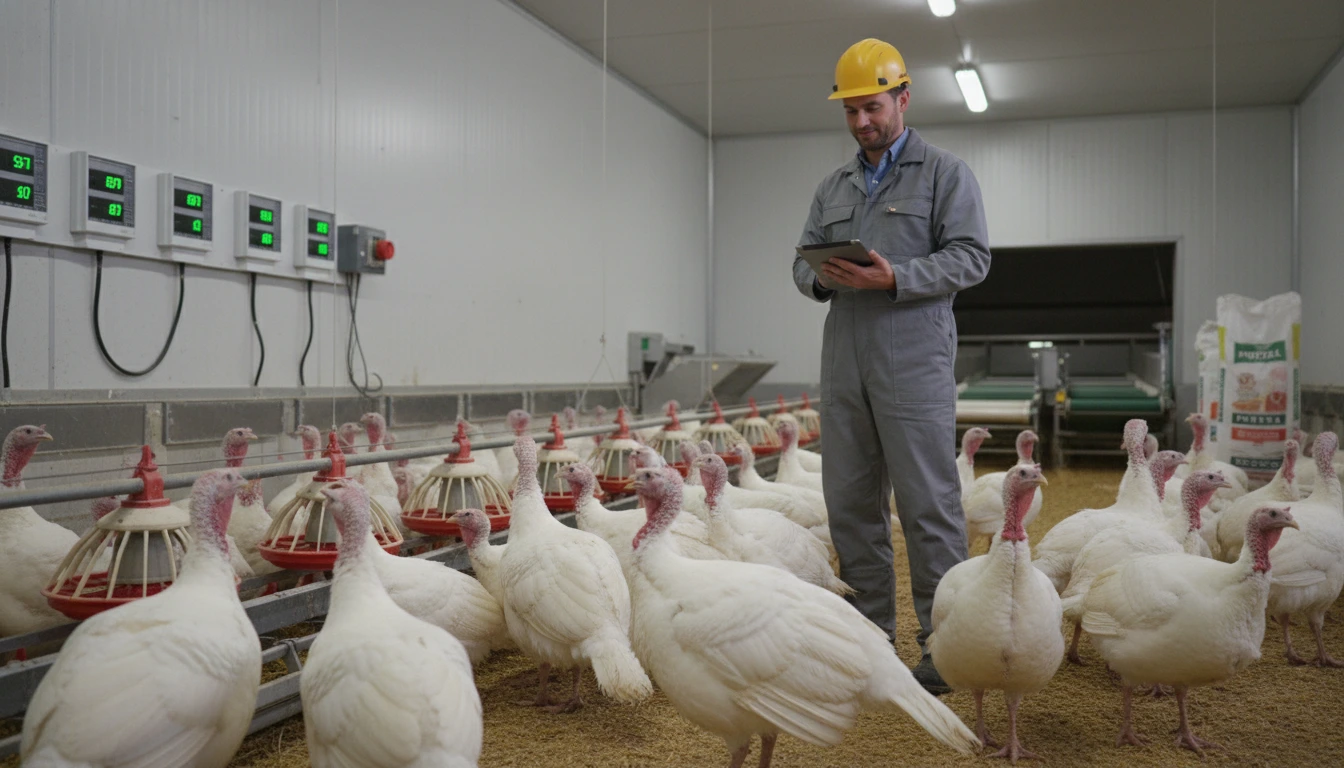
Turkey farming is an essential segment of the poultry industry that focuses on raising turkeys for meat production. This agricultural practice has evolved significantly over the years, transitioning from traditional free-range systems to sophisticated commercial operations. Modern turkey production incorporates advanced breeding techniques, nutritional science, and biosecurity measures to optimize production efficiency.
The importance of this agricultural sector extends beyond meat production. It contributes significantly to rural economies, provides employment opportunities, and supports related industries such as feed production, veterinary services, and equipment manufacturing. With growing consumer demand for lean protein sources, turkey production plays a crucial role in global food security.
Successful operations require careful planning and management. From selecting the right breed to implementing efficient feeding programs, every aspect impacts profitability. This is where tools like our calculator become invaluable, helping farmers make data-driven decisions.
Our calculator serves multiple use cases for different stakeholders. For new entrepreneurs considering entering the poultry business, it provides essential feasibility analysis. Existing farmers can use it to optimize their operations, while agricultural students and researchers benefit from its educational value.
One key application is comparing different production systems. Whether considering conventional indoor systems, free-range operations, or organic production methods, the calculator helps evaluate the financial implications of each approach. This comparative analysis is crucial for making informed investment decisions.
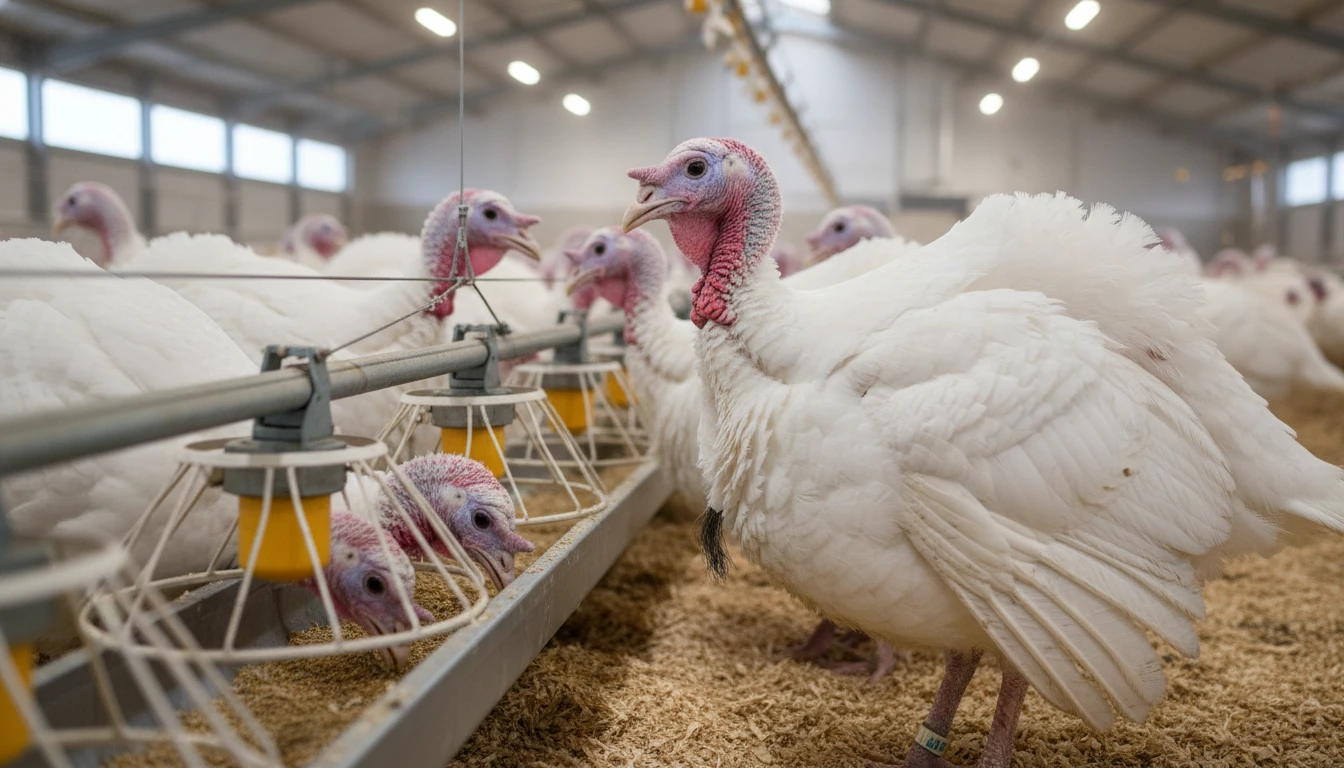
Choosing the right turkey breed is fundamental to success. Commercial breeds like Broad-Breasted White offer rapid growth and high meat yields, making them ideal for meat production. Heritage breeds, while slower growing, often command premium prices in specialty markets. Consider your target market and production goals when selecting breeds for your operation.
Proper nutrition is the cornerstone of profitable operations. Turkeys have specific nutritional requirements that change throughout their growth stages. Implement a phased feeding program with starter, grower, and finisher rations optimized for each growth phase.
Implementing robust biosecurity measures is non-negotiable in modern poultry production. Develop comprehensive vaccination programs, maintain strict visitor protocols, and establish quarantine procedures for new birds. Regular health monitoring and prompt veterinary intervention are essential.
Proper housing design significantly impacts productivity. Ensure adequate ventilation, temperature control, and space allocation. Modern facilities often incorporate automated systems for feeding, watering, and environmental control to optimize labor efficiency.
For more detailed information on poultry nutrition and management, refer to the USDA Poultry Production Resources , an authoritative source for agricultural best practices.
Understanding turkey production requires knowledge of related poultry concepts. Feed conversion ratio (FCR), mortality rates, and growth curves are fundamental metrics in all poultry operations. These concepts apply equally to other poultry sectors, such as chicken farming, duck farming, and layer farming.
Market dynamics also play a crucial role in profitability. Seasonal demand patterns, particularly around holidays, significantly impact pricing strategies. Understanding these market forces helps farmers optimize production schedules and marketing approaches.
Sustainability considerations are increasingly important. Efficient resource utilization, waste management, and environmental stewardship practices not only reduce operational costs but also meet growing consumer demand for sustainable protein sources.
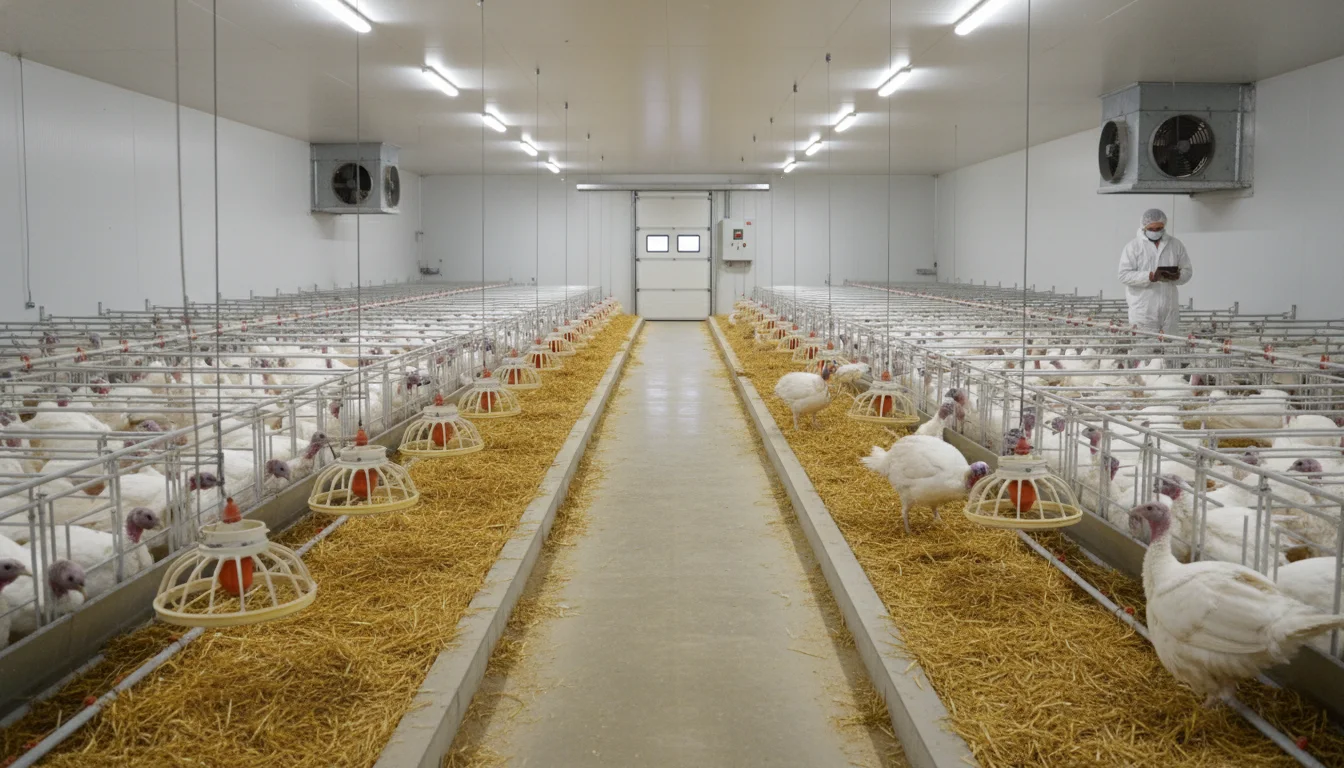
Successful operations combine scientific knowledge with practical management skills. By leveraging tools like our advanced calculator, farmers can make informed decisions that optimize profitability while maintaining sustainable practices. Whether you're starting a new operation or improving an existing one, accurate calculations and careful planning are essential for success.
The future looks promising, with technological advancements and growing market opportunities. By staying informed about industry trends and utilizing modern tools, farmers can build resilient and profitable enterprises that contribute to food security and economic development.