
Tilapia Farming Calculator
Advanced Free AI Assistant for Aquaculture Planning and Profitability Analysis
Tilapia Farming Calculator
Input Parameters
Pond Dimensions
Stocking Parameters
Feed Parameters
Economic Parameters
Calculation Results
Pond Statistics
Stocking Results
Feed & Growth Results
Economic Analysis
Free AI Assistant Recommendations
• Based on your inputs, your stocking density of 15 fish/m² is optimal for good growth with moderate aeration.
• Consider improving your FCR to 1.3 to reduce feed costs by approximately 13%.
• Your survival rate of 85% is good, but can be improved to 90%+ with better water quality management.
Recent Calculations
Tilapia Farming Calculation Formulas
Pond Calculations
Pond Area: Length × Width
Example: 20m × 15m = 300m²
Water Volume: Area × Depth
Example: 300m² × 1.5m = 450m³
Stocking Quantity: Area × Stocking Density
Example: 300m² × 15 fish/m² = 4,500 fish
Growth & Feed Calculations
Final Biomass: Harvest Fish × Average Weight
Average weight typically reaches 500-700g in 5-8 months
Total Feed Required: Biomass Gain × FCR
FCR (Feed Conversion Ratio) = Feed given / Weight gained
Economic Calculations
Total Costs: Fingerling Cost + Feed Cost + Other Expenses
Other expenses include labor, electricity, maintenance
Revenue: Final Biomass × Selling Price
Net Profit: Revenue - Total Costs
Return on Investment (ROI): (Net Profit / Total Costs) × 100%
Key Performance Indicators
- Optimal FCR: 1.2-1.5 (lower is better)
- Good Survival Rate: 85-95%
- Target Harvest Weight: 500-700g per fish
How to Use the Tilapia Farming Calculator
Enter Pond Dimensions
Input the length, width, and depth of your tilapia pond. The calculator supports both meters and feet.
Set Stocking Parameters
Specify stocking density, initial fish size, and expected survival rate for your tilapia farming operation.
Configure Feed Details
Enter feed conversion ratio (FCR), feed price, and culture period. Lower FCR indicates better feed efficiency.
Add Economic Factors
Input costs for fingerlings, labor, and expected selling price. Select your currency for accurate calculations.
Analyze Results
Review calculated biomass, feed requirements, costs, revenue, and profitability. Save or share your results.
Pro Tips for Accurate Calculations
- Measure pond dimensions accurately for precise volume calculations
- Factor in local climate conditions that affect tilapia growth rates
- Consider water exchange rates when calculating stocking density
- Adjust FCR based on feed quality and feeding management practices
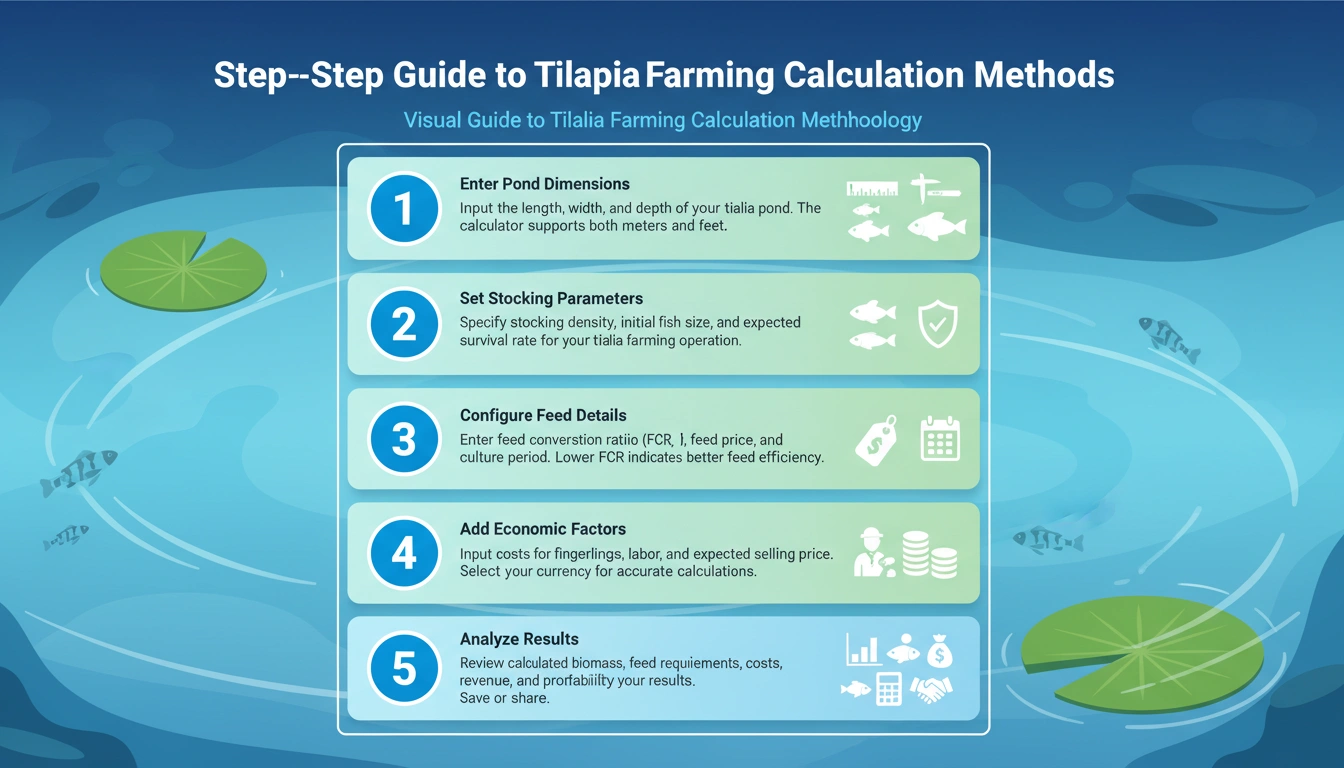
Visual guide to tilapia farming calculation methodology
Frequently Asked Questions about Tilapia Farming
What is the ideal stocking density for tilapia farming?
The ideal stocking density for tilapia farming typically ranges from 10-30 fish per square meter in intensive systems, but depends on water quality, aeration, and management practices. Our calculator helps determine the optimal density for your specific conditions. For semi-intensive systems, 5-10 fish/m² is common, while extensive systems may have 1-5 fish/m².
How do I calculate feed requirements for tilapia?
Feed requirements are calculated based on fish biomass, desired growth rate, and feed conversion ratio (FCR). The tilapia farming calculator automates this complex calculation, considering fish size, water temperature, and feeding frequency. Generally, tilapia are fed 2-5% of their body weight daily, adjusted based on water temperature and growth stage.
What is a good FCR for tilapia farming?
A good Feed Conversion Ratio (FCR) for tilapia farming ranges from 1.2 to 1.8 under optimal conditions. Lower FCR values indicate more efficient feed utilization. The calculator uses 1.5 as a default but allows adjustment based on your specific feed quality and management. Excellent management with high-quality feed can achieve FCR as low as 1.2.
How long does it take to grow tilapia to market size?
Tilapia typically reach market size (500-600 grams) in 5-8 months under optimal temperature and feeding conditions. Growth rate depends on water temperature, feed quality, stocking density, and genetics. The calculator estimates growth timeline based on these factors. In tropical climates with temperatures above 25°C, growth is faster than in cooler conditions.
Can this calculator be used for different tilapia farming systems?
Yes, the tilapia farming calculator is adaptable to various systems including pond culture, cage culture, recirculating aquaculture systems (RAS), and aquaponics. You can adjust parameters to match your specific farming method and scale. The calculator also supports different currencies for global applicability in tilapia farming operations.
Comprehensive Guide to Tilapia Farming: Techniques, Benefits, and Best Practices
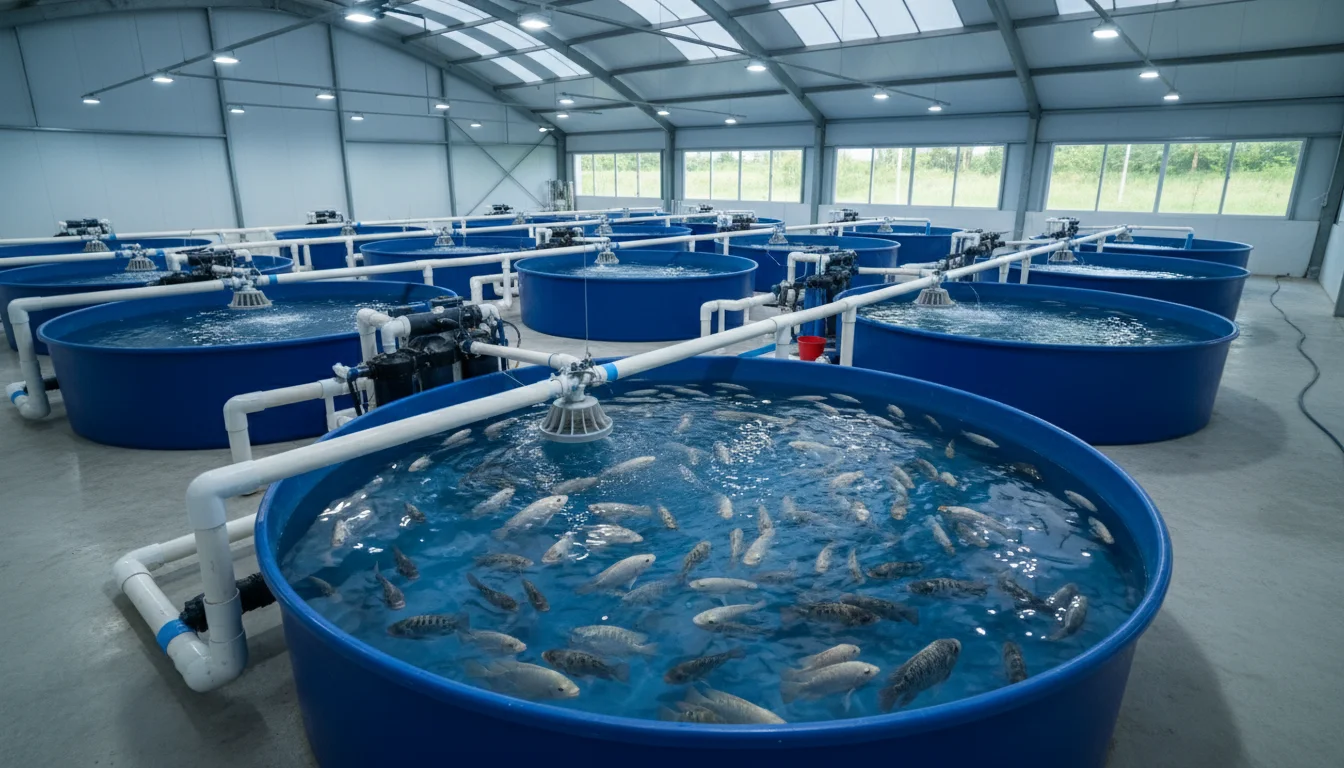
Modern tilapia farming operation with optimal water conditions for fish health and growth
What is Tilapia Farming and Why It Matters
Tilapia farming, a vital component of global aquaculture, involves the controlled cultivation of tilapia fish species for food production. As one of the most farmed fish worldwide, tilapia farming contributes significantly to food security, economic development, and sustainable protein production. The importance of tilapia farming extends beyond mere food production; it represents a scalable solution to growing global protein demands while offering relatively low environmental impact compared to many terrestrial livestock systems.
Modern tilapia farming operations utilize various systems including pond culture, cage culture in lakes or reservoirs, and recirculating aquaculture systems (RAS). Each method offers distinct advantages depending on available resources, climate conditions, and market requirements. Successful tilapia farming requires careful planning, precise calculation of inputs, and continuous monitoring of water quality parameters to ensure optimal growth conditions.
Benefits and Use Cases of Tilapia Farming
Tilapia farming offers numerous benefits that explain its global popularity. First, tilapia are remarkably adaptable to various environmental conditions, thriving in different water quality parameters and feeding regimes. Their omnivorous diet allows for flexible feeding strategies using both natural food sources and formulated feeds. From an economic perspective, tilapia farming provides relatively quick returns on investment compared to many other aquaculture species, with market-ready fish typically produced within 5-8 months.
The use cases for tilapia farming extend across multiple scales and contexts. Small-scale family operations benefit from tilapia's resilience and relatively simple husbandry requirements, while large commercial enterprises leverage advanced technologies for intensive production. Additionally, tilapia farming integrates well with agricultural systems through aquaponics, where fish waste fertilizes plant crops in a symbiotic relationship. For those interested in related aquaculture ventures, our oyster farming calculator provides similar planning tools for shellfish cultivation.
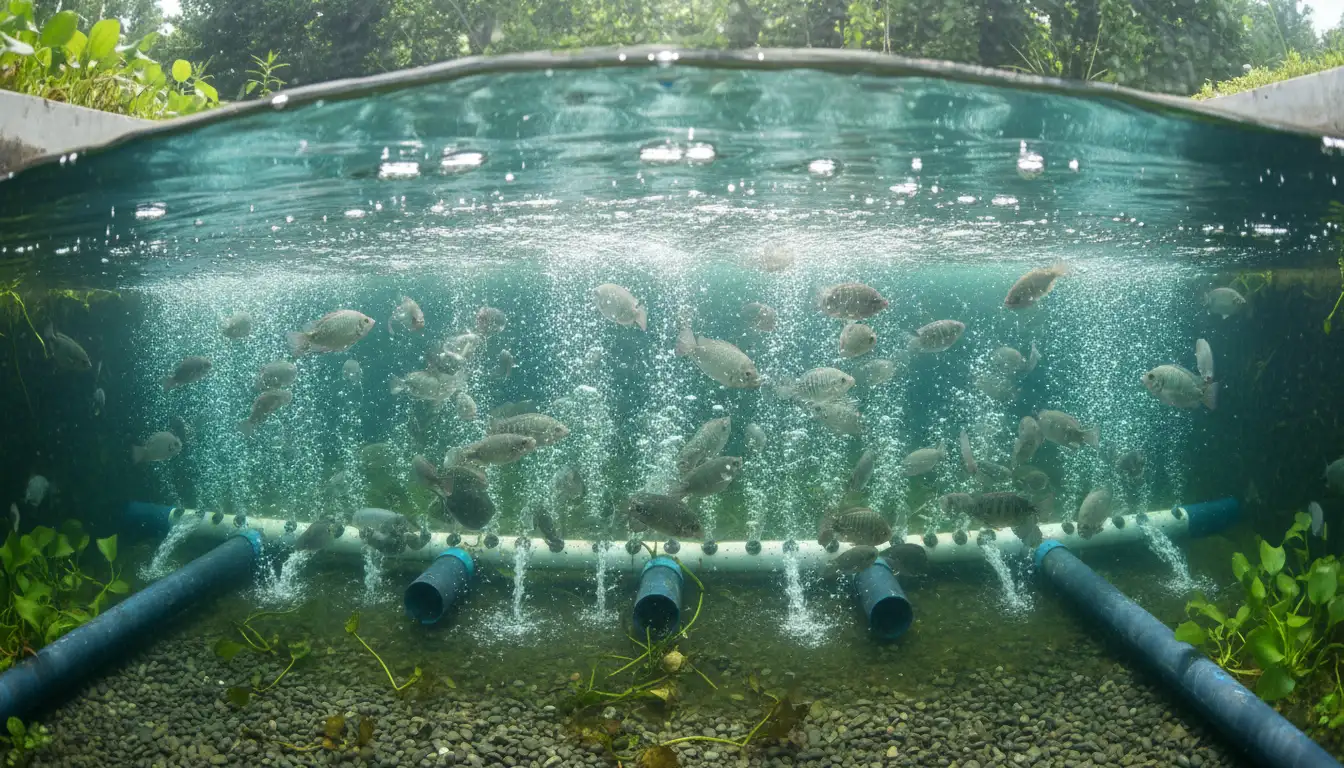
Tilapia feeding in well-aerated pond with proper water circulation system
Tips and Best Practices for Successful Tilapia Farming
Successful tilapia farming begins with proper site selection and pond preparation. Ensure adequate water supply with appropriate quality parameters, particularly temperature (optimal range 25-30°C), pH (6.5-9.0), and dissolved oxygen (above 5 mg/L). Stocking density should align with your system's carrying capacity; overstocking leads to stunted growth and increased disease susceptibility. Regular water quality monitoring is essential for maintaining optimal conditions.
Feed management represents a critical component of tilapia farming economics. Implement feeding schedules based on fish size and water temperature, typically 2-3 times daily. Monitor feed conversion ratios closely to optimize feed utilization and reduce waste. For disease prevention, maintain good water quality, avoid stress factors, and consider routine health checks. When planning complementary aquaculture ventures, our crab farming calculator offers similar planning capabilities for crustacean aquaculture.
Advanced Techniques in Modern Tilapia Farming
Modern tilapia farming incorporates several advanced techniques to enhance productivity and sustainability. Selective breeding programs have developed improved strains with faster growth rates, better feed conversion efficiency, and increased disease resistance. Water quality management technologies, including automated monitoring systems and efficient aeration equipment, help maintain optimal environmental conditions with reduced labor requirements.
Integrated multi-trophic aquaculture (IMTA) systems represent another innovative approach, where tilapia farming combines with other species to utilize nutrients more efficiently and reduce environmental impact. Additionally, precision feeding technologies optimize feed delivery based on real-time fish behavior and environmental conditions. For those exploring other finfish options, the lobster farming calculator provides specialized tools for high-value crustacean cultivation.
Global Perspectives and Market Considerations
Tilapia farming operates within a global market context influenced by regional preferences, trade regulations, and consumer trends. Major producing countries include China, Indonesia, Egypt, Brazil, and the Philippines, each with distinct production systems and market channels. Understanding regional differences in preferred size grades, processing methods, and distribution channels is essential for market success.
Certification programs and sustainability standards increasingly influence market access and premium pricing opportunities. Implementing traceability systems and adhering to responsible farming practices not only meets market requirements but also enhances operational efficiency. For comprehensive information on aquaculture best practices, refer to the Food and Agriculture Organization's aquaculture resources, which provides authoritative guidance on sustainable fish farming practices worldwide.
Key Takeaways for Aspiring Tilapia Farmers
- Start with proper planning using accurate calculations for stocking density, feed requirements, and economic projections
- Invest in water quality management as the foundation of successful tilapia farming operations
- Select appropriate genetics matched to your specific environmental conditions and market requirements
- Implement feeding strategies that optimize growth while minimizing environmental impact
- Develop marketing plans early, considering both local and potential export market opportunities
Related Aquaculture Calculators
Explore our suite of specialized agriculture and farming calculators to optimize your aquaculture operations:
Oyster Farming Calculator
Calculate stocking density, growth rates, and profitability for oyster cultivation operations.
Calculate NowCrab Farming Calculator
Plan mud crab or mangrove crab farming with accurate stocking and feed calculations.
Calculate NowLobster Farming Calculator
Optimize spiny lobster or freshwater lobster aquaculture with precise planning tools.
Calculate Now