
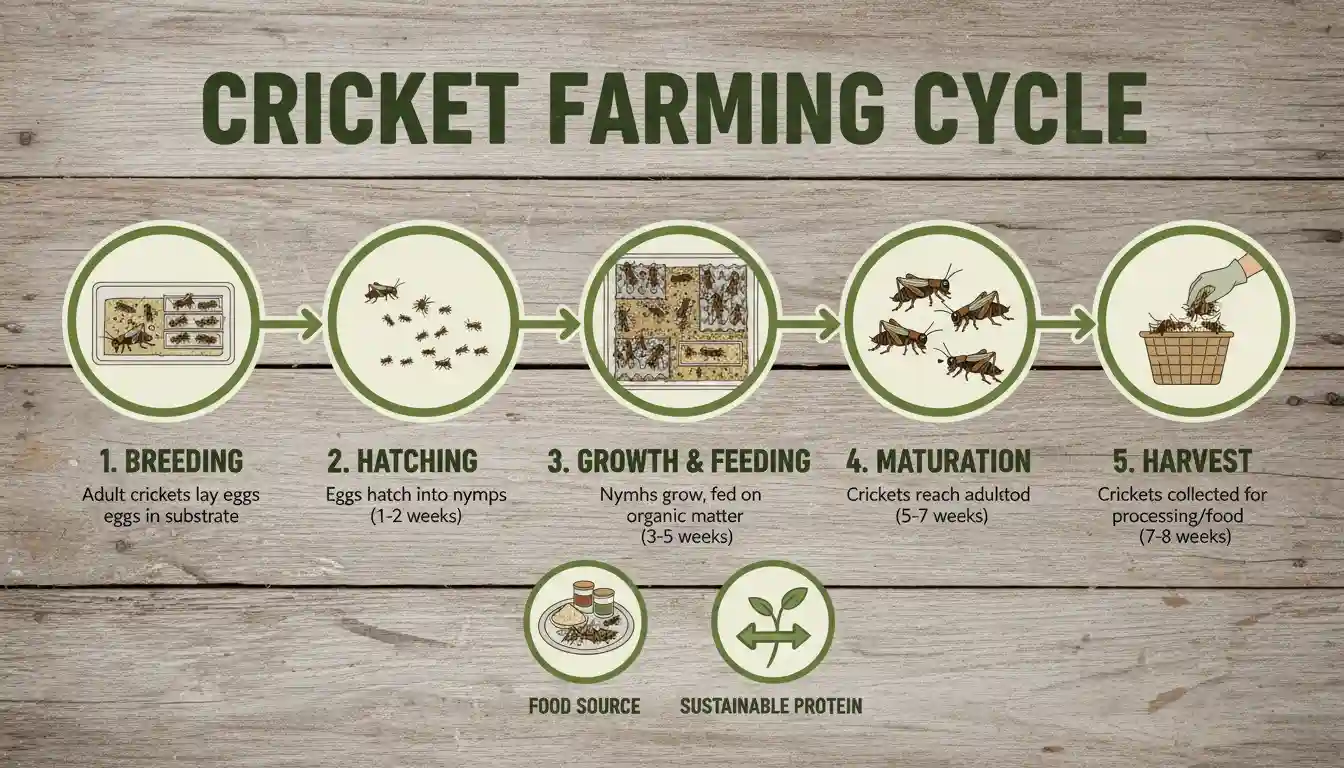
Cricket Farming: The Future of Sustainable Protein Production
Sustainable Entomoculture offers high-protein food with minimal environmental impact
What is Cricket Farming and Why It Matters
Cricket farming, also known as cricket rearing or cricket cultivation, is the practice of raising crickets for various purposes including human consumption, animal feed, and fishing bait. With the global population projected to reach 9.7 billion by 2050, traditional livestock farming is becoming increasingly unsustainable due to its high resource consumption and environmental impact. Cricket rearing offers a viable alternative that requires significantly less land, water, and feed while producing high-quality protein.
The cricket rearing industry has seen exponential growth in recent years, driven by increasing awareness of sustainable food sources and the nutritional benefits of edible insects. Crickets contain up to 70% protein by dry weight, along with essential amino acids, vitamins (particularly B12), and minerals like iron and zinc. They also contain healthy fats and are a good source of fiber in the form of chitin.
Benefits and Use Cases of Cricket Farming
Environmental Benefits
Cricket rearing produces significantly fewer greenhouse gases than traditional livestock. While cattle produce approximately 2.8 kg of CO₂ equivalent per kg of protein, crickets produce only 0.06 kg. Additionally, cricket rearing requires about 90% less water than beef production and can be done vertically, requiring minimal land area.
Nutritional Benefits
Crickets are a complete protein source containing all nine essential amino acids. They're particularly rich in lysine, an amino acid often lacking in plant-based diets. Cricket powder contains more iron than spinach and more calcium than milk by weight. The chitin in cricket exoskeletons may also provide prebiotic benefits for gut health.
Economic Opportunities
Cricket rearing creates economic opportunities at various scales, from small household operations to large commercial facilities. The global edible insect market is projected to reach $8 billion by 2030, with crickets representing a significant portion of this growth. Entrepreneurs can enter the market with relatively low startup costs compared to traditional livestock farming.
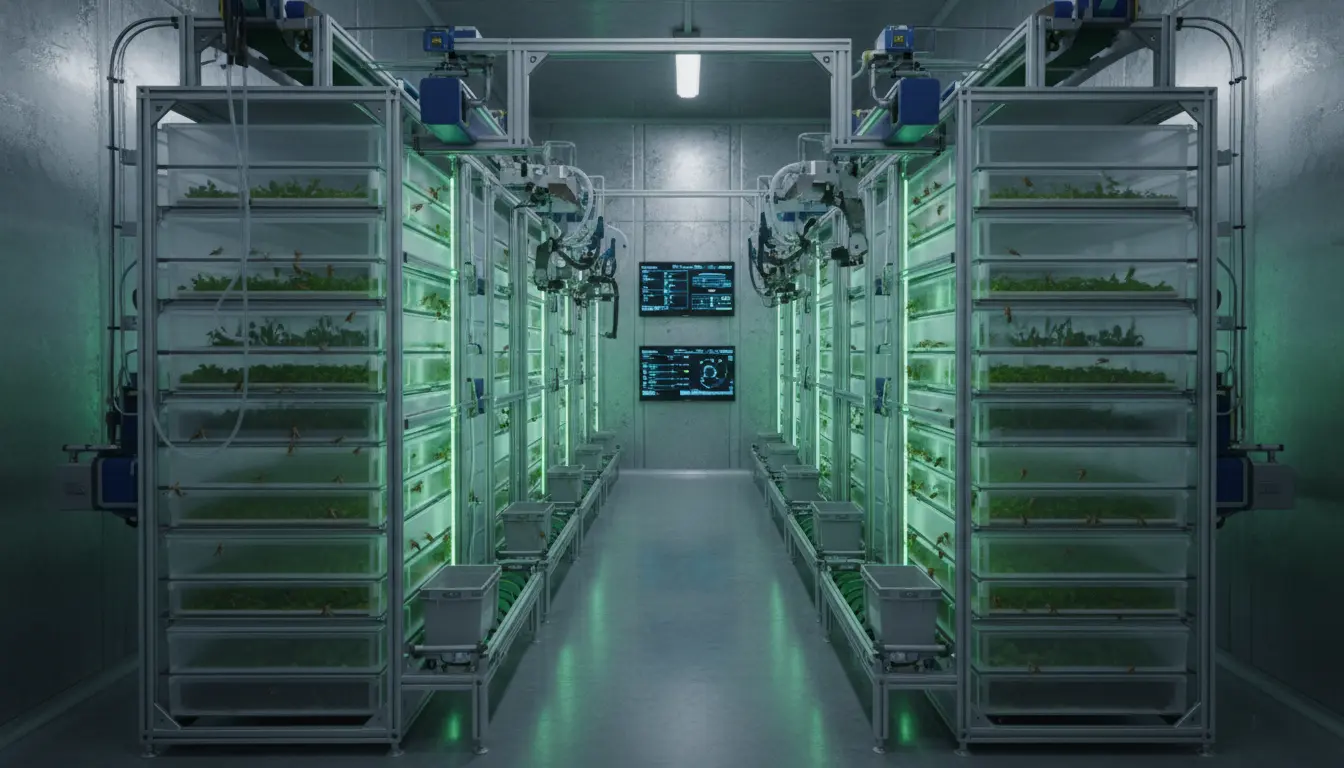
Modern cricket rearing setups maximize production in minimal space through vertical farming techniques
Tips and Best Practices for Successful Cricket rearing
1. Start with the Right Species
Different cricket species have different characteristics. The house cricket (Acheta domesticus) is most commonly farmed due to its rapid growth and high reproduction rate. The banded cricket (Gryllodes sigillatus) is more resistant to disease, while the field cricket (Gryllus bimaculatus) grows larger. Choose species based on your climate, market demand, and farming expertise.
2. Optimize Environmental Conditions
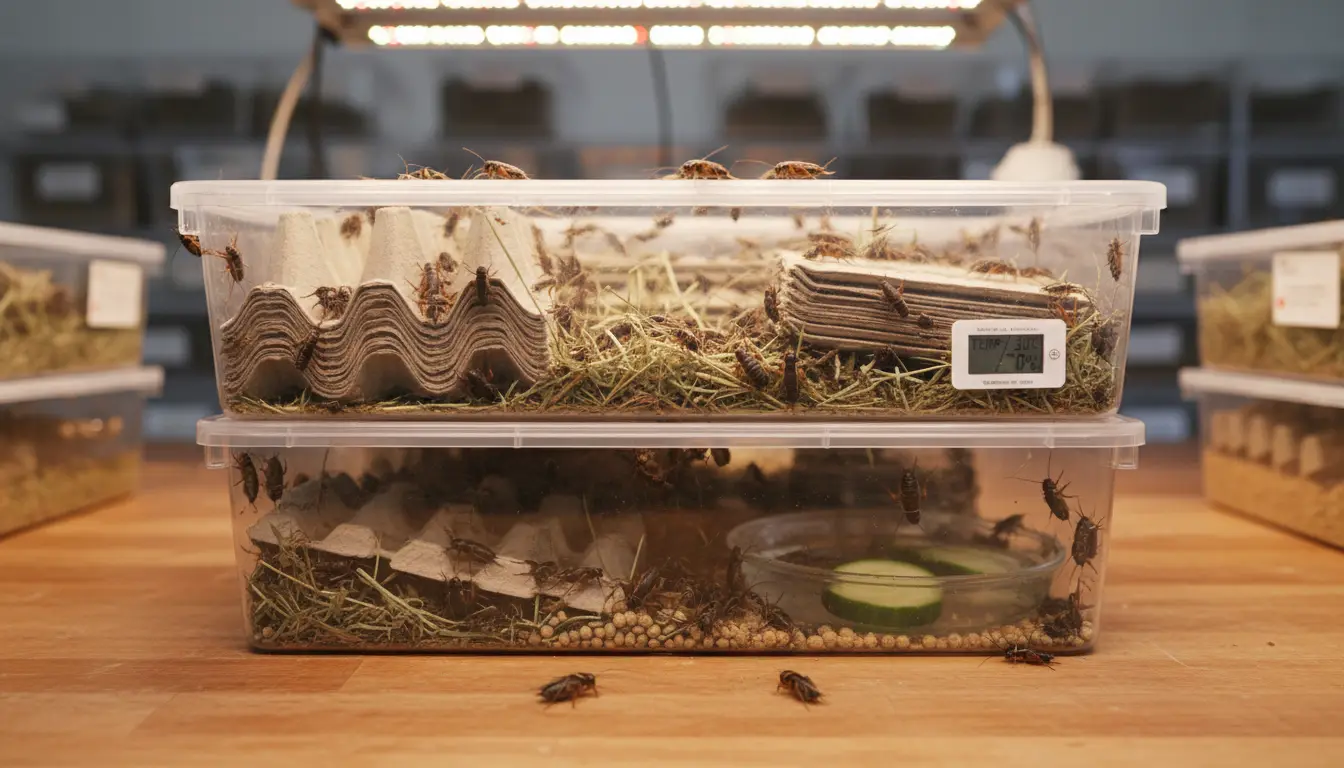
Crickets thrive at temperatures between 28-32°C (82-90°F) and humidity levels of 60-70%. Use thermostats and humidistats to maintain these conditions consistently. Proper ventilation is crucial to prevent ammonia buildup and reduce disease risk. Consider using automated climate control systems for larger operations.
3. Implement Efficient Feeding Strategies
Develop a balanced feed formula that provides adequate protein (15-20%), carbohydrates, vitamins, and minerals. Many successful cricket farmers use a combination of commercial poultry feed supplemented with vegetables and grains. Feed should be provided in shallow trays to minimize waste and contamination.
4. Manage Breeding Cycles Effectively
Maintain separate breeding, growing, and harvesting containers to streamline operations. Implement staggered breeding cycles to ensure consistent production. Keep detailed records of breeding pairs, hatch rates, and growth patterns to optimize your breeding program over time.
Related Concepts and Complementary Practices
Cricket rearing often complements other forms of bee farming and insect agriculture. Many sustainable farms integrate multiple insect species to create diversified income streams and enhance ecosystem services. For example, some operations combine cricket farming with silkworm farming to utilize different feed sources and market opportunities.
Another related practice is butterfly farming, which focuses on conservation and ecotourism rather than food production. While different in purpose, butterfly farming shares many techniques with cricket farming, particularly in climate control and breeding management.
For authoritative information on insect farming regulations and best practices, visit the Food and Agriculture Organization's edible insects portal, which provides comprehensive guidelines and research on sustainable insect farming practices worldwide.
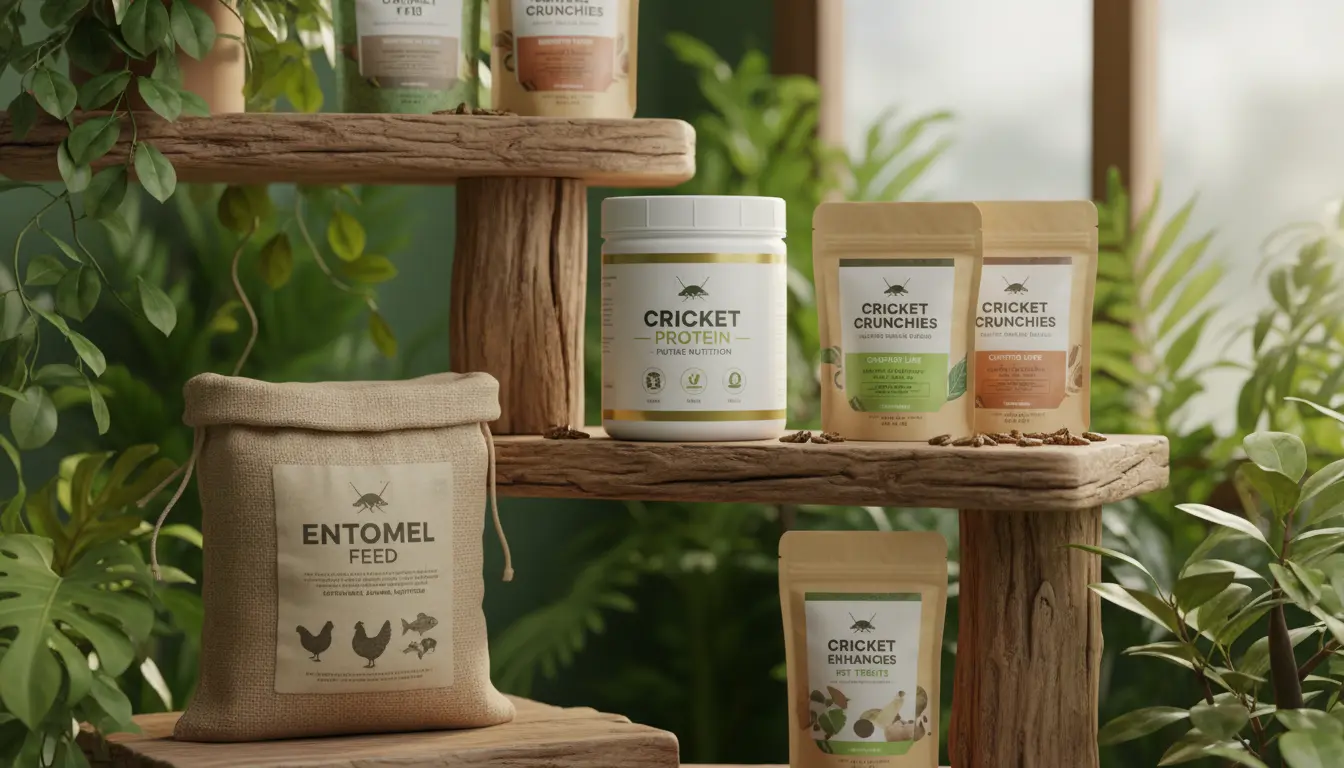
Cricket-based products including protein powder, snacks, and animal feed represent the future of sustainable nutrition
The Future of Cricket rearing
As technology advances and consumer acceptance grows, cricket farming is poised to become a mainstream component of the global food system. Innovations in automation, feed optimization, and processing technology are making cricket rearing more efficient and scalable. With the right approach and tools like our cricket rearing calculator, entrepreneurs and farmers can successfully enter this growing market and contribute to a more sustainable food future.
Whether you're considering a small home setup or planning a commercial operation, proper planning and calculation are essential for success. Use our free cricket rearing calculator to model different scenarios, optimize your operation, and make informed decisions about your cricket farming venture.