
Bison Farming Calculator
Calculate costs, space requirements, and profitability for bison farming operations.
Calculate NowAdvanced AI-Powered Agriculture Tool
Recommended: Start with 10-100 birds
Adult emus eat 1.5-2.5 kg daily
200-400 m² recommended for adults
Hello! I'm your AI Emu Farming Assistant. I can help you with:
Based on your inputs, the AI recommends:
Example: 50 emus × 1.8 kg × $0.85 × 365 = $27,922.50
Includes grazing area, shelter, and breeding space
Average oil yield: 5-7 liters per bird at 14-18 months
Includes all operational and capital expenses
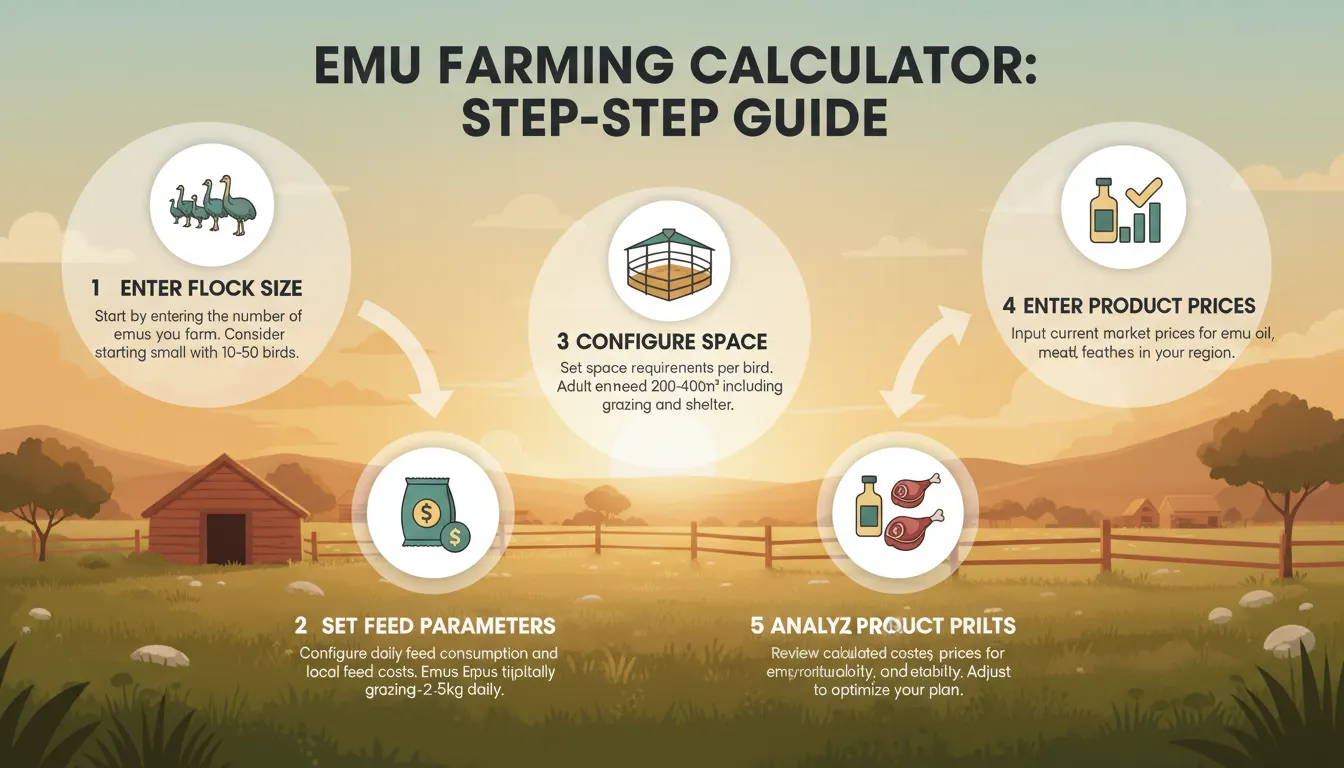
Start by entering the number of emus you plan to farm. Consider starting small with 10-50 birds.
Configure daily feed consumption and local feed costs. Emus typically eat 1.5-2.5kg daily.
Set space requirements per bird. Adult emus need 200-400m² including grazing and shelter.
Input current market prices for emu oil, meat, and feathers in your region.
Review calculated costs, revenue, and profitability. Adjust inputs to optimize your plan.
Adult emus require approximately 200-400 square meters per bird, with breeding pairs needing more space. Emu chicks can be kept in smaller enclosures of 50-100 square meters. The space should include:
Proper space allocation reduces stress, prevents disease, and improves overall productivity in your emu farming operation.
An adult emu typically consumes 1.5-2.5 kg of feed daily, depending on age, activity level, and season. Chicks require specialized starter feed with higher protein content (22-24% protein), while adults do well on maintenance feed (16-18% protein).
Feed costs typically represent 60-70% of total operational expenses in emu farming. Using our emu farming calculator, you can accurately estimate feed requirements based on your specific flock size and local feed prices.
Emus reach slaughter age at 14-18 months. Initial investment returns typically begin in the second year, with full profitability achieved by year 3-4 when breeding stock is established. The timeline varies based on:
Many successful emu farming operations achieve 35-45% profit margins by year 3, making it a viable agricultural enterprise with proper planning.
Emus thrive in temperate climates similar to their native Australia. The United States, Canada, India, China, and European countries with moderate climates are suitable for emu farming. Key climate considerations include:
Our calculator includes regional adjustments for different climates and countries, helping you plan accordingly. For comparison with other livestock, check our bison farming calculator.
Primary products include emu oil (used in cosmetics and therapeutics), lean red meat, feathers for crafts and dusters, leather from hides, and fertile eggs for breeding. Each product has different market values:
Diversifying your product offerings can significantly increase profitability in emu farming operations. For other exotic animal farming calculations, see our kangaroo ranching calculator.
Calculate costs, space requirements, and profitability for bison farming operations.
Calculate NowOptimize silk production with precise calculations for feed, space, and profitability.
Calculate NowPerfect cooking times for various meats including emu, based on weight and cooking method.
Calculate NowPlan sustainable kangaroo farming operations with detailed cost and revenue projections.
Calculate Now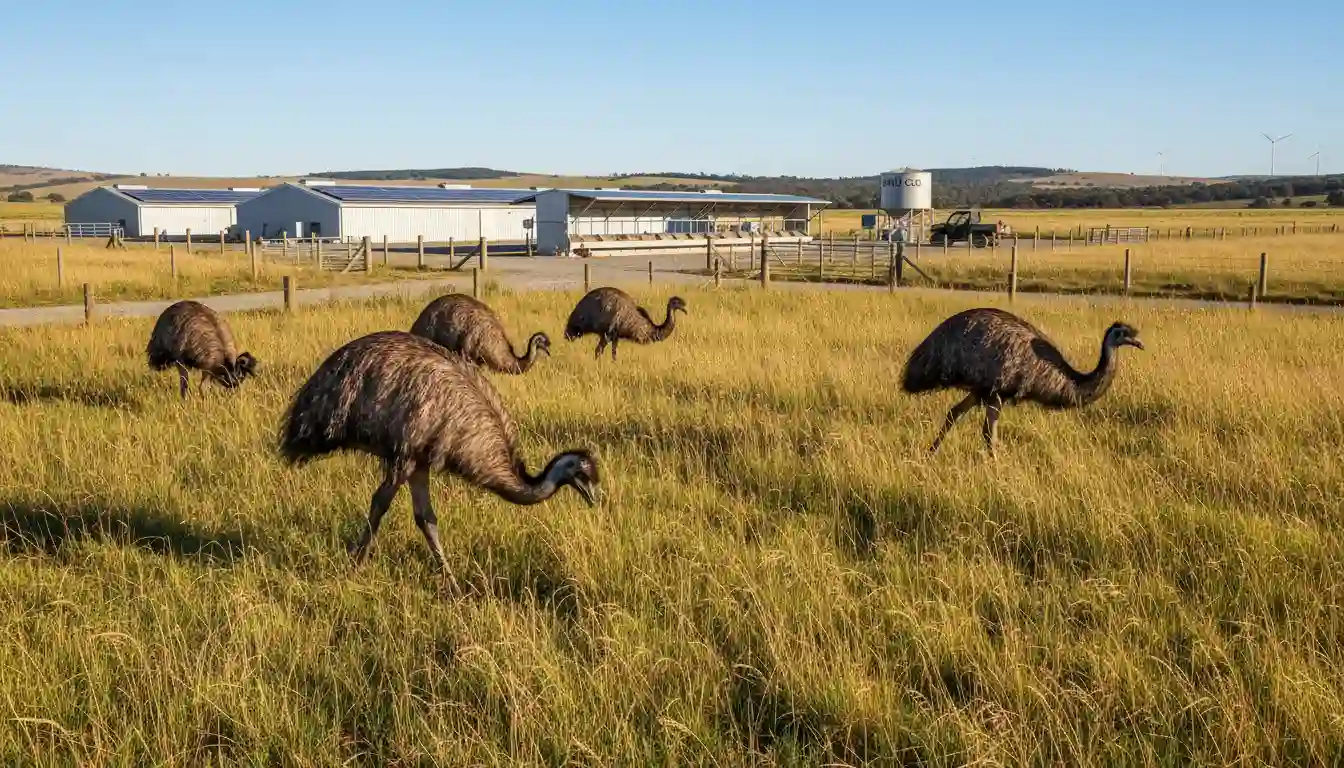
Emu farming represents one of the most promising alternative agriculture ventures in the 21st century, offering multiple revenue streams from oil, meat, feathers, and leather. With growing global demand for sustainable protein sources and natural health products, emu farming has evolved from niche exotic farming to a commercially viable agricultural enterprise.
Emu farming involves the breeding and raising of emus (Dromaius novaehollandiae), large flightless birds native to Australia, for commercial purposes. Unlike traditional livestock, emus offer multiple products from a single animal, making them exceptionally efficient for diversified farming operations. The global emu farming industry has grown steadily at 8-12% annually, driven by increasing demand for emu oil in cosmetics and pharmaceuticals, as well as premium lean meat in health-conscious markets.
The importance of emu farming extends beyond profit margins. These birds require less water than cattle (approximately 5 liters daily versus 40+ liters for cattle), produce fewer greenhouse gases, and can thrive on marginal lands unsuitable for traditional agriculture. According to the Food and Agriculture Organization of the United Nations, sustainable livestock alternatives like emu farming contribute to food security while reducing environmental impact.
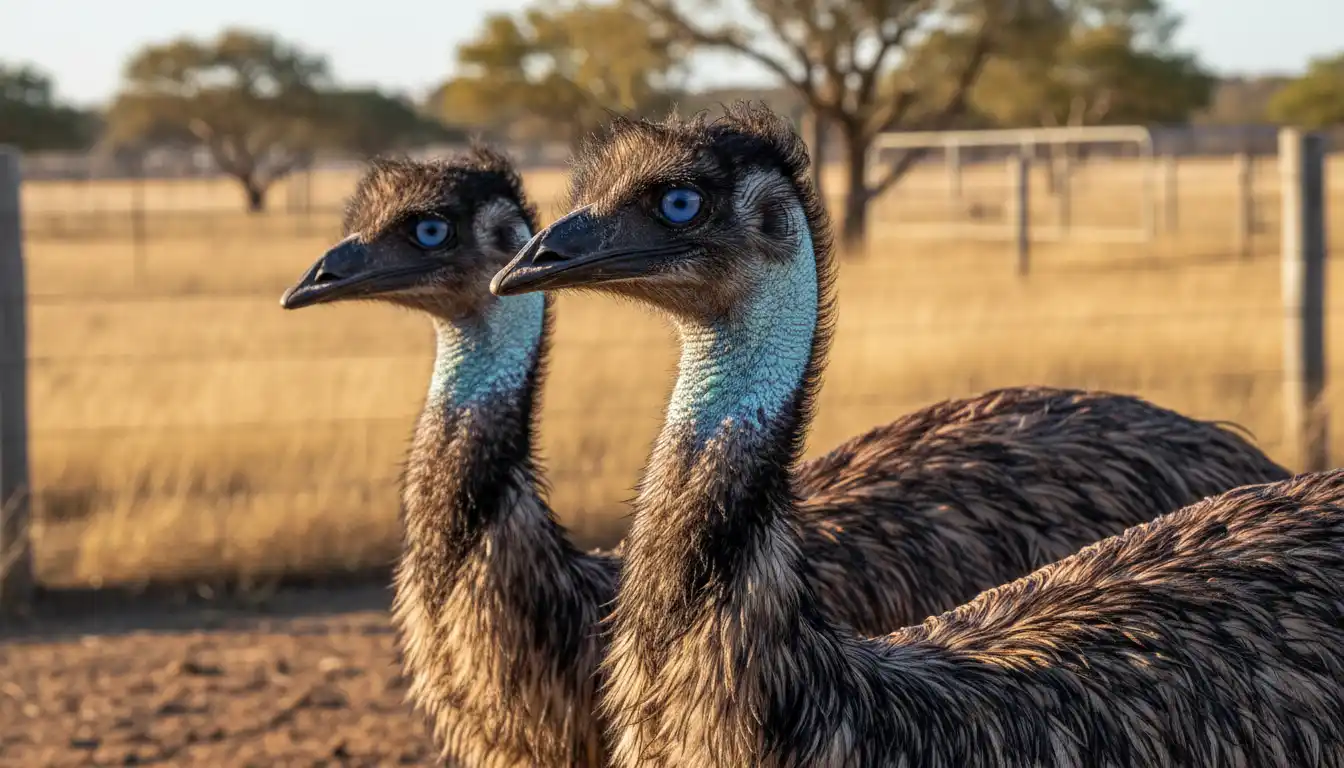
The multifaceted nature of emu products creates diverse revenue streams that buffer farmers against market fluctuations. Emu oil, rich in omega-3, -6, and -9 fatty acids, commands premium prices in cosmetic and therapeutic markets. The meat, with its low cholesterol and high iron content, appeals to health-conscious consumers seeking alternative protein sources. Feathers find applications in fashion, crafts, and industrial dusters, while hides produce durable, distinctive leather.
Successful emu farming operations typically achieve 35-45% profit margins by year 3, significantly higher than many traditional livestock enterprises. The key to profitability lies in efficient scale (50-500 birds for commercial operations), optimized feed conversion ratios, and value-added processing of byproducts. Many farmers also generate income from agritourism, offering farm tours and educational programs about sustainable emu farming practices.
For those interested in comparing different exotic animal farming options, our bison farming calculator provides similar detailed projections for another sustainable livestock alternative.
Successful emu farming begins with proper planning and infrastructure. Key considerations include:
Technology integration significantly enhances emu farming efficiency. Automated feeding systems, climate-controlled shelters for extreme weather, and digital monitoring of bird health and productivity metrics can increase yields by 15-25%. Many modern emu farms utilize smartphone apps for inventory management, feed tracking, and market price monitoring.
Understanding cooking requirements for emu meat is also important for product development. Our meat cooking time calculator helps determine optimal preparation methods for this unique protein.
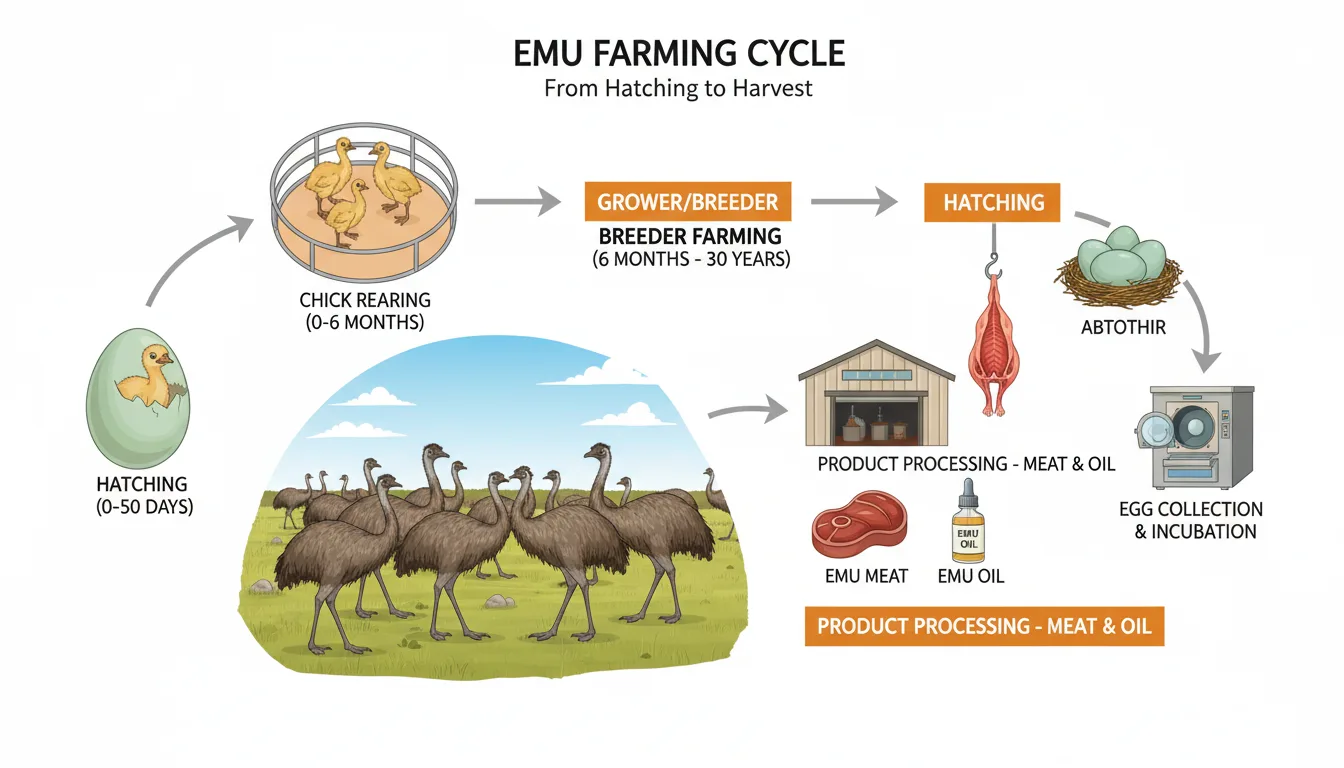
Emu farming intersects with several important agricultural trends including regenerative agriculture, circular farming systems, and value-added processing. By incorporating emus into diversified farming operations, farmers can create closed-loop systems where waste products from one enterprise become inputs for another.
The future of emu farming looks promising with emerging markets in Asia and the Middle East showing increased interest in emu products. Research into new applications for emu oil in nutraceuticals and medical treatments continues to expand market potential. Additionally, carbon credit programs may soon recognize the lower environmental footprint of emu farming compared to traditional livestock, providing additional revenue streams.
For farmers considering other exotic livestock options, similar planning tools are available for different species. Our kangaroo ranching calculator offers comparable analysis for another Australian native species gaining international interest.
Emu farming represents a sustainable, profitable alternative to traditional livestock with multiple revenue streams. Success requires careful planning, proper infrastructure, and market awareness. Use our free emu farming calculator to develop your business plan with accurate cost and revenue projections tailored to your specific location and scale.