Wool Production Calculator - Free AI Assistant Tool

Wool Production Calculator

Free AI-Powered Assistant for Profitable Wool Production

Real-time Calculations AI Assistant Global Wool Markets Mobile Optimized
Live Wool Prices: Merino: $12.45/kg Crossbred: $6.80/kg Alpaca: $18.20/kg
Updated: Just now

Select Animal Type

Calculation Type

Typical farm: 100-500 animals

%

🤖 Free AI Assistant for Wool Production

Hello! I'm your AI assistant for wool production. Ask me anything about sheep breeds, wool processing, market trends, or profitability optimization. I can help you make informed decisions for your wool production operation.

Powered by advanced AI. Responses are for informational purposes only.

Calculation Results

Enter your wool production details and click "Calculate" to see detailed results and recommendations.

Recent Calculations

Wool Calculation Formulas

Our Wool Calculator uses scientifically validated formulas to provide accurate projections for your fiber farming operation. Here are the mathematical models we employ:

Yield Analysis Formulas

Total Annual Wool = Flock Size × Fleece Weight × Shearings per Year

Greasy Wool: Animals × Fleece Weight × Shearings
Clean Wool: Greasy Wool × Clean Yield %
Scoured Weight: Greasy Wool × (1 - Scouring Loss %)
Value Adjustment: Base Price × Grade Multiplier × Length Factor

Profitability Formulas

Annual Profit = (Wool Revenue + By-products) - (Feed + Shearing + Vet + Labor + Land)

Wool Revenue: Clean Wool × Price × Value-Added Multiplier
Operating Costs: (Feed × 12) + Shearing + Vet + Labor × 12
Net Profit: Revenue - (Operating + Processing + Fixed Costs)
ROI: (Net Profit / Total Investment) × 100%

Real-world Calculation Example

For a wool production operation with 100 sheep producing 4.5kg fleece at $8.50/kg:

Annual Greasy Wool: 100 × 4.5 × 2 = 900kg
Clean Wool (65% yield): 900 × 65% = 585kg
Potential Revenue: 585 × $8.50 = $4,972.50
Annual Feed Cost: 100 × $12 × 12 = $14,400
Net Profit/Loss: $4,972.50 - $14,400 = -$9,427.50

Insight: This example shows why proper planning with our Wool Production Calculator is essential. Value-added processing can increase revenue 4-8x.

How to Use the Wool Production Calculator

1

Select Animal Type

Choose between sheep, alpaca, llama, or goat wool farming for species-specific calculations in your operation.

2

Input Production Data

Enter accurate information about flock size, fleece weights, wool quality, and processing requirements.

3

Customize Parameters

Adjust calculations based on your specific wool farming conditions, market prices, and regional variations.

4

Analyze & Optimize

Review detailed projections, save or share results, and use AI insights to optimize your wool production for maximum profitability.

Quick Tips for Effective Wool Production

🧬 Genetic Selection

Choose breeds with high wool yields and desirable fiber characteristics for maximum wool product value.

✂️ Shearing Techniques

Proper shearing preserves staple length and minimizes second cuts, increasing wool farming value by 15-30%.

📦 Wool Preparation

Proper skirting, classing, and packaging can increase wool production returns by 20-40% through better grading.

💰 Market Timing

Monitor global wool prices and sell when markets favor your wool production grade and micron range.

Frequently Asked Questions

What is wool production and how profitable is it?

Wool farming involves raising animals specifically for their fleece, which is harvested through shearing and processed into various textile products. Profitability varies significantly by scale, breed, and value-added processing. According to the Australian Wool Exchange, fine wool producers can achieve net profits of $20-$50 per animal annually, while operations with value-added processing (spinning, weaving) can increase returns 4-8x. Our Wool Production Calculator helps determine realistic profitability based on your specific operation parameters.

How much wool can I expect from different animals?

Wool yields vary dramatically by species and breed: Merino sheep produce 4-6kg annually, Romney sheep 5-7kg, Alpacas 3-5kg, Angora goats 4-6kg, and Cashmere goats 0.2-0.5kg of fine undercoat. These figures represent greasy wool weights; clean yields after scouring typically range from 50-75% of greasy weight. Our calculator includes breed-specific yield tables and adjusts for factors like nutrition, climate, and genetics that affect wool yields efficiency.

What are the main costs in wool production?

Primary costs in wool production include: feed (40-60% of total), shearing ($5-$15 per animal), veterinary care ($15-$40 annually per animal), pasture maintenance ($100-$300 per acre annually), and processing costs ($1.50-$4.00 per kg for scouring). Additional costs for value-added processing can include spinning ($8-$15 per kg), dyeing ($3-$8 per kg), and weaving ($10-$25 per meter). Our calculator's processing module provides detailed cost breakdowns for each stage of wool production.

How accurate is the Wool Production Calculator?

Our Wool Production Calculator uses industry-standard formulas validated by agricultural economists and textile engineers. It incorporates real-time market data from wool auctions, regional price variations, and best practice guidelines from organizations like the International Wool Textile Organisation. While providing highly accurate estimates, we recommend consulting with local agricultural extension services for site-specific planning. The calculator updates wool prices daily from major global markets.

Can I process wool on my farm for higher profits?

Yes, on-farm processing can significantly increase profitability in wool production. Value-added processing multiplies raw wool value: scoured wool (1.5x), carded batts (2-3x), spun yarn (4-6x), and finished garments (8-15x). However, processing requires additional equipment investment ($5,000-$50,000), specialized skills, and marketing capabilities. Our calculator's processing module helps evaluate the economic viability of on-farm processing based on your scale and market access.

The Comprehensive Guide to Sustainable Wool Production: From Pasture to Profit
By Textile Agriculture Expert Team
Updated: March 15, 2024
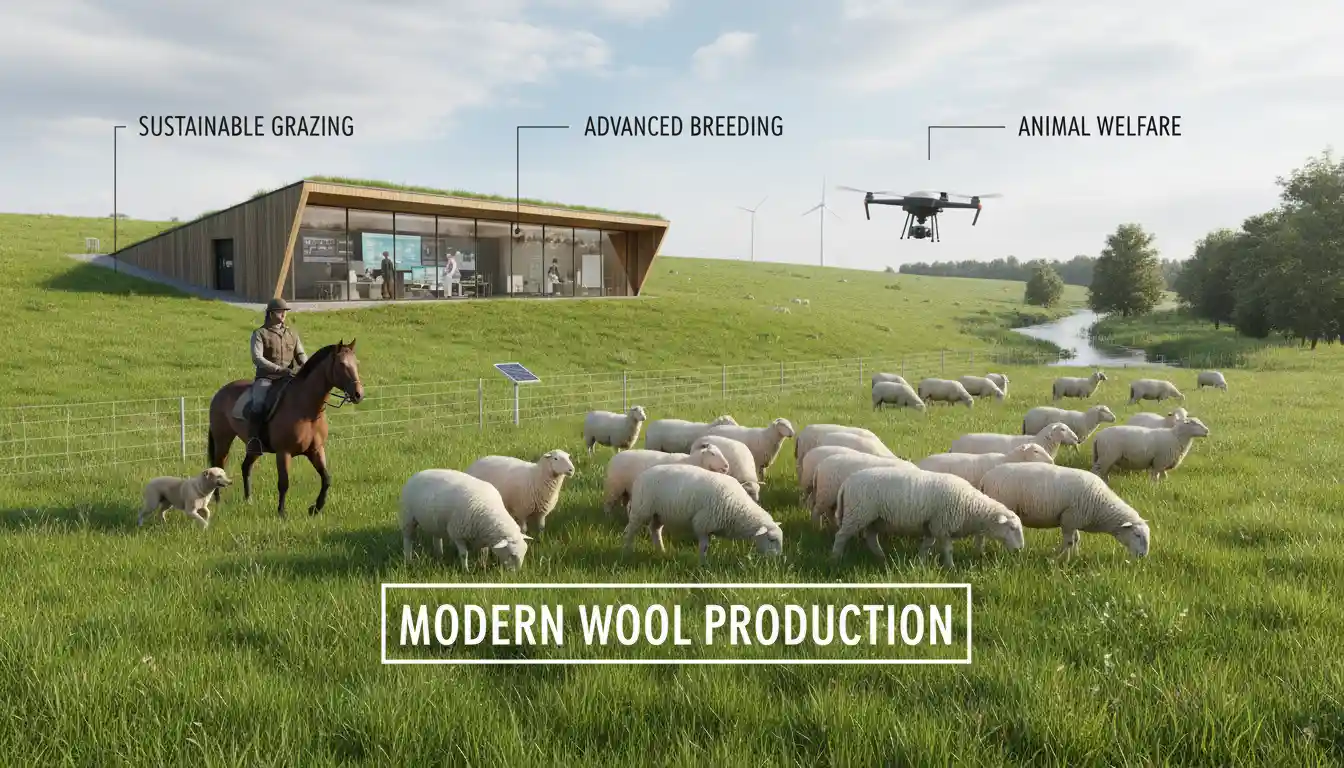
Sustainable wool production farm with healthy sheep grazing in green pasture
Modern wool production combines sustainable grazing practices with advanced breeding for optimal fiber quality and animal welfare.

What is Wool Production and Why It's Essential

Wool production represents one of humanity's oldest agricultural practices, dating back over 10,000 years. Today, it remains a vital global industry, with annual production exceeding 1.1 million metric tons of clean wool worth approximately $8-10 billion. Unlike synthetic fibers, wool is a renewable, biodegradable resource that supports rural economies and sustainable land management practices worldwide.

The modern wool farming industry has evolved significantly, incorporating genetic improvement, precision nutrition, and sophisticated processing technologies. According to the Food and Agriculture Organization of the United Nations, sustainable wool production can play a crucial role in climate-smart agriculture by sequestering carbon in pastures and providing income diversification for farmers.

Key Advantages of Sustainable Wool Production:

  • Environmental Benefits: Wool is renewable, biodegradable, and requires less energy to produce than synthetic fibers
  • Economic Stability: Provides consistent income in marginal agricultural areas unsuitable for crops
  • Carbon Sequestration: Well-managed wool-producing pastures capture 0.5-2 tons of carbon per acre annually
  • Versatile Markets: From luxury textiles to technical applications like insulation and filtration
  • Animal Welfare: Ethical wool production supports humane animal husbandry standards

Economic Benefits and Market Dynamics
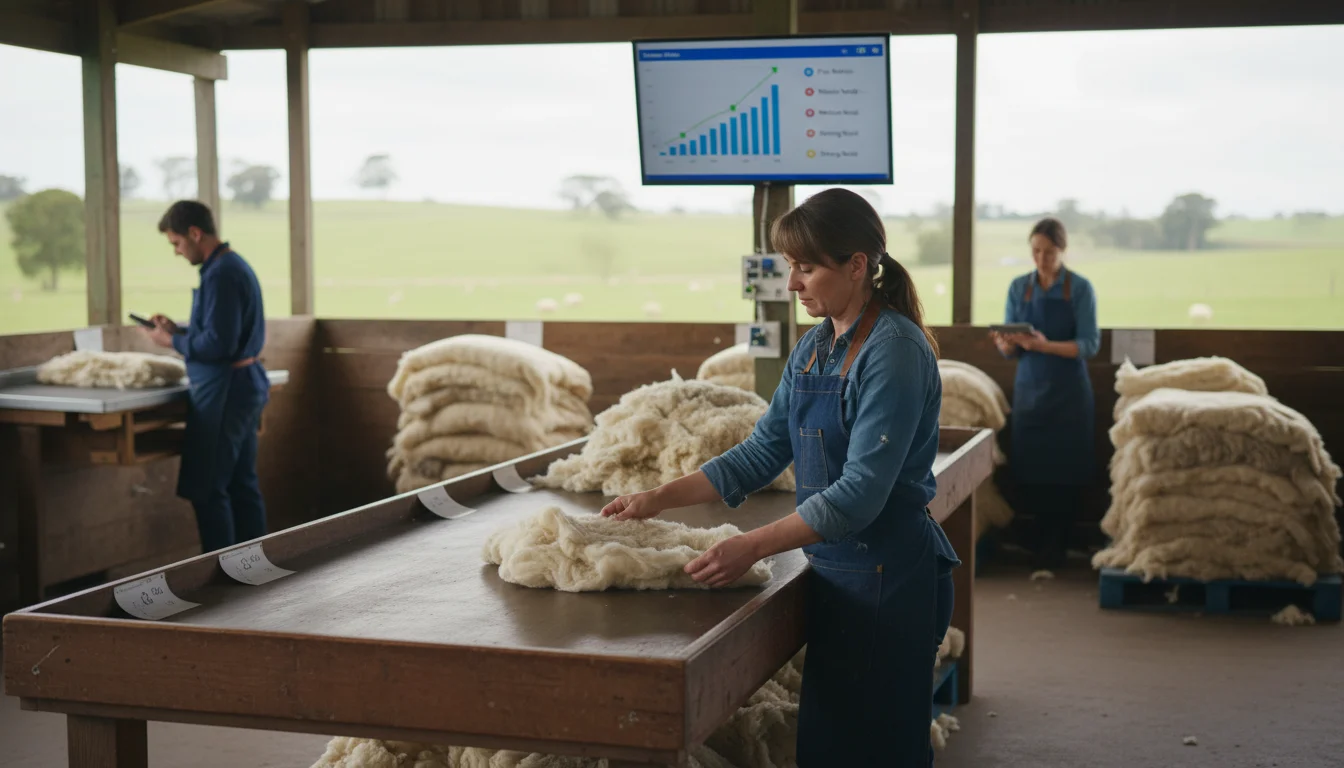
Wool grading and quality assessment in modern wool production facilities
Professional wool classing and grading significantly impact market value in wool production operations.

The economic viability of wool farming extends across multiple market segments and value chains. Successful operations typically integrate several revenue streams:

Primary Revenue Streams in Wool Production:

  • Raw Wool Sales: Greasy wool prices range from $3-$20 per kg depending on micron, with superfine Merino commanding premium prices up to $40 per kg for specialty lots.
  • Value-Added Processing: On-farm processing increases returns dramatically: scoured wool (1.5x), spun yarn (4-6x), and finished garments (8-15x raw wool value).
  • Breeding Stock: High-genetic-merit animals can generate $500-$5,000 in breeding sales, with elite genetics commanding higher prices.
  • By-Products: Pelts, lanolin, and meat from cull animals provide additional income streams in integrated wool production systems.

For those considering other fiber-producing animals, our Reptile Farming Calculator provides economic analysis for exotic fiber production, while the Dairy Farming Calculator offers insights into integrated livestock operations that can complement wool production.

Essential Practices for Successful Wool Production

Critical Success Factors:

  1. Genetic Selection: Choose breeds aligned with your climate, market, and management capabilities. Fine-wool breeds like Merino excel in premium markets, while dual-purpose breeds offer income diversification.
  2. Nutrition Management: Proper feeding directly impacts wool quality and quantity. Protein levels during wool growth periods significantly affect fiber diameter and strength.
  3. Shearing Expertise: Professional shearing preserves staple length, minimizes second cuts, and maintains animal welfare. Proper wool preparation (skirting, classing) increases market value by 20-40%.
  4. Market Intelligence: Understand wool grading systems, auction dynamics, and value-added opportunities. Relationships with wool brokers and processors enhance market access.

Feed optimization represents the largest cost-saving opportunity in wool farming. Our calculator's nutrition module helps balance protein requirements with cost efficiency. Implementing strategic supplementation during critical wool growth periods can improve fiber quality and increase staple strength by 15-25%.

Financial Planning Insights

Initial investment for a commercial wool farming operation typically ranges from $50,000-$500,000+, depending on scale and infrastructure. Key expenses include:

Expense CategorySmall Scale (100 animals)Commercial Scale (1000 animals)
Breeding Stock$15,000 - $30,000$150,000 - $300,000
Pasture Infrastructure$10,000 - $25,000$50,000 - $150,000
Shearing Equipment$2,000 - $5,000$10,000 - $30,000
Wool Storage & Handling$3,000 - $8,000$20,000 - $60,000
Processing Equipment$5,000 - $20,000$50,000 - $200,000

For those interested in complementary livestock operations, our Emu Farming Calculator offers insights into alternative agricultural enterprises that can diversify farm income alongside wool production.

Sustainable Practices and Future Trends

Modern wool processing facility showcasing sustainable textile production from farm to fabric
Sustainable wool farming integrates ecological stewardship with advanced processing for premium textile manufacturing.

Sustainability represents both an ethical imperative and market advantage in modern wool farming. Environmentally conscious practices include:

  • Regenerative Grazing: Rotational systems that improve soil health, biodiversity, and carbon sequestration
  • Water Management: Efficient irrigation and natural waterway protection in wool-producing regions
  • Chemical Reduction: Integrated pest management and reduced veterinary chemical use
  • Energy Efficiency: Renewable energy adoption in processing facilities and on-farm operations
  • Circular Economy: Wool recycling and waste reduction throughout the value chain

Emerging Industry Trends

The future of wool production includes several promising developments:

Traceability Technology

Blockchain and DNA testing enable complete supply chain transparency from farm to consumer.

Technical Applications

Wool's natural properties are being leveraged in filtration, insulation, and medical textiles beyond traditional apparel.

Climate-Smart Breeding

Genetic selection for heat tolerance, methane reduction, and drought resilience in wool-producing animals.

Direct-to-Consumer Models

Digital platforms connecting producers with conscious consumers willing to pay premiums for sustainable, traceable wool.

Final Recommendations

Wool production offers a unique opportunity to combine agricultural tradition with modern sustainability and market sophistication. Our free Wool Production Calculator provides the analytical tools needed to make informed decisions about breed selection, scale, processing integration, and financial planning.

Whether you're starting a small hobby farm or planning a commercial wool production enterprise, success requires careful calculation, continuous market monitoring, and commitment to sustainable practices. Begin your journey with thorough research, connect with established wool producers and processors, and use our comprehensive calculator to plan your sustainable wool production venture.

`); printWindow.document.close(); printWindow.focus(); setTimeout(() => { printWindow.print(); printWindow.close(); }, 250); }, // Format currency formatCurrency: function(amount, currency, marketPrice = false) { // Special formatting for market prices (shorter) if (marketPrice) { if (amount > 100) { return `${currency.symbol}${amount.toFixed(0)}`; } return `${currency.symbol}${amount.toFixed(2)}`; } // Handle large numbers if (amount > 1000000) { return `${currency.symbol}${(amount / 1000000).toFixed(1)}M`; } if (amount > 1000) { return `${currency.symbol}${(amount / 1000).toFixed(1)}K`; } // Format based on currency const formatter = new Intl.NumberFormat('en-US', { style: 'currency', currency: currency.code, minimumFractionDigits: 0, maximumFractionDigits: amount < 10 ? 2 : 0 }); try { return formatter.format(amount); } catch { // Fallback for unsupported currencies return `${currency.symbol}${amount.toLocaleString('en-US', { minimumFractionDigits: 0, maximumFractionDigits: 2 })}`; } }, // Show notification showNotification: function(message, type = 'success') { const colors = { success: 'bg-green-100 border-green-400 text-green-700', error: 'bg-red-100 border-red-400 text-red-700', info: 'bg-blue-100 border-blue-400 text-blue-700', warning: 'bg-yellow-100 border-yellow-400 text-yellow-700' }; const notification = document.createElement('div'); notification.className = `${colors[type]} border px-6 py-4 rounded-xl fixed top-4 right-4 z-50 max-w-sm shadow-lg animate-slide-up`; notification.innerHTML = `
${type === 'success' ? '✓' : type === 'error' ? '✗' : 'ℹ'} ${message}
`; document.body.appendChild(notification); setTimeout(() => { notification.style.opacity = '0'; notification.style.transition = 'opacity 0.5s'; setTimeout(() => notification.remove(), 500); }, 3000); }, // Show error showError: function(message) { this.elements.resultsContainer.innerHTML = `

${message}

Please check your input values and try again.

`; } }; // ============================================ // INITIALIZE WHEN DOCUMENT IS READY // ============================================ // Wait for DOM to be fully loaded if (document.readyState === 'loading') { document.addEventListener('DOMContentLoaded', () => { window.WoolCalculator.init(); }); } else { // DOM already loaded window.WoolCalculator.init(); } // Make calculator available globally window.wc = window.WoolCalculator;
Scroll to Top