
Smart Cattle Farming X - Calculate Livestock Operations with Precision
Optimize your livestock operations with our comprehensive cattle farming calculator. Make data-driven decisions for feed management, profitability analysis, and herd health metrics to maximize your bovine operation efficiency and sustainability.
Livestock Management Calculator
Calculation Results
Daily Feed Required
0 kg
Monthly Cost
$0
Annual Revenue
$0
Calculation History
No calculation history yet
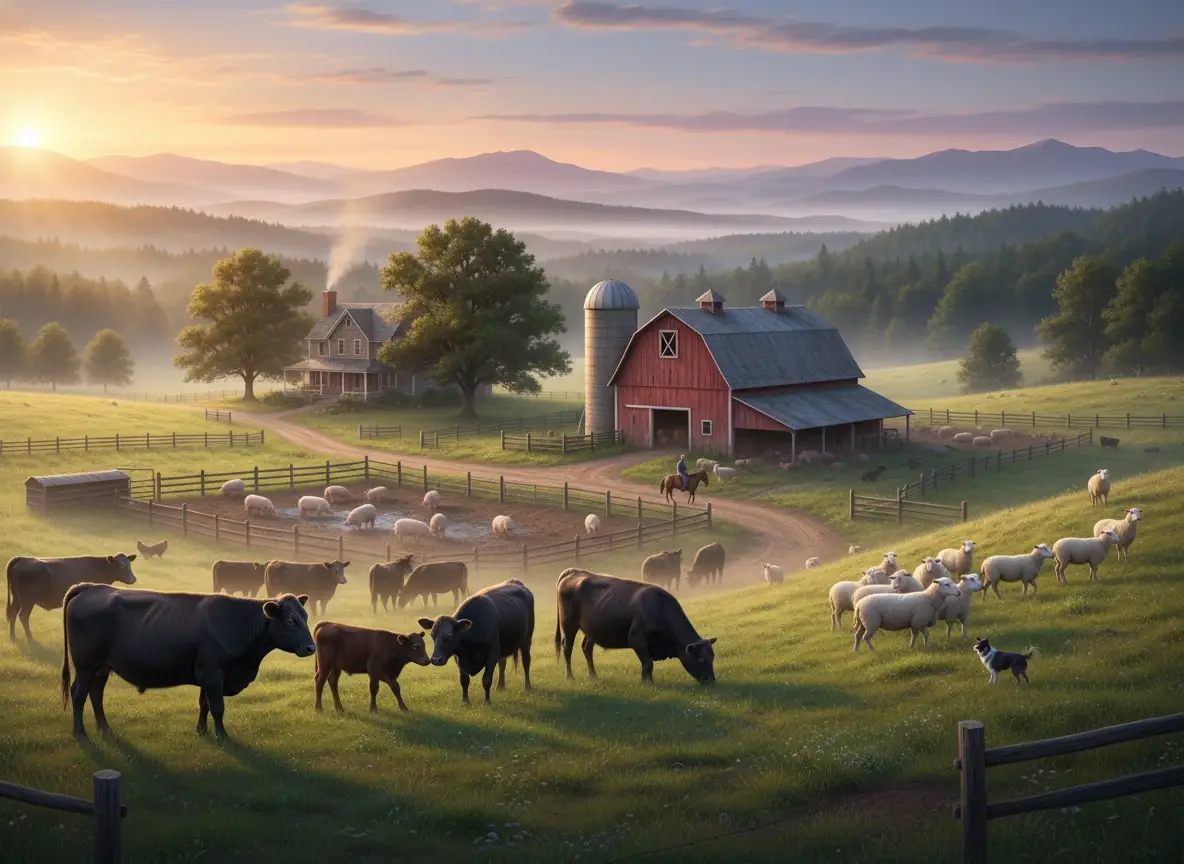
Modern Livestock Management Practices
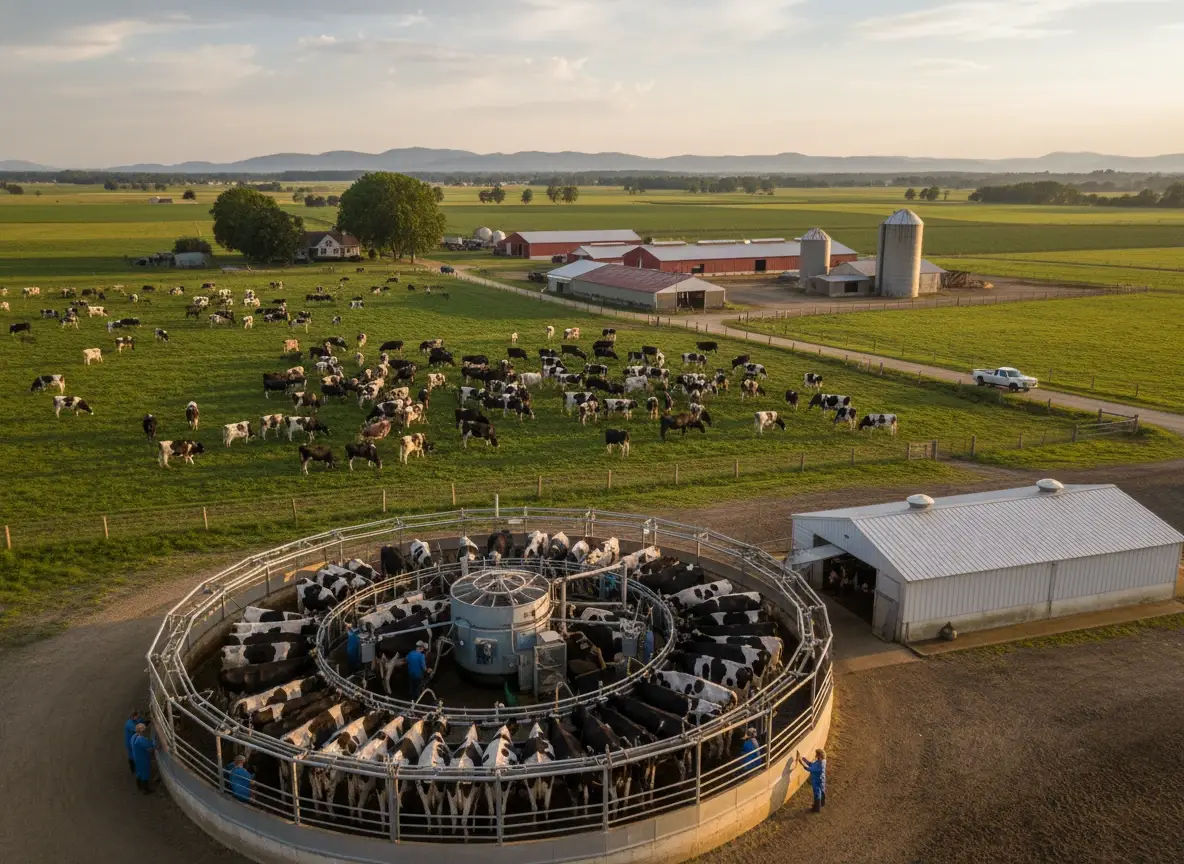
Dairy Cattle Operations
Modern dairy cattle farming emphasizes animal welfare, efficient milk production, and sustainable resource management.

Beef Cattle Production
Pasture-based beef cattle farming combines traditional grazing with modern animal nutrition and health management.
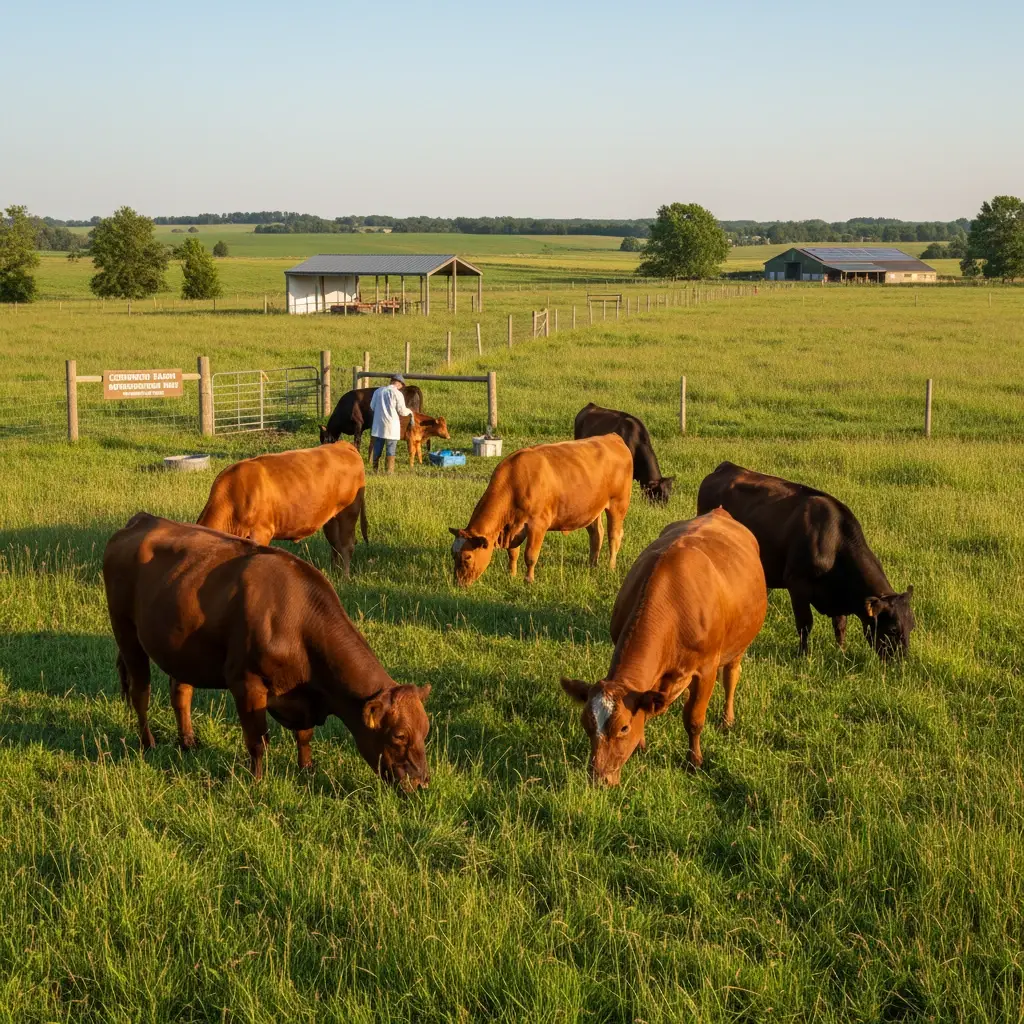
Herd Health Management
Proactive health management ensures animal welfare and productivity in all types of cattle farming operations.
Livestock Management AI Assistant
Get personalized recommendations for your cattle operations
Hello! I'm your livestock management assistant. Ask me anything about herd management, feed optimization, or profitability analysis.
How to Use the Livestock Calculator
- Enter your herd details - Input the number of cattle, their average weight, and select the cattle type (dairy, beef, or dual-purpose).
- Provide cost information - Enter the current feed cost per kilogram to accurately calculate expenses.
- Click "Calculate Now" - Our algorithm will process your inputs and generate comprehensive results.
- Review and analyze results - Examine the visual charts, cost breakdowns, and export your calculation history for future reference.
Understanding Modern Cattle Farming
Cattle farming represents one of the most vital segments of global agriculture, providing essential resources including meat, milk, leather, and other byproducts. Modern bovine operations have evolved significantly from traditional methods, incorporating advanced technologies and sustainable practices to optimize production while minimizing environmental impact.
The practice of cattle farming involves raising domesticated bovines, primarily for the purpose of producing beef and dairy products. Professional livestock management requires comprehensive knowledge of animal nutrition, breeding techniques, health management, and market dynamics. Successful operations balance economic viability with ethical animal treatment and environmental stewardship.
Sustainable cattle farming practices have gained prominence in recent years, focusing on reducing the ecological footprint of livestock operations. These include rotational grazing systems that improve soil health, manure management strategies that minimize water pollution, and feed efficiency programs that reduce greenhouse gas emissions per unit of production.
Technological innovations are transforming contemporary cattle farming through precision livestock farming (PLF) approaches. These include automated feeding systems, wearable health monitors, GPS tracking for pasture management, and data analytics platforms that optimize every aspect of operations. Such advancements enable livestock managers to make data-driven decisions that enhance productivity and animal welfare.
The economic significance of cattle farming extends beyond direct agricultural production, contributing substantially to rural economies and employment. Livestock operations support various ancillary industries including feed production, veterinary services, transportation, and meat processing. In many regions, cattle farming represents a cornerstone of agricultural heritage and cultural identity.
Effective cattle farming management requires attention to numerous factors including breed selection appropriate for local conditions, nutritional requirements throughout different life stages, disease prevention protocols, and market timing for optimal returns. Modern operations increasingly emphasize animal welfare standards, with many consumers showing preference for products from facilities that prioritize humane treatment.
Climate considerations play an increasingly important role in cattle farming, with operations needing to adapt to changing weather patterns while simultaneously reducing their environmental impact. Research continues to develop feeding strategies that lower methane emissions and breeding programs that enhance feed conversion efficiency in bovine production systems.
The future of cattle farming lies in the integration of traditional husbandry knowledge with cutting-edge technologies. From genomic selection to automated monitoring systems, innovation continues to drive improvements in the sustainability and productivity of livestock operations worldwide. As global population growth increases demand for animal proteins, efficient and responsible cattle farming will remain crucial to food security.
Modern cattle farming operations must navigate complex regulatory environments, consumer preferences, and market dynamics while maintaining profitability. Successful cattle farmers often participate in certification programs that verify animal welfare standards, environmental stewardship, and product quality. These certifications can provide market advantages and demonstrate commitment to responsible practices.
Workforce development represents another critical aspect of contemporary cattle farming. As operations become more technologically advanced, the need for skilled workers with expertise in data analysis, animal science, and equipment maintenance continues to grow. Educational programs and vocational training play essential roles in preparing the next generation of livestock professionals.
Global trade patterns significantly influence cattle farming economics, with international markets creating both opportunities and challenges for producers. Understanding export requirements, tariff structures, and international quality standards becomes increasingly important for operations seeking to compete in global markets. Cattle farming operations that adapt to these complex trade dynamics often achieve greater financial stability.
The integration of renewable energy represents an emerging trend in modern cattle farming. Many operations now incorporate solar power, wind energy, and biogas production from manure management systems. These initiatives not only reduce operational costs but also contribute to broader sustainability goals, creating additional revenue streams while minimizing environmental impact.
Consumer education represents an important aspect of contemporary cattle farming, with many producers actively engaging with the public to explain modern agricultural practices. Farm tours, educational materials, and transparent communication about production methods help build trust and understanding between producers and consumers. This engagement becomes particularly important as public interest in food origins and production methods continues to grow.
Explore More Agricultural Calculators
Check out our other specialized calculators for comprehensive farm management:
For authoritative information on sustainable livestock practices, visit the Food and Agriculture Organization of the United Nations.
Livestock Calculation Formulas
Daily Feed Requirement Formula
Daily Feed (kg) = Herd Size × Average Weight (kg) × Feed Conversion Ratio
Where Feed Conversion Ratio typically ranges from 0.025 to 0.035 for maintenance, and 0.06 to 0.08 for growth, depending on cattle type and production stage.
Monthly Feed Cost Formula
Monthly Cost ($) = Daily Feed (kg) × Feed Cost ($/kg) × 30
Example Calculation
For a herd of 50 beef cattle with an average weight of 600kg, feed cost of $0.40/kg, and a feed conversion ratio of 0.03:
- Daily Feed = 50 × 600 × 0.03 = 900 kg
- Monthly Cost = 900 × 0.40 × 30 = $10,800
Frequently Asked Questions
How accurate is the livestock calculator?
Our calculator uses industry-standard formulas and conversion ratios to provide highly accurate estimates for feed requirements and costs. However, actual results may vary based on specific farm conditions, cattle breeds, and regional factors. We recommend using the results as a guideline and adjusting based on your actual experience.
Can I use this calculator for different cattle breeds?
Yes, the calculator accommodates different cattle types (dairy, beef, dual-purpose) which account for variations in nutritional requirements and feed conversion efficiency across breeds. For highly specific breed calculations, you may need to adjust the feed conversion ratio based on your particular cattle's characteristics.
How often should I recalculate my livestock metrics?
We recommend recalculating your metrics whenever there are significant changes in herd size, feed prices, or production goals. For ongoing operations, monthly reviews are advisable to account for seasonal variations and market fluctuations that impact profitability.
Does the calculator account for seasonal variations in feed requirements?
While our base calculations provide year-round estimates, operations should adjust for seasonal factors. During colder months, cattle typically require additional feed for maintenance energy, while pasture-based systems may reduce feed costs during grazing seasons. Our AI assistant can provide seasonal adjustment recommendations.
Related Calculators
Agriculture & Farming
Comprehensive calculators for crop planning, yield estimation, and farm management.
Environment & Energy
Tools for calculating carbon footprint, energy usage, and environmental impact.
Miscellaneous Calculators
Various specialized calculators for different industries and applications.