
Comprehensive Guide to Black Soldier Fly Farming: Benefits, Calculations, and Best Practices
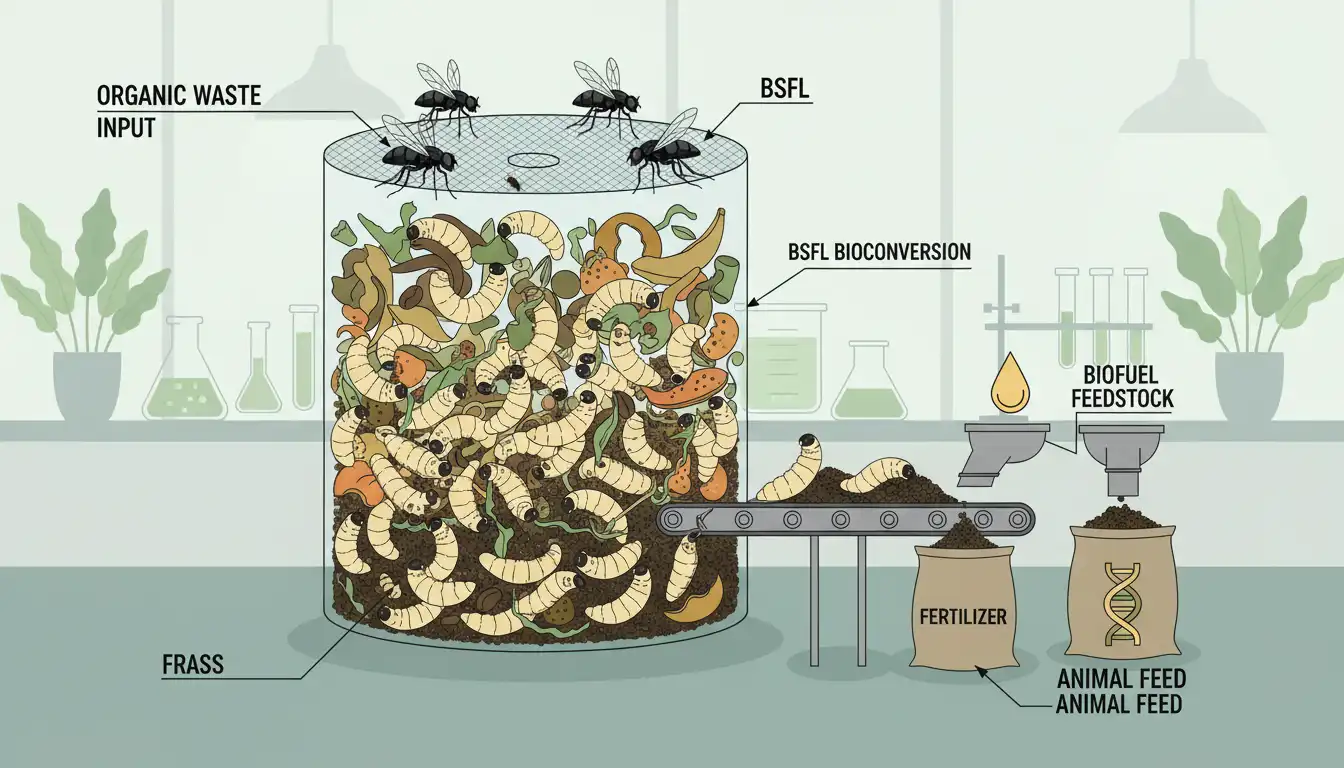
Black Soldier Fly farming has emerged as one of the most promising sustainable agriculture technologies of the 21st century. This innovative approach to waste management and protein production leverages the natural lifecycle of Hermetia illucens to convert organic waste into valuable resources. As global demand for sustainable protein sources continues to grow, Black Soldier Fly farming offers a circular economy solution that addresses multiple environmental challenges simultaneously.
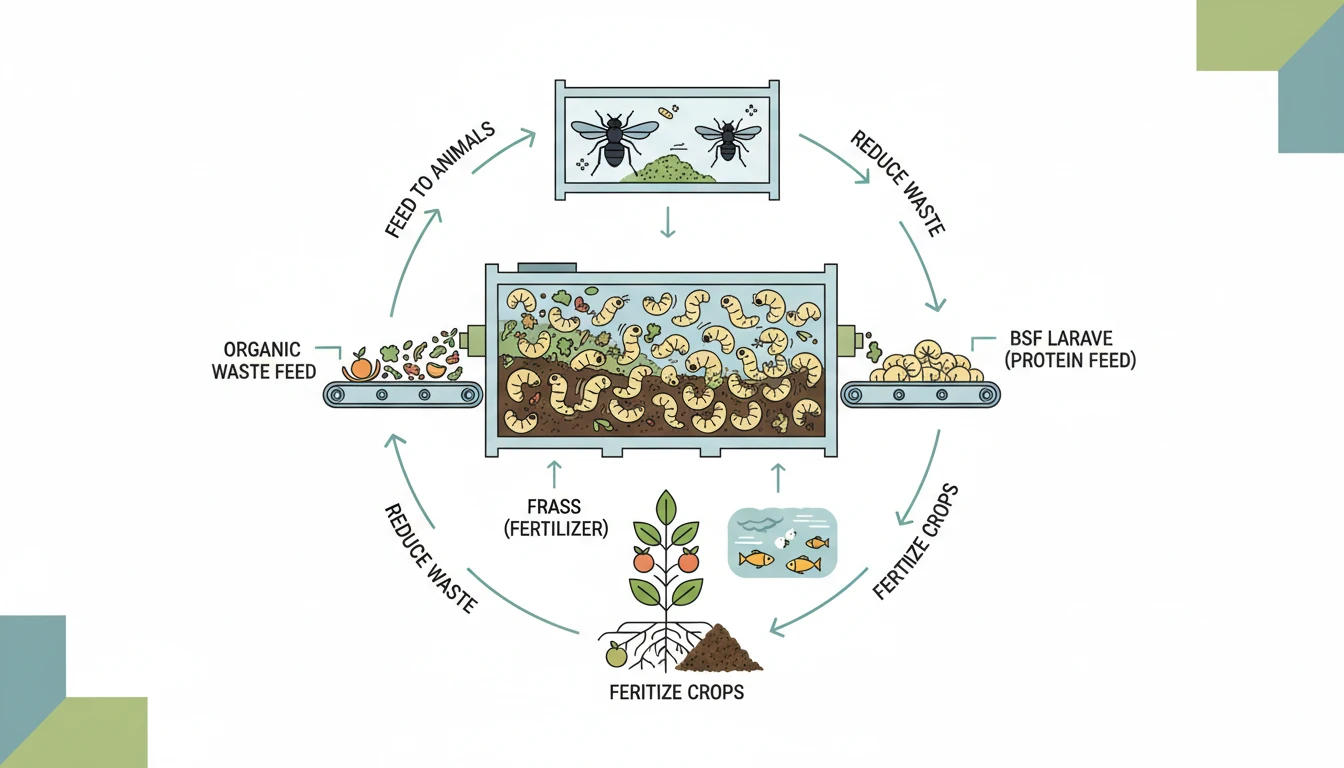
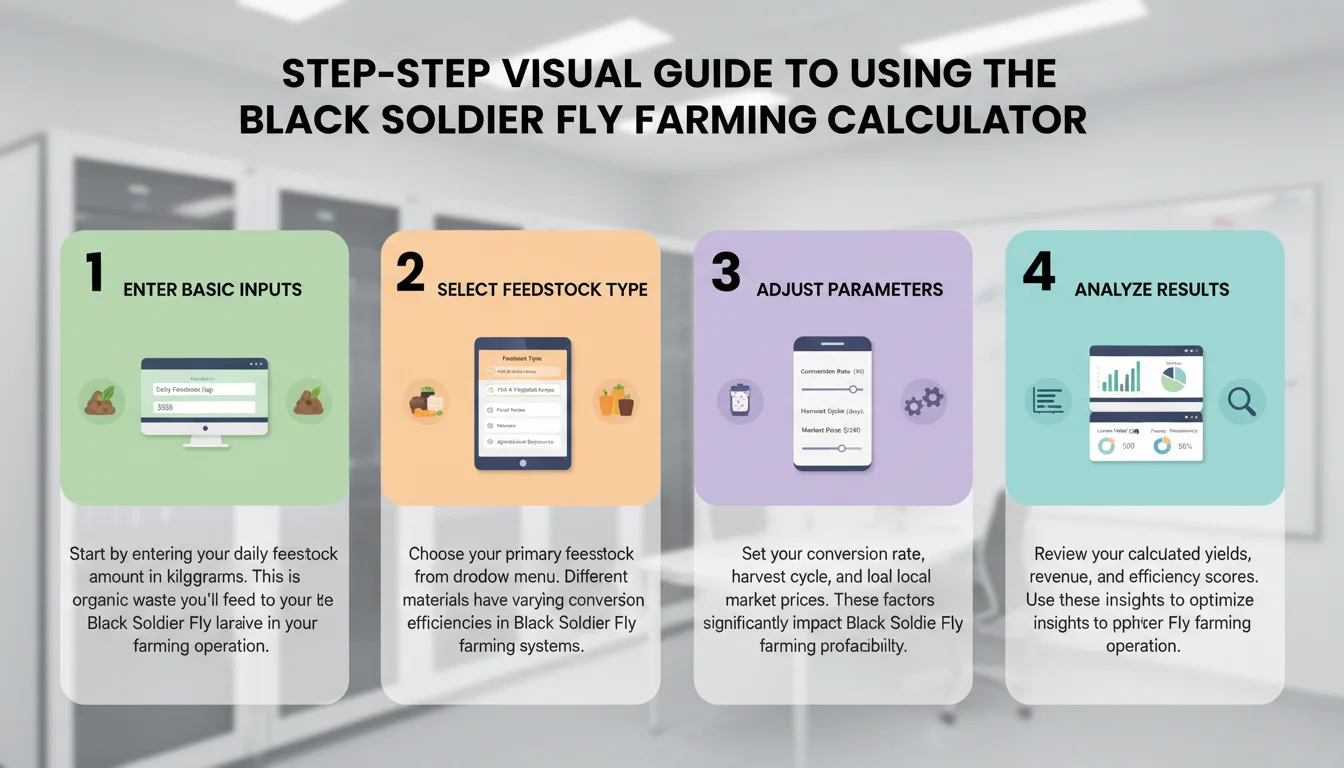
The fundamental principle behind Black Soldier Fly farming is remarkably efficient: these insects consume various organic waste materials and convert them into protein-rich larvae and nutrient-dense frass fertilizer. A well-managed Black Soldier Fly farming operation can process thousands of kilograms of organic waste monthly while producing valuable products for animal feed and agriculture. Our Black Soldier Fly farming calculator helps quantify these benefits and plan profitable operations.
Why Black Soldier Fly Farming Matters for Sustainable Agriculture
Traditional agriculture faces mounting challenges including resource depletion, environmental degradation, and increasing demand for protein. Black Soldier Fly farming addresses these issues through its circular approach. Each kilogram of Black Soldier Fly larvae can contain up to 45% protein, making it comparable to fishmeal and soybean meal but with a significantly lower environmental footprint.
The environmental benefits of Black Soldier Fly farming extend beyond protein production. By diverting organic waste from landfills, these operations reduce methane emissions—a potent greenhouse gas. Additionally, the frass (insect manure) produced serves as an excellent organic fertilizer, completing the nutrient cycle. Our calculator helps quantify these environmental benefits alongside economic metrics.
Key Benefits and Use Cases for Black Soldier Fly Farming
Black Soldier Fly farming offers multiple benefits that make it attractive for various applications:
- Waste Management Solution: Processes organic waste streams that would otherwise end up in landfills
- Sustainable Protein Source: Produces insect protein for aquaculture, poultry, and pet food industries
- Organic Fertilizer Production: Creates nutrient-rich frass that improves soil health
- Circular Economy Model: Closes nutrient loops in food production systems
- Low Water Footprint: Requires significantly less water than traditional livestock farming
Commercial applications of Black Soldier Fly farming continue to expand. From small-scale community waste processors to large industrial operations supplying protein for animal feed, the versatility of this technology makes it applicable across scales. Use our Black Soldier Fly farming calculator to evaluate different operational scales for your specific context.
For those interested in other sustainable insect farming methods, consider exploring mealworm farming calculations, which offers different advantages for specific applications. Each insect farming approach has unique characteristics that may better suit particular waste streams or end products.
Optimizing Your Black Soldier Fly Farming Operation
Successful Black Soldier Fly farming requires attention to several key parameters. Temperature management is critical, with optimal ranges between 27-30°C for larval development. Humidity should be maintained at 60-70% to prevent substrate drying while avoiding excessive moisture that can promote pathogens.
Feedstock preparation significantly impacts conversion efficiency in Black Soldier Fly farming. Particle size reduction through grinding or shredding increases surface area for larval feeding. Proper moisture content adjustment ensures optimal consumption rates. The Black Soldier Fly farming calculator incorporates these factors through the feedstock type multiplier and conversion rate adjustments.
Harvest timing represents another critical optimization point in Black Soldier Fly farming. Larvae should be harvested just before they begin prepupal wandering, typically at 14-21 days depending on temperature and feed quality. Early harvesting yields smaller larvae with higher moisture content, while later harvesting increases biomass but may reduce protein percentage.
Economic Considerations and Market Opportunities
The economics of Black Soldier Fly farming depend on multiple factors including feedstock costs, labor, infrastructure, and market prices for end products. Our comprehensive calculator helps analyze these variables to determine potential profitability. Key revenue streams typically include:
- Processed insect protein for animal feed (highest value)
- Live or dried larvae for poultry or aquaculture
- Frass fertilizer for organic agriculture
- Waste processing fees for municipalities or businesses
Market development for Black Soldier Fly products continues to advance globally. Regulatory frameworks are evolving to accommodate insect-based ingredients in animal feed, creating expanding opportunities for Black Soldier Fly farming operations. The global insect protein market is projected to exceed $1.3 billion by 2027, with Black Soldier Fly products representing a significant portion.
For those considering complementary farming approaches, silkworm farming calculations offer insights into another valuable insect farming sector with different market applications and production requirements.
Technological Innovations in Black Soldier Fly Farming
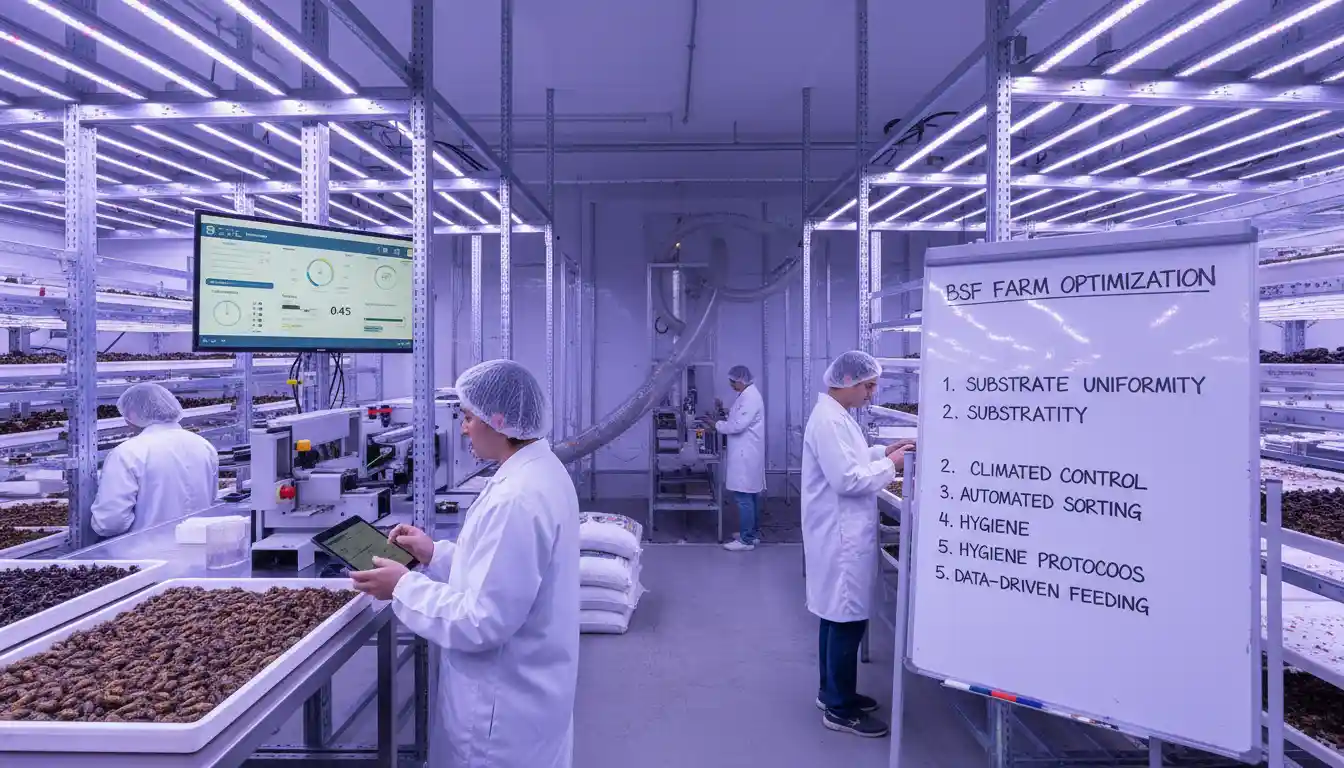
Recent technological advancements are transforming Black Soldier Fly farming from artisanal practice to precision agriculture. Automated feeding systems, climate-controlled rearing environments, and optimized harvesting equipment are increasing efficiency and scalability. Sensor technology monitors key parameters like temperature, humidity, and larval density in real-time.
Genetic research aims to develop Black Soldier Fly strains with improved feed conversion ratios, faster growth rates, and enhanced nutrient profiles. These innovations promise to further increase the efficiency and profitability of Black Soldier Fly farming operations. Our calculator incorporates current industry standards but will be updated as new efficiency benchmarks emerge.
Challenges and Future Outlook
Despite its promise, Black Soldier Fly farming faces several challenges. Scaling operations requires significant capital investment in infrastructure. Market development for insect-based products must continue to overcome regulatory and consumer acceptance barriers. Seasonal variations in feedstock availability can impact operational consistency.
However, the future outlook for Black Soldier Fly farming remains positive. As circular economy principles gain traction and sustainable protein demand grows, this innovative agriculture approach is poised for significant expansion. Continued research, technological innovation, and supportive policies will likely accelerate adoption of Black Soldier Fly farming globally.
For comprehensive scientific information about Black Soldier Fly biology and applications, refer to the FAO Statistical Database, which provides authoritative data on global agriculture and food systems. This reputable source offers valuable context for understanding the role of insect farming in sustainable food systems.
Additionally, those interested in pollinator-related agriculture might explore bee farming calculations, which focuses on different aspects of insect-based agriculture with its own unique economic and ecological considerations.
Key Takeaways for Aspiring Black Soldier Fly Farmers
- Start small and scale gradually as you gain experience with Black Soldier Fly farming
- Use our calculator to model different scenarios before making significant investments
- Focus on consistent feedstock quality and optimal environmental conditions
- Develop multiple revenue streams (protein, fertilizer, waste processing)
- Stay informed about evolving regulations and market opportunities
Black Soldier Fly farming represents a convergence of sustainability, innovation, and economic opportunity. By transforming waste into valuable resources, this approach exemplifies circular economy principles in practice. Whether you're exploring small-scale waste management solutions or commercial protein production, our comprehensive Black Soldier Fly farming calculator provides the analytical tools needed for informed decision-making and operational planning.