Butterfly Farming Calculator | Free AI Assistant Tool
B

Butterfly Farming

AI Assistant & Calculator

Butterfly Farming Calculator

Free AI-powered tool to calculate profitability, requirements, and get expert guidance for successful butterfly farming. Perfect for beginners and commercial operations.

Optimize Your Butterfly Farm

Calculate costs, profits, and requirements with our advanced AI assistant

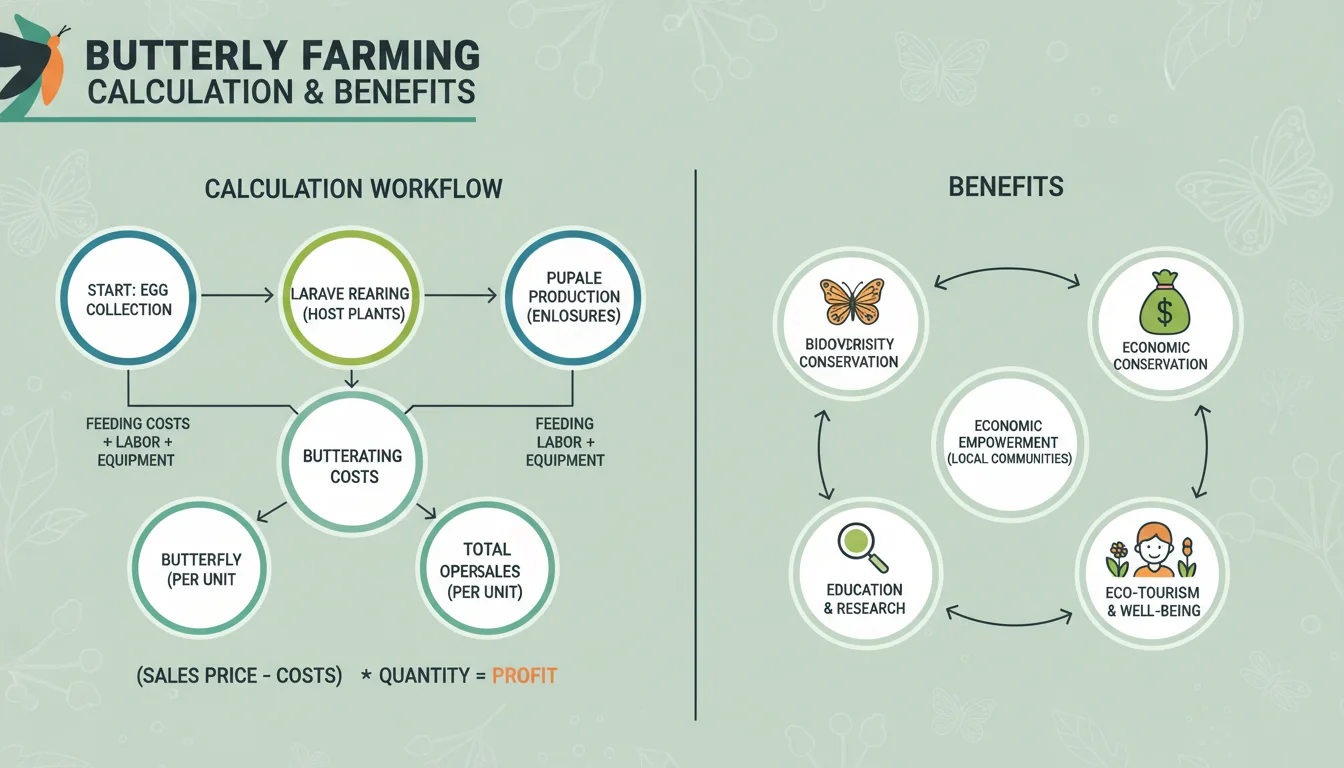
Butterfly farming infographic showing calculation workflow and benefits

Butterfly Farming Calculator

butterflies
$
$

Calculation History

AI Farming Assistant

Ask me anything about butterfly farming, calculations, or best practices.

AI Assistant

Hello! I'm your butterfly farming AI assistant. I can help you with calculations, best practices, species selection, and troubleshooting. What would you like to know about butterfly farming?

Quick questions:

AI Ready

AI Assistant Capabilities

Species Selection
Recommendations based on your location
Disease Diagnosis
Identify common butterfly ailments
Market Analysis
Pricing and demand insights
Regulatory Guidance
Permits and legal requirements

Calculation Formulas & Methodology

Profitability Formula

Monthly Profit = (Quantity × Price × Success Rate) - Operating Costs

Where:
Quantity: Number of butterflies farmed monthly
Price: Selling price per butterfly
Success Rate: Based on experience level (Beginner: 70%, Intermediate: 85%, Expert: 95%)
Operating Costs: Monthly expenses for feed, maintenance, utilities

Population Growth Model

Future Population = Initial × (1 + Growth Rate)^Time

This exponential growth model accounts for breeding cycles and environmental factors affecting butterfly reproduction rates in controlled farming conditions.

Example Calculation

Let's calculate a sample butterfly farming scenario:

  • Monthly Quantity: 500 butterflies
  • Price per Butterfly: $2.50
  • Success Rate: 85% (Intermediate)
  • Operating Costs: $350/month

Revenue = 500 × $2.50 × 85% = $1,062.50
Profit = $1,062.50 - $350 = $712.50
Profit Margin = $712.50 ÷ $1,062.50 × 100 = 67%

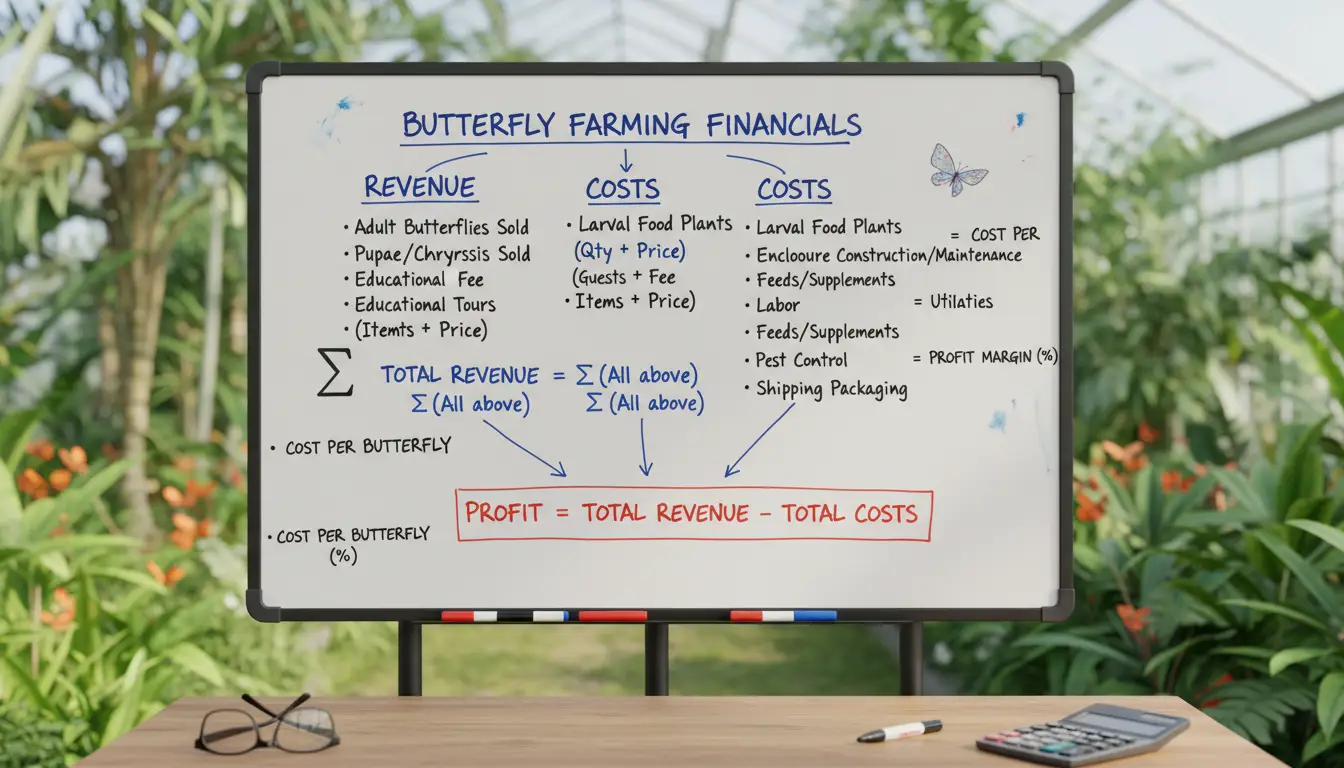
Visual representation of butterfly farming calculation formulas showing revenue, costs, and profit relationship

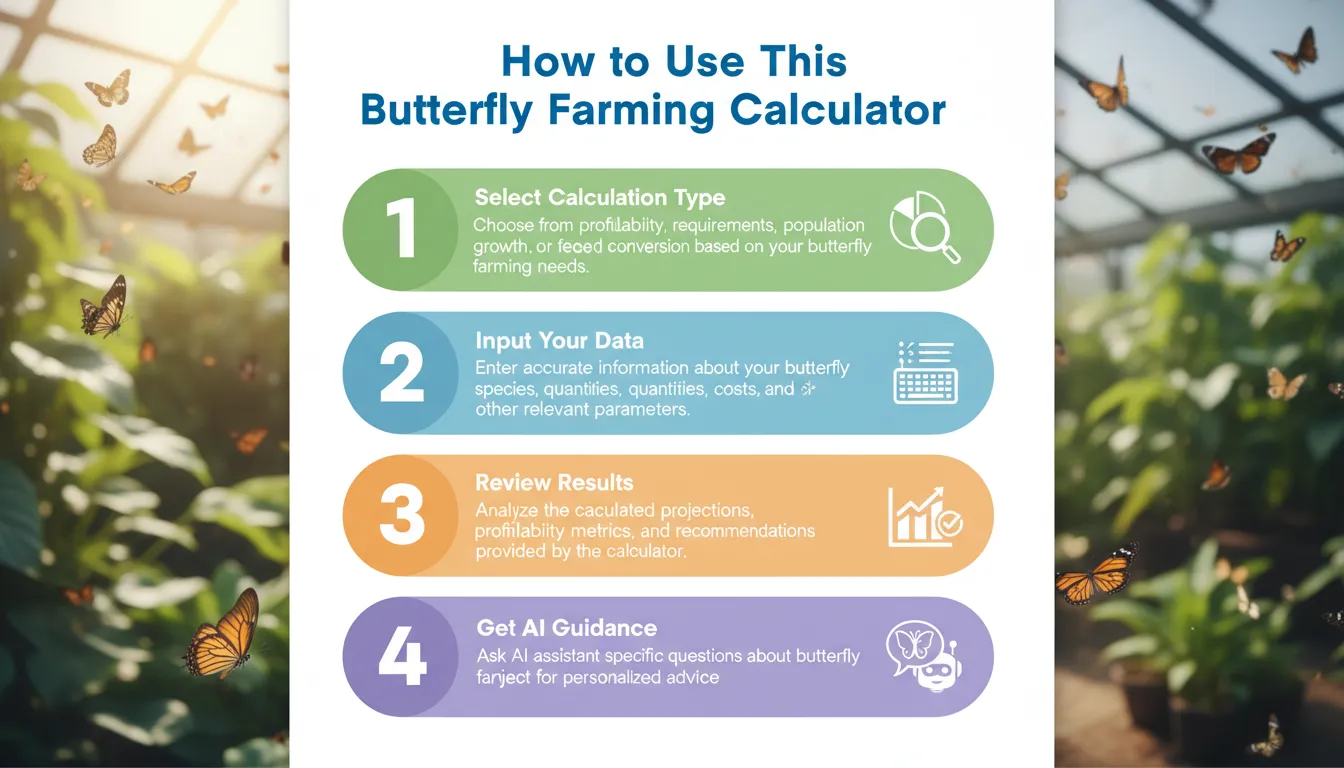
How to Use This Butterfly Farming Calculator

1

Select Calculation Type

Choose from profitability, requirements, population growth, or feed conversion based on your butterfly farming needs.

2

Input Your Data

Enter accurate information about your butterfly species, quantities, costs, and other relevant parameters.

3

Review Results

Analyze the calculated projections, profitability metrics, and recommendations provided by the calculator.

4

Get AI Guidance

Ask the AI assistant specific questions about your butterfly farming project for personalized advice.

Step-by-step visual guide to using the butterfly farming calculator showing input, calculate, results, and plan stages

Frequently Asked Questions

What is butterfly farming?

Butterfly farming, also known as butterfly ranching or butterfly agriculture, is the practice of breeding and raising butterflies in controlled environments for conservation, education, tourism, or commercial purposes like supplying to butterfly houses, weddings, and educational institutions. This sustainable practice helps preserve butterfly species while creating economic opportunities.

How profitable is butterfly farming?

Butterfly ranching profitability varies based on scale, species, and market. Small-scale operations might earn $500-$2,000 monthly, while larger commercial farms can generate $5,000-$20,000+ monthly. Our calculator helps estimate potential earnings based on your specific inputs. According to the US Department of Agriculture, specialty insect farming has grown by 15% annually over the past five years, indicating strong market potential.

What are the initial costs for starting a butterfly farm?

Initial costs range from $1,000 for small backyard setups to $10,000+ for commercial operations. Major expenses include enclosures, host plants, breeding stock, irrigation systems, and climate control equipment. The butterfly ranching calculator can help you create a detailed budget based on your specific goals and location.

Which butterfly species are best for farming?

Popular farmed species include Monarchs, Swallowtails, Painted Ladies, and Blue Morphos. The best species depends on your climate, market demand, and local regulations. Our AI assistant can recommend species based on your location and goals. For example, if you're interested in similar insect farming ventures, you might also explore bee farming which shares some similarities in husbandry techniques.

How do I market my farmed butterflies?

Common markets include butterfly houses, zoos, educational institutions, wedding/event planners, and conservation projects. Building relationships with local butterfly exhibits and participating in conservation programs are effective marketing strategies. The butterfly ranching AI assistant can provide personalized marketing advice based on your target market and location.

Complete Guide to Butterfly Farming: Profitability, Requirements, and Best Practices
By Agricultural Expert Team Updated: January 20, 2024
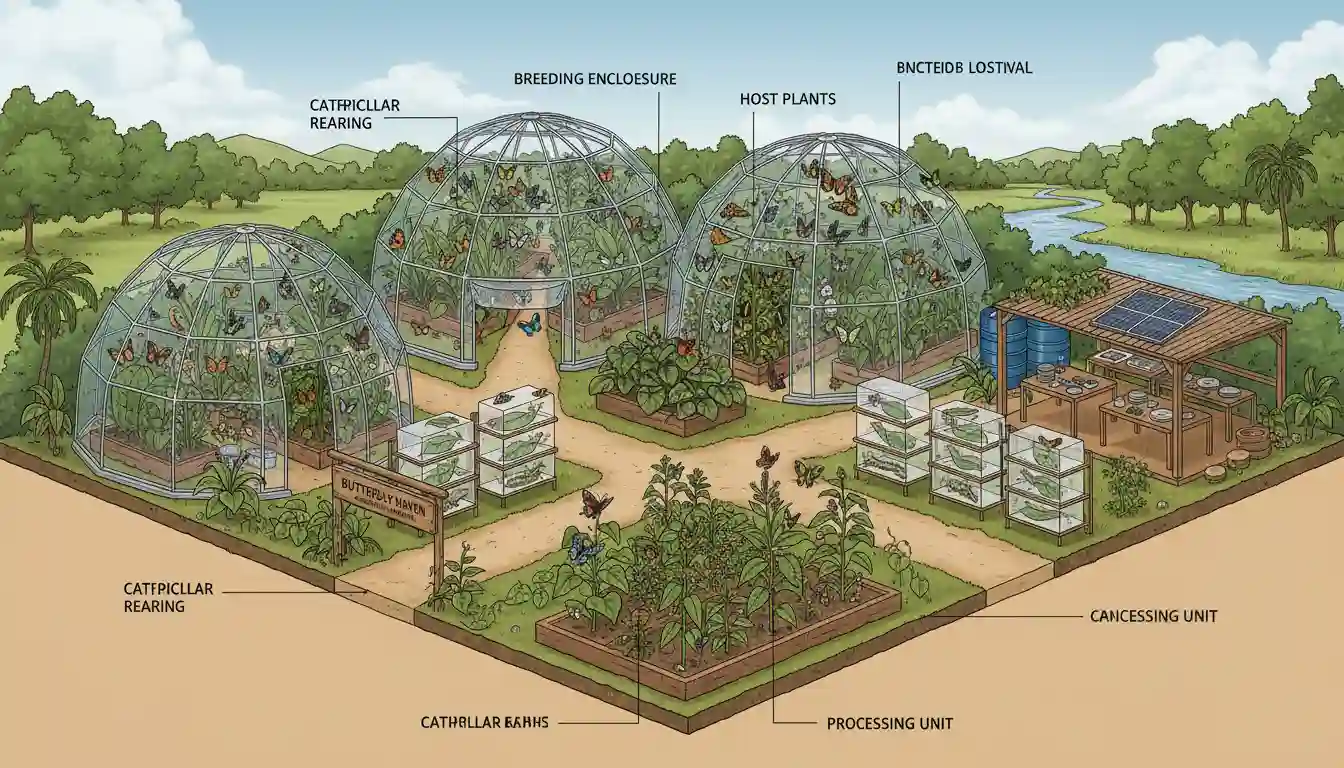
Illustration of butterfly farming setup showing breeding enclosures and host plants for sustainable butterfly agriculture

What is Butterfly Farming and Why It Matters

Butterfly cultivation, also known as butterfly ranching, is the controlled breeding and rearing of butterflies for various purposes including conservation, education, tourism, and commercial sale. Unlike wild collection which can deplete natural populations, sustainable butterfly farming creates economic incentives for habitat preservation while meeting market demand.

The practice has gained significant attention in recent years as a sustainable form of agriculture that combines environmental conservation with income generation. According to butterfly cultivation experts, well-managed farms can produce thousands of butterflies annually while protecting natural habitats from destruction.

Benefits and Use Cases of Butterfly Farming

Butterfly cultivation offers multiple benefits that make it an attractive agricultural venture:

  • Conservation Impact: By creating economic value for living butterflies, ranching reduces pressure on wild populations and encourages habitat preservation.
  • Educational Value: Butterfly farms serve as living laboratories for schools, universities, and research institutions studying insect ecology and metamorphosis.
  • Tourism Revenue
Scroll to Top