Reindeer Farming Calculator - Free AI Assistant Tool

Reindeer Farming Calculator

Advanced AI-powered tool for calculating feed requirements, pasture needs, profitability, and optimizing your reindeer farming operations

reindeer
Enter total number of reindeer in your herd
Medium
1 = Poor quality, 5 = Excellent quality

Calculation Results

Enter your reindeer farming parameters and click "Calculate Requirements"

Free AI Assistant for Reindeer Farming

AI Response

Hello! I'm your Reindeer Farming AI Assistant. I can help you with:

  • Nutrition and feeding calculations
  • Pasture management strategies
  • Breeding and reproduction planning
  • Disease prevention and health management
  • Profitability analysis and market trends

Ask me anything about reindeer farming!

Calculation Formulas & Methodology

Core Formulas Used

Daily Feed Requirement

Feed (kg/day) = ∑(Countage × Weightage × 0.03 × ActivityFactor × SeasonFactor)

Where 0.03 represents 3% body weight consumption

Pasture Area Required

Area (ha) = (TotalLU × 2.5) ÷ PastureQualityIndex

LU = Livestock Unit (1 adult reindeer = 0.8 LU)

Annual Revenue Projection

Revenue = (MeatProduction × Price) + (VelvetProduction × Price) + (OtherIncome)

Example Calculation

Scenario: 100 Reindeer Herd

Adults (60): 60 × 120kg × 0.03 = 216 kg/day
Yearlings (20): 20 × 80kg × 0.03 = 48 kg/day
Calves (20): 20 × 40kg × 0.03 = 24 kg/day
Total Daily Feed: 288 kg/day
Pasture Calculation:

100 reindeer = 80 LU × 2.5 ha/LU = 200 hectares
With medium quality pasture (Index 0.7): 200 ÷ 0.7 = 286 hectares required

How to Use This Calculator

1

Enter Herd Details

Input your total herd size and age distribution percentages

2

Select Parameters

Choose feeding method, production purpose, and region

3

Adjust Quality

Set pasture quality slider based on your land assessment

4

Get Results

View detailed calculations and recommendations

Pro Tips for Accurate Calculations:

  • Regularly update herd numbers for seasonal changes
  • Consult local extension services for regional adjustment factors
  • Consider supplementary feeding during harsh winters
  • Account for predation losses in your calculations
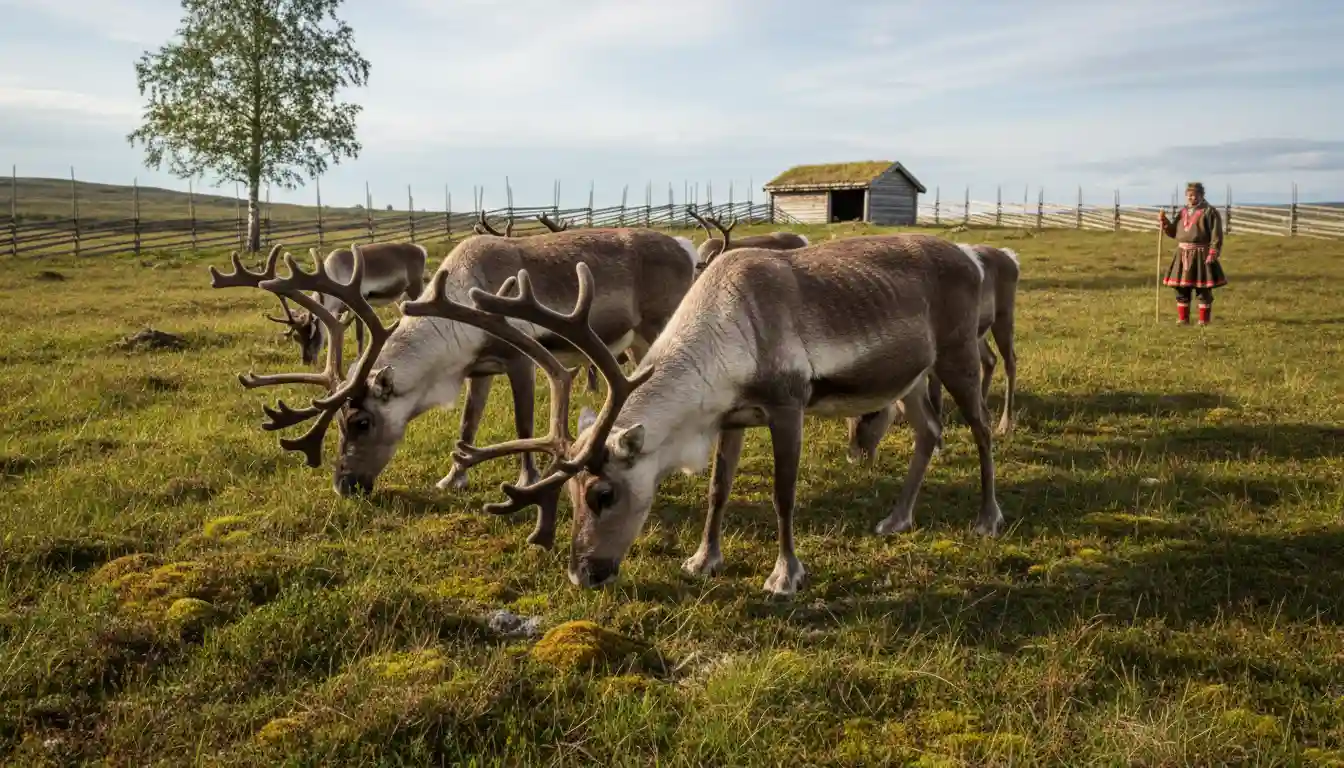
Reindeer herd grazing in natural pasture showing sustainable reindeer farming practices
Reindeer herd grazing in natural pasture
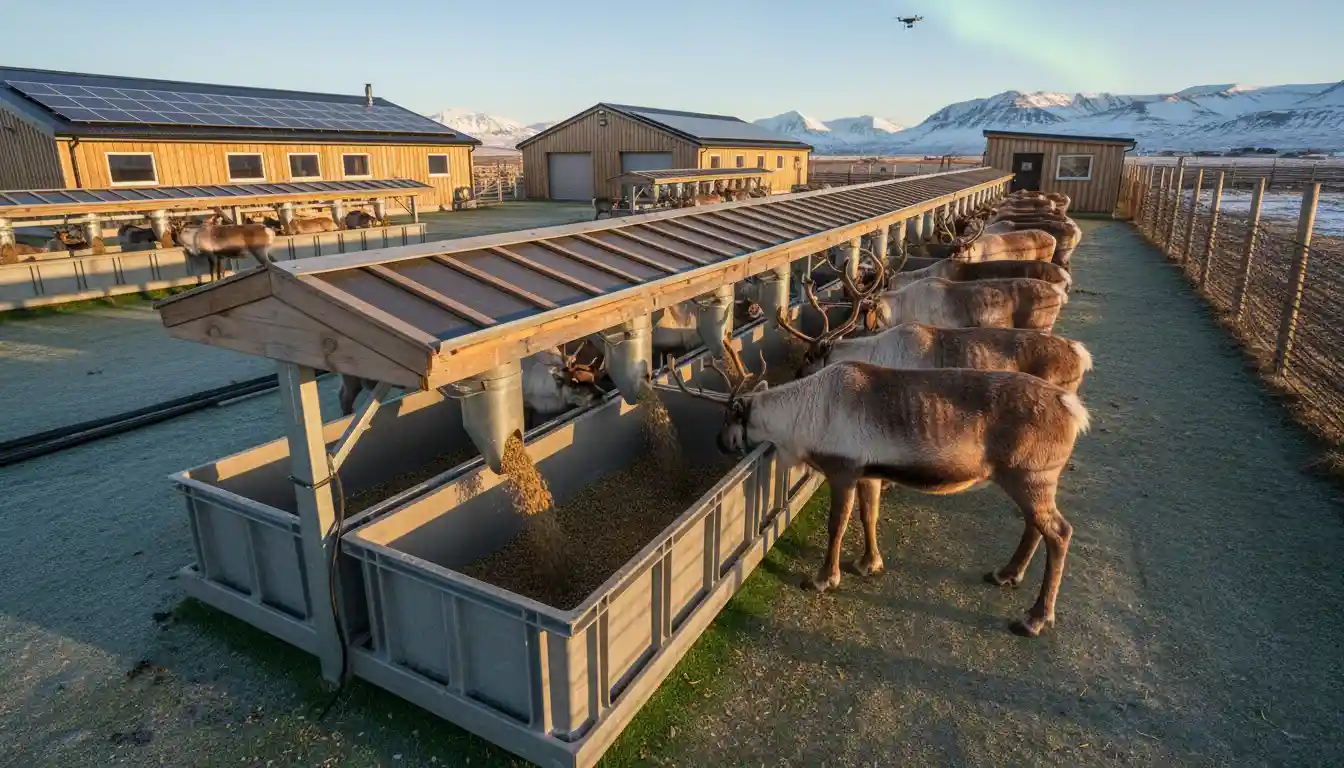
Modern reindeer farming facility with feeding infrastructure for optimized reindeer farming
Modern reindeer farming facility
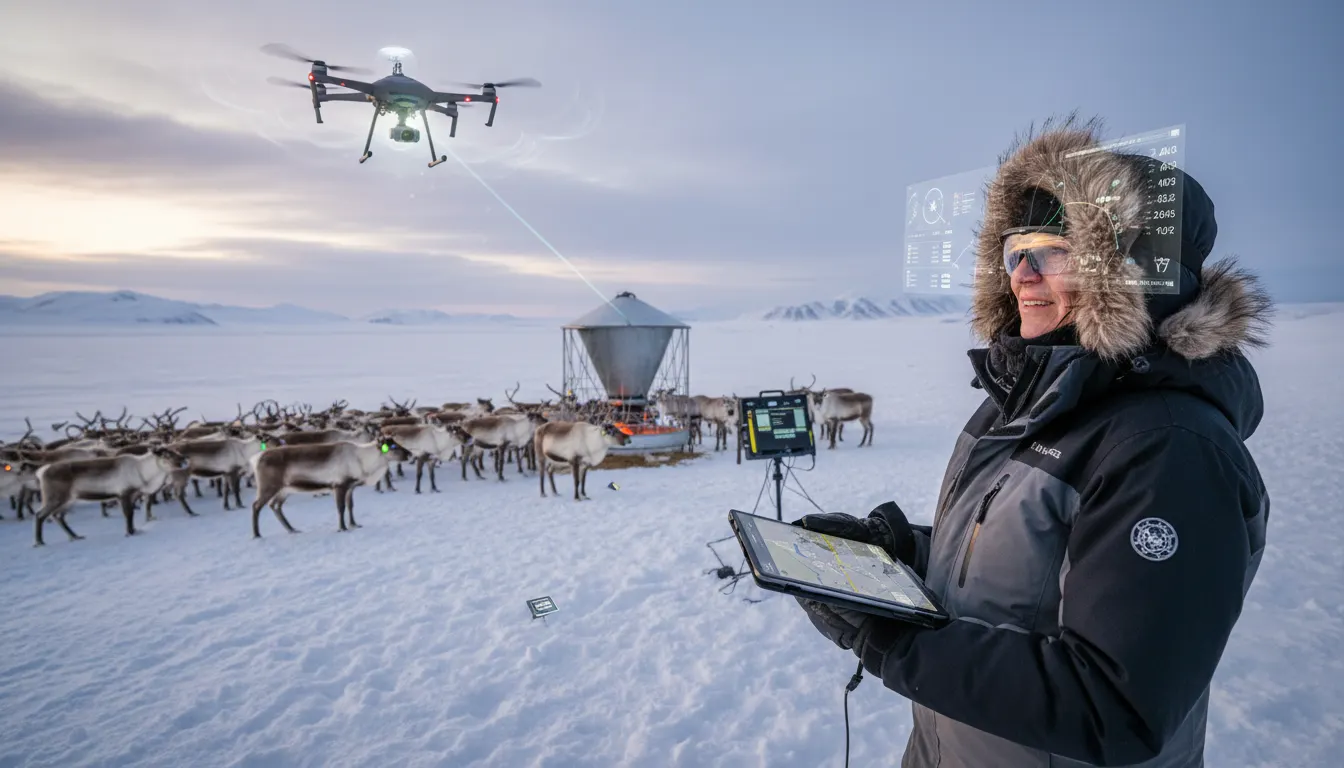
Reindeer farming expert monitoring herd health with technology assisted reindeer farming tools
Reindeer farming expert monitoring herd health

Frequently Asked Questions

What is the ideal pasture size for 100 reindeer?

For 100 reindeer, you need approximately 200-300 hectares of pasture land, depending on vegetation quality and climate conditions. In deer farming, similar principles apply but reindeer require more space due to their migratory nature and specific forage preferences.

How much feed does a reindeer consume daily?

An adult reindeer consumes 2-3% of its body weight in dry matter daily, approximately 3-5 kg of feed depending on season and activity level. During winter, requirements may increase by 20-30% due to thermoregulation needs.

What is the gestation period for reindeer?

Reindeer have a gestation period of 210-240 days, typically giving birth to a single calf in spring. This is similar to other cervids, though timing varies by geographic location and climate conditions.

How do I calculate reindeer farming profitability?

Profitability depends on meat prices, antler velvet market, tourism income, and operational costs. Our calculator includes comprehensive ROI analysis. For comparison, check our llama farming calculator for different livestock economics.

What vaccines do reindeer need?

Essential vaccines include clostridial diseases, pasteurellosis, and specific regional requirements. Always consult local veterinary authorities and refer to authoritative sources like the FAO's animal health guidelines for updated information.

Comprehensive Guide to Modern Reindeer Farming: Strategies and Calculations

By Agricultural Expert Updated: January 2024

Reindeer farming represents a unique intersection of traditional husbandry and modern agricultural science, offering sustainable meat production, valuable antler velvet, and ecotourism opportunities in northern regions worldwide.

What is Reindeer Farming and Why It Matters

Reindeer farming, also known as reindeer husbandry, involves the managed breeding and raising of reindeer (Rangifer tarandus) for various products including meat, antler velvet, hides, and as working animals. Unlike traditional livestock, reindeer are semi-domesticated animals that maintain their migratory instincts, requiring specialized management approaches that respect their natural behaviors while optimizing production outcomes.

The global reindeer farming industry supports indigenous communities across the Arctic and subarctic regions while providing high-quality, lean protein sources with exceptional nutritional profiles. Reindeer meat contains higher protein content (22-24%) and lower fat levels compared to beef, along with significant amounts of omega-3 fatty acids, iron, and vitamin B12, making it a valuable component of modern healthy diets.

Benefits and Strategic Use Cases

Modern reindeer farming offers multiple revenue streams that contribute to its economic viability. Primary benefits include:

  • Sustainable Meat Production: Reindeer convert low-quality forage into high-value protein efficiently, with feed conversion ratios superior to many traditional livestock species in northern climates
  • Antler Velvet Market: Annual antler harvest provides velvet used in traditional medicine and supplements, with established markets in Asia commanding premium prices
  • Ecological Management: Reindeer grazing helps maintain tundra ecosystems, preventing shrub encroachment and supporting biodiversity
  • Cultural Preservation: Supports traditional indigenous lifestyles while providing economic opportunities in remote regions
  • Tourism Integration: Farm visits, sledding experiences, and educational programs create additional revenue

These diverse income sources make reindeer farming particularly resilient to market fluctuations. When calculating potential returns, tools like our meat cooking time calculator can help optimize product utilization and value addition.

Technical Calculations and Best Practices

Successful reindeer farming requires precise calculations across several domains. Feed requirements vary significantly by season, with winter needs 20-30% higher than summer due to thermoregulation demands. Our calculator incorporates these seasonal adjustment factors based on latitude and climate zone inputs.

Pasture management calculations consider both quantity and quality of available forage. Reindeer prefer specific lichen species (Cladonia and Cetraria) that require 15-30 years to regenerate after grazing, necessitating rotational grazing systems spanning thousands of hectares. The calculation formulas account for these slow regeneration rates through conservative stocking density recommendations.

Breeding program calculations optimize for both genetic diversity and production traits. With a 75-80% calf survival rate under good management, herd growth projections must account for predation losses, winter mortality, and reproductive efficiency. These factors are integrated into our profitability calculations alongside market price data for meat (typically $15-25/kg) and velvet ($200-400/kg).

Global Considerations and Regional Adaptations

Reindeer farming practices and calculations must adapt to regional variations across the circumpolar north. Scandinavian operations often focus on meat production with supplemental feeding, while Siberian herds maintain more extensive migratory patterns. North American operations increasingly integrate with indigenous tourism initiatives.

Climate change introduces additional calculation variables, with changing snow conditions, vegetation patterns, and parasite ranges affecting both herd health and pasture availability. Our calculator includes climate adjustment factors that modify traditional formulas based on regional climate projections.

For farmers considering alternative livestock options, our silkworm farming calculator demonstrates how different agricultural systems require specialized calculation approaches based on species-specific biology and market dynamics.

Future Trends and Technological Integration

Emerging technologies are transforming reindeer farming calculations and management practices. GPS tracking enables precise monitoring of herd movements and grazing patterns, feeding data into predictive models for pasture utilization. Remote sensing provides vegetation indices that update pasture quality assessments in real-time.

Genetic testing allows more accurate predictions of growth rates, velvet production potential, and disease resistance, refining breeding program calculations. Automated feeding systems with biometric monitoring optimize supplemental feed delivery based on individual animal requirements.

As the industry modernizes, integrated calculation tools become increasingly essential for making data-driven management decisions that balance production objectives with ecological sustainability and animal welfare considerations.

`); printWindow.document.close(); printWindow.focus(); printWindow.print(); } });// ==================== AI ASSISTANT ====================const aiResponses = { default: "I can help with reindeer nutrition, breeding, pasture management, and profitability calculations. What specific aspect would you like to know more about?", feeding: (herdSize) => { const results = calculateReindeerRequirements(); return `Based on your herd size of ${herdSize || 100} reindeer: - Daily feed requirement: Approximately ${results.requirements.dailyFeed} kg - Feed per reindeer: ${results.requirements.feedPerReindeer} kg/day - Annual feed needed: ${results.requirements.annualFeed} tons Tip: During winter, increase feed by 20-30% with energy-rich supplements.`; }, breeding: "Breeding season is August-October. Maintain 1 bull per 15-20 cows. Calving occurs May-June after 210-240 day gestation. Target 85%+ calf survival with proper nutrition and predator control. Average pregnancy rate should be 85-90%.", pasture: () => { const results = calculateReindeerRequirements(); return `Pasture quality: ${results.factors.pastureQuality} Required area: ${results.requirements.pastureRequired} hectares Recommendation: Implement rotational grazing with 30-60 day rest periods between grazing cycles.`; }, profitability: () => { const results = calculateReindeerRequirements(); return `Current projection: ${results.financials.roi}% ROI Annual profit: ${results.currency.symbol}${results.financials.profit} Key areas for improvement: Feed efficiency, value-added products, and diversified income streams.`; }, health: "Essential vaccines: Clostridial diseases, pasteurellosis. Monitor for parasites, foot rot, and brucellosis. Regular mineral supplementation prevents deficiencies. Annual health check recommended.", winter: "Winter management: Provide windbreaks, increase feed by 30%, ensure water access (heating if needed), monitor body condition weekly. Consider indoor facilities for extreme cold (-40°C).", velvet: "Antler velvet is harvested in late spring/early summer. Proper handling and quick freezing preserve quality. Average yield is 2-3 kg per adult reindeer annually. Market price varies by quality and region.", tourism: "Reindeer tourism can generate $50-200 per visitor. Activities include sledding, feeding, photography tours, and cultural experiences. Peak seasons are winter (Christmas) and summer (midnight sun)." };document.getElementById('askAiBtn').addEventListener('click', function() { const questionInput = document.getElementById('aiQuestion'); if (!questionInput) return; const question = questionInput.value.toLowerCase().trim(); let response = aiResponses.default; if (!question) { response = "Please enter a question about reindeer farming. I can help with feeding, breeding, health, pasture management, profitability, and more!"; } else if (question.includes('feed') || question.includes('nutrition')) { response = aiResponses.feeding(document.getElementById('herdSize').value); } else if (question.includes('breed') || question.includes('calf')) { response = aiResponses.breeding; } else if (question.includes('pasture') || question.includes('graz')) { response = aiResponses.pasture(); } else if (question.includes('health') || question.includes('vaccine') || question.includes('disease')) { response = aiResponses.health; } else if (question.includes('profit') || question.includes('cost') || question.includes('roi') || question.includes('revenue')) { response = aiResponses.profitability(); } else if (question.includes('winter') || question.includes('cold') || question.includes('snow')) { response = aiResponses.winter; } else if (question.includes('velvet') || question.includes('antler')) { response = aiResponses.velvet; } else if (question.includes('tour') || question.includes('visitor') || question.includes('experience')) { response = aiResponses.tourism; } const aiResponseElement = document.getElementById('aiResponse'); if (aiResponseElement) { aiResponseElement.innerHTML = `

${response}

`; } // Clear the input questionInput.value = ''; });// Allow Enter key to submit AI question const aiQuestionInput = document.getElementById('aiQuestion'); if (aiQuestionInput) { aiQuestionInput.addEventListener('keypress', function(e) { if (e.key === 'Enter') { e.preventDefault(); document.getElementById('askAiBtn').click(); } }); }// ==================== INITIALIZATION ====================// Set initial pasture quality display const initialQuality = pastureQualitySlider ? pastureQualitySlider.value : 3; const pastureQualityText = document.getElementById('pastureQualityText'); if (pastureQualityText) { pastureQualityText.textContent = PASTURE_QUALITY[initialQuality].name; pastureQualityText.className = `text-sm font-medium ${PASTURE_QUALITY[initialQuality].color}`; }// Add input validation document.querySelectorAll('input[type="number"]').forEach(input => { input.addEventListener('blur', function() { const min = parseInt(this.min) || 0; const max = parseInt(this.max) || 10000; let value = parseInt(this.value) || min; if (value < min) value = min; if (value > max) value = max; this.value = value; performCalculation(); }); });// Initialize the calculator with default values performCalculation();// Add smooth scrolling for anchor links document.querySelectorAll('a[href^="#"]').forEach(anchor => { anchor.addEventListener('click', function(e) { const href = this.getAttribute('href'); if (href !== '#') { e.preventDefault(); const target = document.querySelector(href); if (target) { target.scrollIntoView({ behavior: 'smooth', block: 'start' }); } } }); }); });
Scroll to Top