
🐟
Catfish Farming Calculator
Calculate profitability, feed requirements, and pond management for catfish farming operations.
Calculate NowAdvanced Free AI Assistant for Aquaculture and Shrimp Production
Optimize your shrimp farming operations with precise calculations for feed, stocking density, water quality, and profitability. This comprehensive tool helps both small-scale and commercial shrimp farming operations maximize efficiency and sustainability.
Enter your shrimp farming details to see calculation results
Get personalized recommendations for your shrimp aquafarming operation
Optimal FCR for shrimp farming is 1.2-1.6. Values above 1.8 indicate feed waste and reduced profitability.
Maintain dissolved oxygen above 4 mg/L for healthy shrimp growth. Below 2 mg/L can cause stress and mortality.
Regular water exchange (10-30% daily) helps maintain water quality and reduce disease risk in shrimp farming.
Get AI-powered insights based on your current calculator inputs
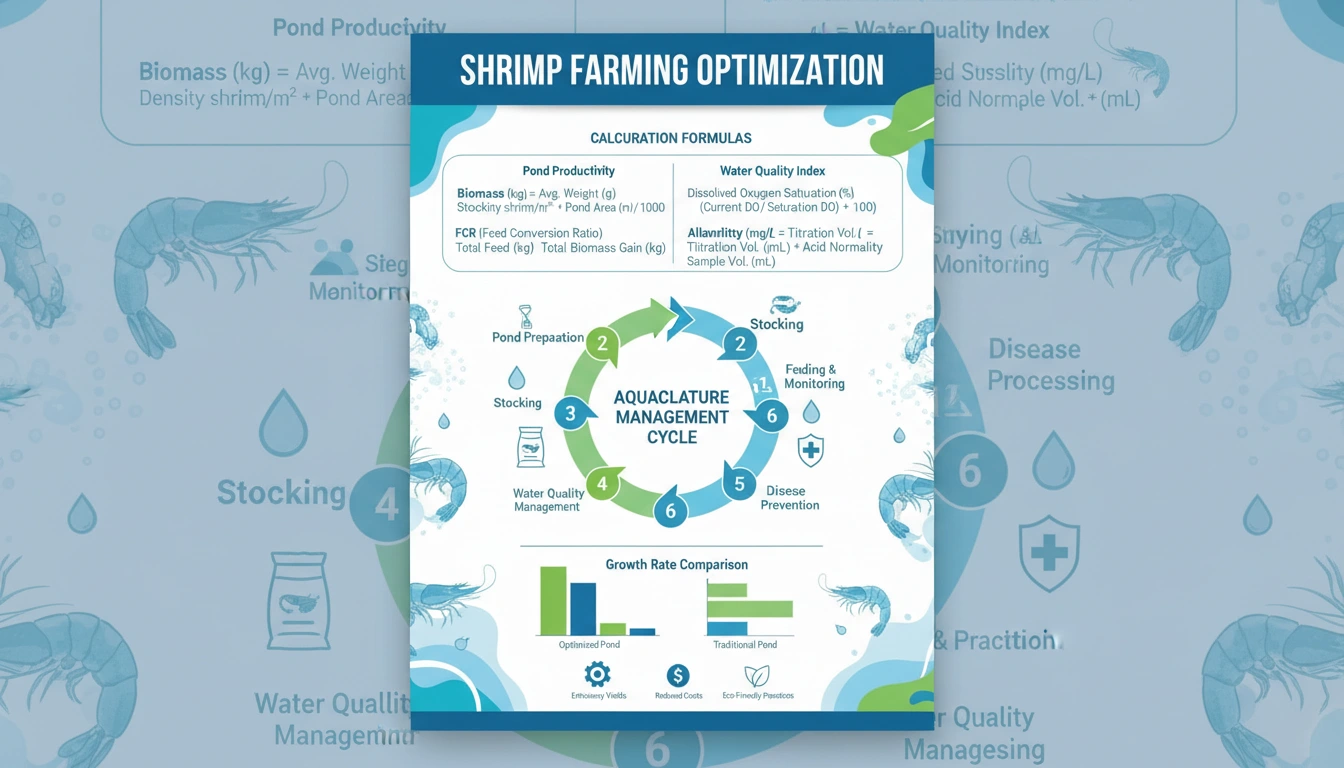
This calculates the total shrimp weight at harvest for your shrimp farming operation.
FCR (Feed Conversion Ratio) indicates how efficiently shrimp convert feed to biomass in shrimp farming.
Calculates total number of shrimp stocked, considering pond area in hectares converted to m².
Given: 1 hectare pond, stocking density 30 shrimp/m², 80% survival, harvest size 20g
Total Shrimp Stocked:
1 × 10,000 × 30 = 300,000 shrimp
Total Biomass at Harvest:
1 × 30 × 0.8 × 20 ÷ 1000 = 4,800 kg
Feed Required (FCR 1.5):
4,800 × 1.5 = 7,200 kg
Key Insight: For profitable shrimp farming, focus on optimizing FCR and survival rates. Small improvements in these parameters significantly impact shrimp farming profitability.
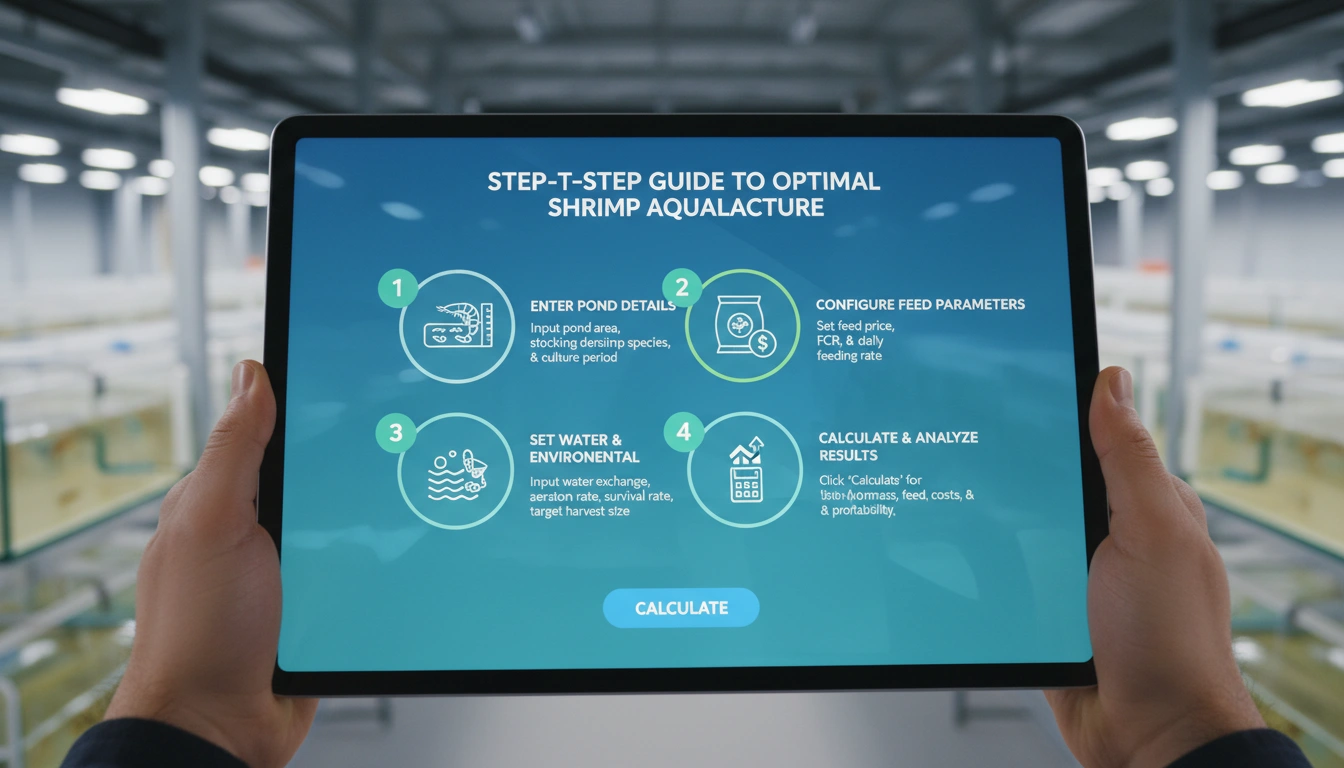
Start by inputting your pond area, stocking density, shrimp species, and culture period. These parameters form the foundation for all shrimp aquafarming calculations and directly impact your operation's scale.
Set feed price, feed conversion ratio (FCR), and daily feeding rate. These critical parameters determine your feed costs and efficiency in shrimp aquafarming, significantly affecting profitability.
Input water exchange rates, aeration requirements, expected survival rate, and target harvest size. Proper water management is essential for successful shrimp aquaculture operations.
Click "Calculate" to see detailed results including biomass projections, feed requirements, cost analysis, and profitability metrics for your shrimp aquaculture business.
Shrimp aquafarming represents one of the fastest-growing segments of global aquaculture, combining advanced technology with sustainable practices to meet the world's growing demand for seafood while providing significant economic opportunities.
Shrimp aquaculture, also known as shrimp aquaculture, involves the cultivation of shrimp for human consumption in controlled environments. This practice has evolved from traditional extensive systems to highly sophisticated intensive operations that maximize productivity while addressing environmental concerns. Modern shrimp aquafarming utilizes advanced technology, scientific management practices, and sustainable approaches to produce high-quality shrimp efficiently.
The global significance of shrimp aquafarming cannot be overstated. According to the Food and Agriculture Organization (FAO), aquaculture accounts for approximately 52% of global shrimp production, with shrimp aquaculture operations expanding rapidly in Asia, Latin America, and other regions. This growth is driven by increasing global demand for shrimp, which remains one of the most traded seafood commodities worldwide.
From an economic perspective, shrimp aquaculture provides livelihoods for millions of people in coastal communities, contributes to food security, and generates significant export revenues for producing countries. Environmentally, well-managed shrimp aquafarming can be more sustainable than wild capture fisheries, reducing pressure on natural shrimp populations and marine ecosystems when implemented responsibly.
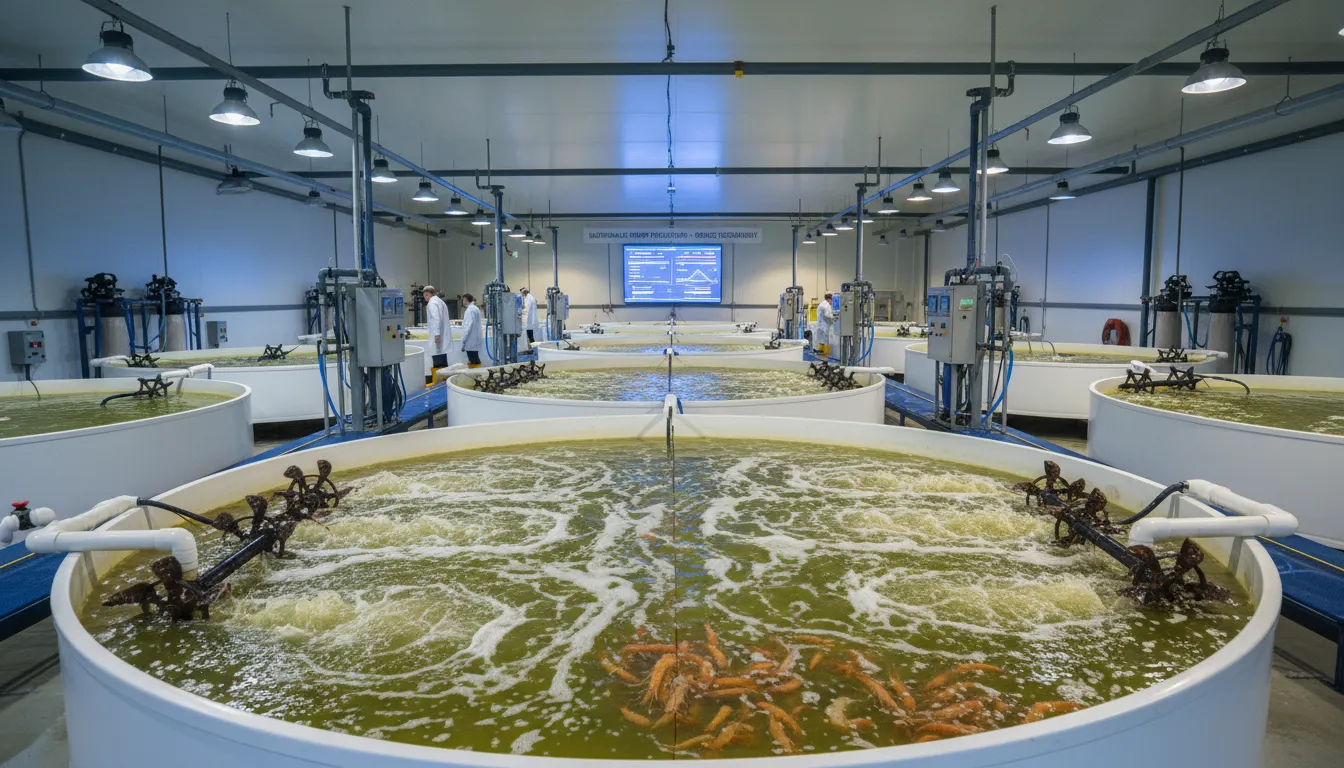
Modern shrimp farming systems utilizing biofloc technology for sustainable production
The advantages of shrimp aquaculture are substantial, offering economic, social, and environmental benefits when managed properly. Modern shrimp aquafarming techniques have addressed many historical challenges, making this form of aquaculture increasingly sustainable and profitable.
Modern shrimp aquafarming encompasses various production systems tailored to different scales and environmental conditions:
Successful shrimp aquafarming requires careful planning, proper management, and attention to detail throughout the production cycle. Here are essential considerations for establishing and maintaining a profitable operation:
Proper pond preparation is fundamental to successful shrimp aquafarming:
Optimal stocking practices maximize productivity in shrimp aquaculture:
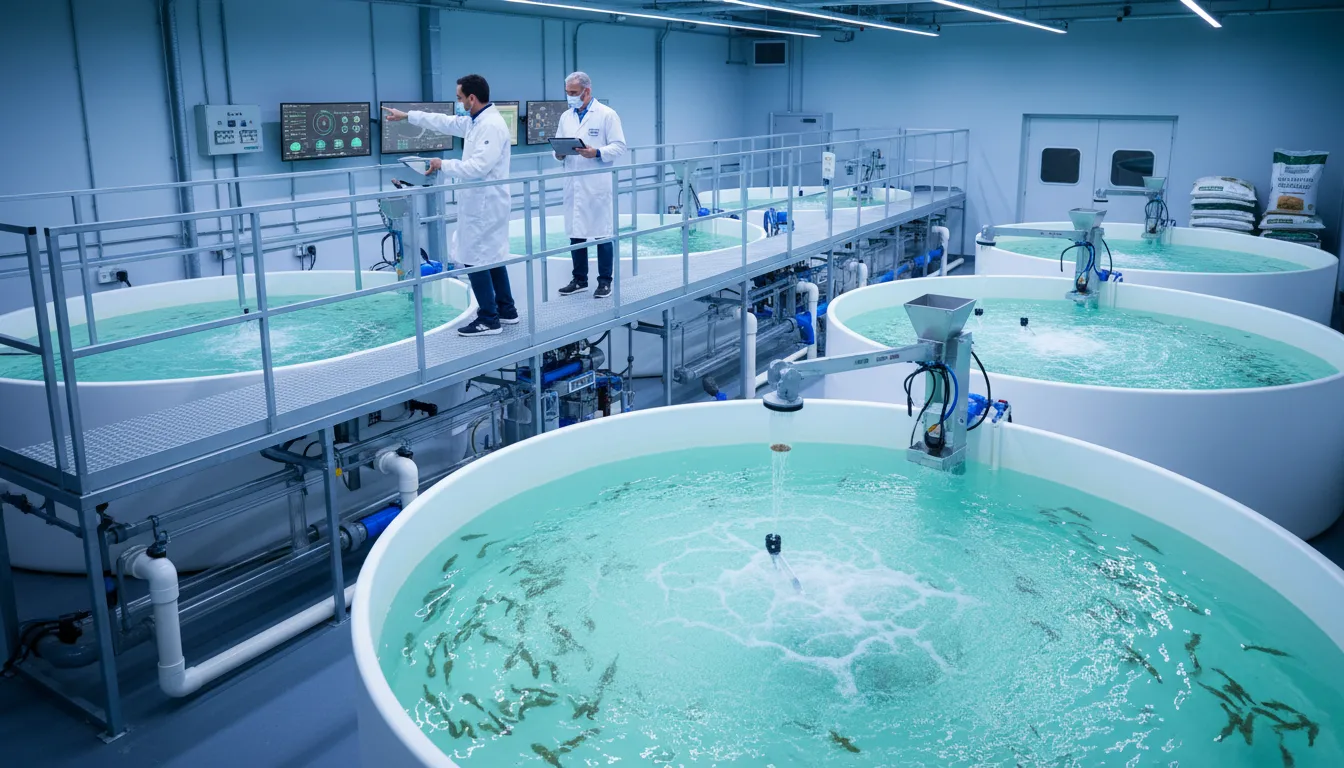
Water quality monitoring and feed management in modern shrimp aquafarming operations
Efficient feed management is crucial for profitable shrimp aquaculture:
Preventive health management protects investments in shrimp aquaculture:
Shrimp aquaculture intersects with several related aquaculture concepts that can enhance operations:
For those considering expanding their aquaculture operations, it's worth exploring complementary options like trout farming which can share similar water quality management principles with shrimp farming. Similarly, salmon farming techniques often inform advanced shrimp farming practices, particularly in recirculating systems.
Shrimp farming represents a dynamic and potentially profitable agricultural enterprise, particularly suited to regions with appropriate water resources and market access. By combining traditional knowledge with modern management tools like our shrimp farming calculator, producers can optimize their operations for both economic and environmental outcomes. The future of shrimp farming lies in sustainable intensification—producing more shrimp with fewer resources through improved genetics, better nutrition, and advanced system design.
Whether you're exploring shrimp farming as a new venture or seeking to optimize an existing operation, tools like our comprehensive calculator provide valuable insights for decision-making. By accurately modeling different scenarios, you can develop a shrimp farming business plan that balances productivity, sustainability, and profitability in this important aquaculture sector.