
Pro Broiler Farming - Calculate Broiler Farming with Precision
Optimize your poultry business with our comprehensive broiler farming calculator. Calculate feed conversion ratios, mortality rates, profitability, and ROI for poultry operations worldwide. Make data-driven decisions for your meat production enterprise.
Broiler Production Inputs
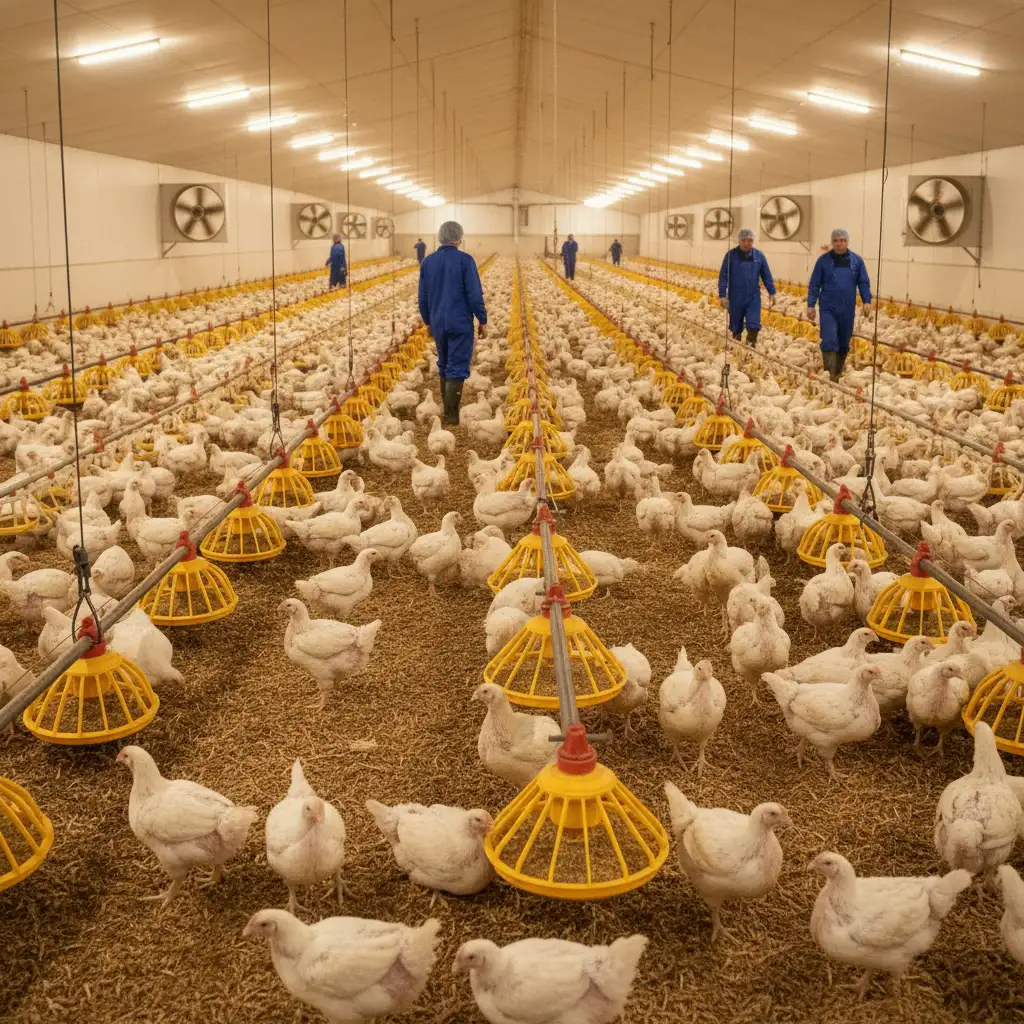
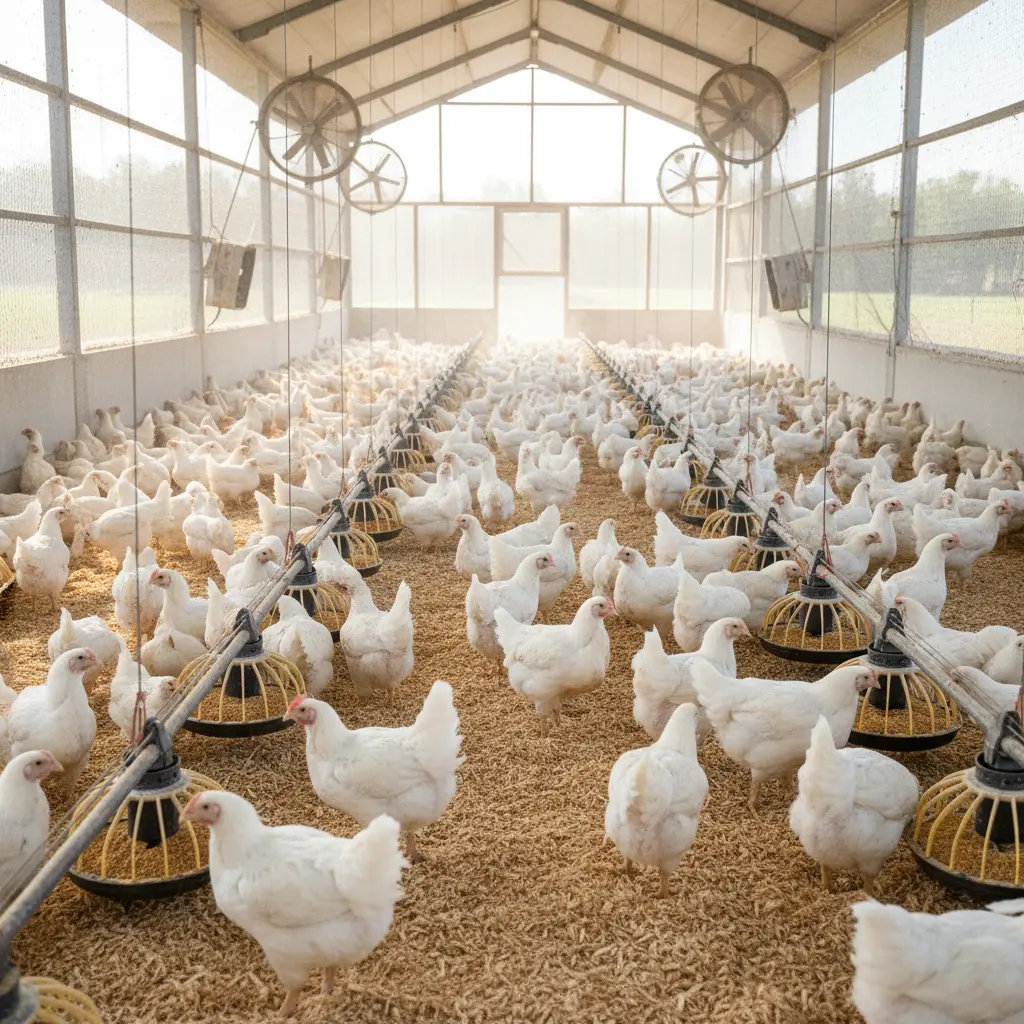
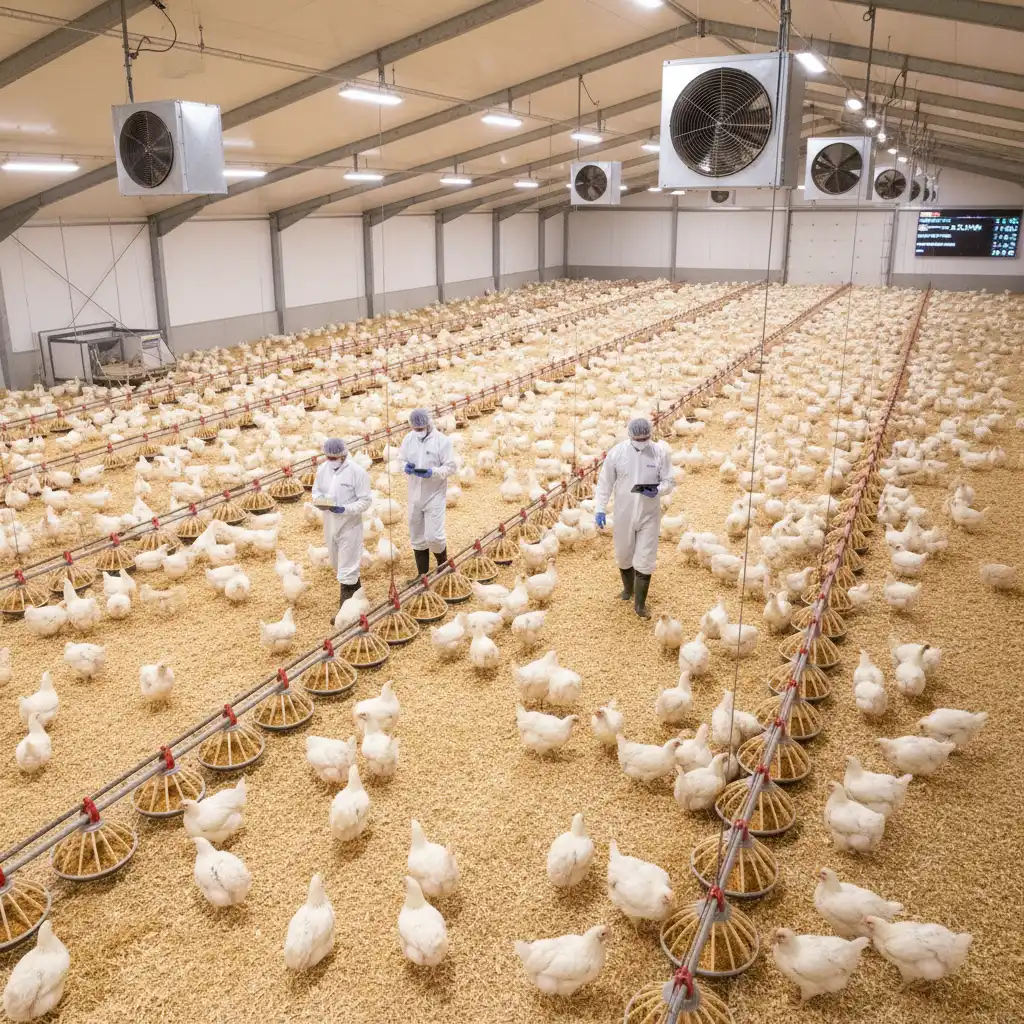
Modern Poultry Production
Production Results
Cost Breakdown
ROI Analysis
Calculation History
Poultry Production AI Assistant
Get personalized advice for your meat production operation
Related Farming Calculators
Dairy Farming Calculator
Calculate milk production, feed costs, and profitability for dairy operations.
Chicken Farming Calculator
Analyze layer poultry farming for egg production and profitability.
Goat Farming Calculator
Calculate costs and returns for meat, milk, and fiber goat farming.
Sheep Farming Calculator
Analyze profitability for wool, meat, and dairy sheep farming operations.
How to Use the Poultry Calculator
- 1
Enter Basic Production Parameters
Start by inputting the number of birds, cycle length in days, and costs associated with chicks and feed. These are the fundamental inputs for any poultry calculation.
- 2
Adjust Mortality & Selling Details
Input your expected mortality rate, average weight at sale, and selling price per kg. These factors significantly impact poultry profitability.
- 3
Review Advanced Costs (Optional)
Use the Advanced Calculator tab to include medication, labor, utilities, and other operational expenses for a more comprehensive production analysis.
- 4
Calculate & Analyze Results
Click "Calculate" to see your projected revenue, costs, profit, and ROI. The visual charts help you understand cost distribution in your poultry operation.
- 5
Optimize & Plan
Use the results to make data-driven decisions. Adjust inputs to find the most profitable configuration for your meat production business.
What is Broiler Farming?
Broiler farming represents a specialized agricultural practice focused on raising chickens specifically for meat production. Unlike layer farming which produces eggs, this approach involves rearing fast-growing chicken breeds that reach market weight in just 5-7 weeks. This efficient form of poultry production has become a vital component of global food security, providing affordable animal protein to populations worldwide.
The modern broiler farming industry has evolved significantly through technological advancements and improved breeding techniques. Successful operations require careful management of housing conditions, nutrition, disease prevention, and environmental controls. The primary goal is to maximize feed conversion efficiency while maintaining bird health and welfare standards.
Key Aspects of Successful Poultry Production
- Selection of fast-growing, efficient broiler breeds
- Precision nutrition and feed formulation
- Climate-controlled housing systems
- Comprehensive biosecurity measures
- Regular health monitoring and vaccination
- Efficient waste management systems
Commercial broiler farming typically operates on an all-in-all-out system where birds of the same age group are raised together in batches. This method allows for thorough cleaning and disinfection between batches, reducing disease transmission risks. The intensive nature of modern operations enables high production volumes from relatively small land areas, making it accessible to producers in both rural and peri-urban settings.
Economic viability in this sector depends on several critical factors including feed conversion ratio (FCR), mortality rates, and market prices. Feed typically represents 60-70% of total production costs, making nutritional efficiency a primary focus. Contemporary practices leverage scientific research to optimize growth rates while maintaining meat quality standards expected by consumers.
Global trends show increasing consumer demand for poultry meat, driven by population growth, urbanization, and rising incomes in developing countries. Sustainable approaches are evolving to address environmental concerns while meeting this growing demand. Many operations now incorporate renewable energy, water conservation, and manure management systems to reduce their ecological footprint.
Technology integration has transformed contemporary production through automated feeding systems, environmental sensors, and data analytics. These innovations allow poultry professionals to monitor flock health, optimize growth conditions, and predict outcomes with unprecedented accuracy. The future of broiler farming lies in further precision agriculture applications that enhance both productivity and animal welfare.
For those considering entering the industry, proper planning is essential. Our chicken farming calculator and dairy farming calculator can help you analyze profitability across different agricultural ventures. Additionally, exploring goat farming might provide diversification opportunities for your agricultural portfolio.
Successful broiler farming requires continuous learning and adaptation to changing market conditions, regulatory requirements, and consumer preferences. Organizations like the Food and Agriculture Organization (FAO) provide valuable resources for best practices and global industry trends.
As the industry continues to evolve, emphasis on animal welfare, environmental sustainability, and food safety will shape standards. Implementing responsible practices not only ensures business longevity but also contributes to broader food system resilience. Whether operating a small-scale family farm or a large commercial operation, the principles of efficient broiler farming remain fundamentally similar: optimize inputs, minimize losses, and deliver quality products to market.
The scale of broiler farming operations varies significantly across different regions. In the United States, large integrated companies dominate production, while in many African and Asian countries, smallholder operations remain prevalent. Each system presents unique challenges and opportunities for those engaged in broiler farming activities.
Environmental considerations have become increasingly important in modern broiler farming. Producers must address issues related to waste management, water usage, and greenhouse gas emissions. Innovative solutions such as manure-to-energy conversion and water recycling systems are being implemented to create more sustainable broiler farming enterprises.
Market dynamics significantly influence profitability in broiler farming. Factors such as feed grain prices, consumer demand patterns, and international trade agreements all impact the economic viability of operations. Successful producers must develop strategies to manage these risks while maintaining efficient broiler farming practices.
Consumer preferences continue to evolve, with growing interest in organic, free-range, and antibiotic-free poultry products. These market segments offer opportunities for differentiation within the broiler farming sector. Producers who can adapt their operations to meet these specialized demands often achieve premium pricing for their products.
Technological advancements continue to revolutionize broiler farming practices. From precision feeding systems that deliver customized nutrition to individual birds, to automated climate control systems that optimize growing conditions, technology is enhancing both productivity and animal welfare in broiler farming operations worldwide.
The importance of biosecurity cannot be overstated in successful broiler farming. Disease outbreaks can devastate flocks and cause significant economic losses. Implementing strict protocols, including controlled access, proper sanitation, and vaccination programs, is essential for protecting the health of birds and ensuring the sustainability of broiler farming businesses.
Looking ahead, the future of broiler farming will likely involve greater integration of digital technologies, increased focus on sustainability metrics, and continued improvement in genetic selection for both productivity and animal welfare traits. These developments will help ensure that broiler farming remains a vital component of global food production systems.
Poultry Production Calculation Formulas
Key Formulas Used
Total Feed Cost
Total Revenue
Net Profit
Example Calculation
Let's calculate for a small poultry operation:
- Number of Birds: 1,000
- Chick Cost: $1.20 per bird = $1,200
- Feed Intake: 4.2 kg per bird
- Feed Cost: $0.45 per kg = $1,890 total feed cost
- Mortality Rate: 3% (30 birds)
- Live Birds for Sale: 970 birds
- Average Weight: 2.5 kg
- Selling Price: $2.10 per kg
Total Revenue: 970 × 2.5 × 2.10 = $5,092.50
Total Cost: $1,200 + $1,890 = $3,090
Net Profit: $5,092.50 - $3,090 = $2,002.50
Profit per Bird: $2,002.50 ÷ 1,000 = $2.00
Frequently Asked Questions about Poultry Production
What is the ideal temperature for poultry houses?
Temperature management is critical in poultry production. During the first week, birds require 32-35°C (90-95°F), which should be gradually reduced by 2.5-3°C each week until reaching 20-21°C (68-70°F) by the 5th week. Proper temperature control ensures optimal growth rates and feed conversion efficiency while reducing mortality.
How much space do broiler chickens need?
Space requirements depend on the production system. In intensive operations, allow 0.07-0.09 sq.m (0.75-1 sq.ft) per bird during the first weeks, increasing to 0.12-0.15 sq.m (1.3-1.6 sq.ft) by market age. Free-range systems typically provide 1 sq.m (10.8 sq.ft) per bird outdoors in addition to indoor housing.
What is a good feed conversion ratio (FCR) in broiler farming?
Feed conversion ratio is a key performance indicator in broiler farming. Modern broiler breeds typically achieve FCR of 1.5-1.8, meaning 1.5-1.8 kg of feed produces 1 kg of live weight. Excellent operations can achieve FCR as low as 1.4 with optimal management, genetics, and nutrition.
How long does a production cycle typically last?
Standard cycles range from 35-42 days for birds reaching 2.0-2.5 kg, though some markets prefer heavier birds requiring 49-56 days. The cycle length depends on target market weight, genetics, and feeding programs. Most commercial operations complete 5-7 cycles per year.
What are the main challenges in poultry production?
Successful operations must address several challenges: disease management (especially respiratory and intestinal diseases), feed cost volatility, maintaining optimal environmental conditions, managing mortality rates, meeting animal welfare standards, and navigating market price fluctuations. Implementing biosecurity protocols is essential in modern operations to prevent disease outbreaks.